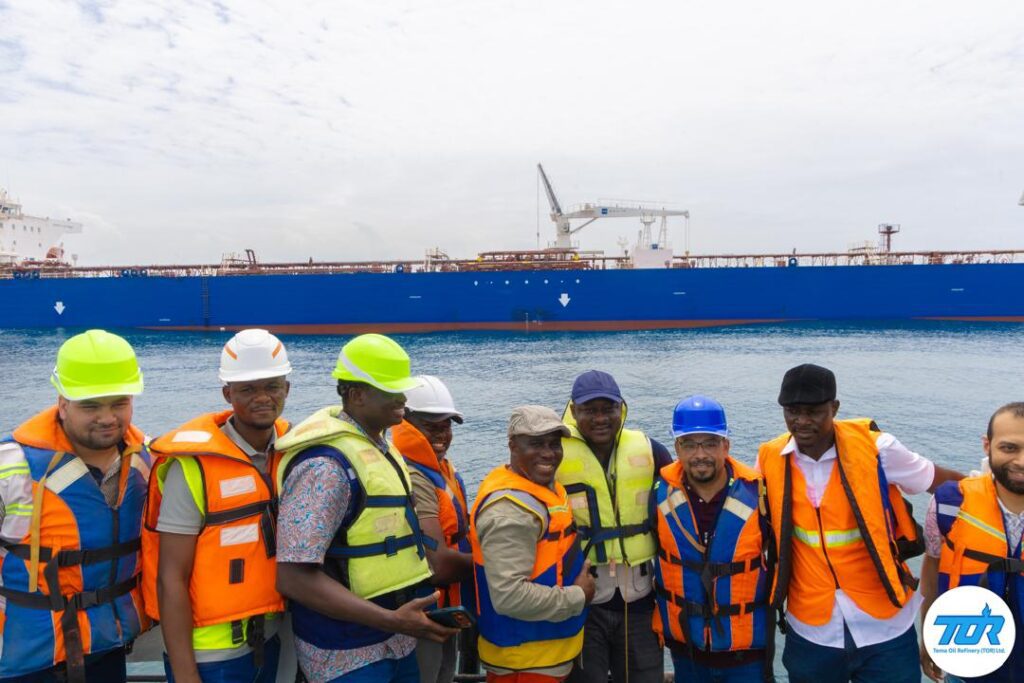
President John Dramani Mahama has disclosed that Ghana will make architectural history in its domestic energy landscape this June by delivering a commercial parcel of locally extracted crude oil directly to the Tema Oil Refinery (TOR) for processing.
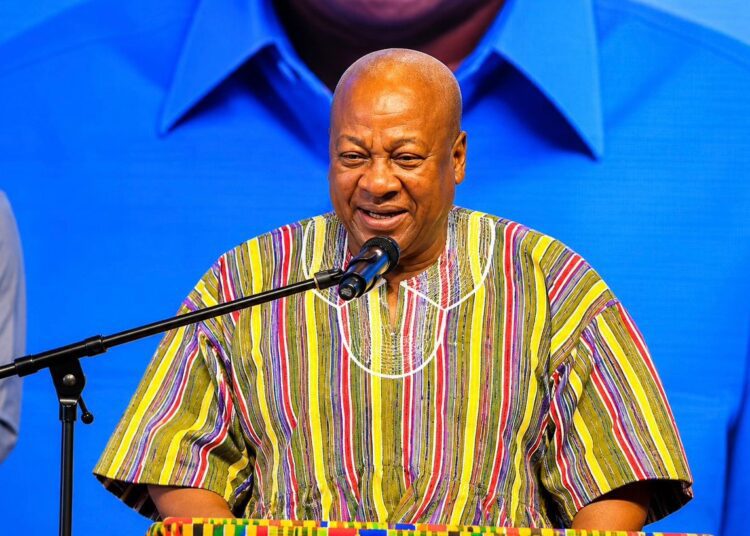
Speaking at an expansive townhall meeting with the Ghanaian diaspora in London, UK, the President signaled a definitive structural pivot away from the conventional economic cycle of exporting raw resource wealth only to import expensive, finished petroleum consumables.
The strategic move is explicitly framed as a policy resurrection of a value-addition blueprint successfully trialed during his initial term in office but subsequently abandoned by successive administrations.
“We are about to start refining our own crude, and so in June, we are delivering a parcel of Ghanaian crude from our own oil fields to the Tema Oil Refinery to process. And that is what we call value addition because we process, we mine ores like manganese, bauxite, and all the other ores, gold and everything, and then we ship them out to be processed by somebody. And so in that processing, we are creating jobs in that other person’s economy.”
President John Dramani Mahama
Expanding on this historic national transition, the President elaborated that the upcoming delivery to the state-owned refinery aims to disrupt the unsustainable paradigm of shipping out primary mineral wealth such as manganese, bauxite, and gold and yielding the downstream industrial employment benefits to foreign nations.
By processing domestic crude within the borders of the West African nation, the state intends to retain critical financial liquidity and industrial capacity that historically escaped to overseas economies.
Furthermore, the administration highlighted a concurrent stabilization of the broader energy framework, noting that the government has systematically resolved a legacy debt of approximately 1.5 billion dollars owed to Independent Power Producers (IPPs).
Through a rigorous debt ring-fencing mechanism paired with a consistent payment structure, the state has achieved absolute operational compliance, assuring a reliable, uninterrupted flow of domestic electricity to fuel this localized industrial push.
Retaining Downstream Value and Stemming Capital Flight
This impending operational shift at the Tema Oil Refinery represents a monumental macroeconomic correction for a country historically afflicted by “resource curse” dynamics.
For decades, the structural paradox of the Ghanaian energy economy has been characterized by high export volumes of premium, sweet Brent-grade crude from offshore fields like Jubilee and Ten, counterbalanced by the debilitating, costly importation of refined petrol, diesel, and aviation fuel.
This structural imbalance has chronically exposed the local currency, the Cedi, to aggressive imported inflation and persistent foreign exchange pressures.
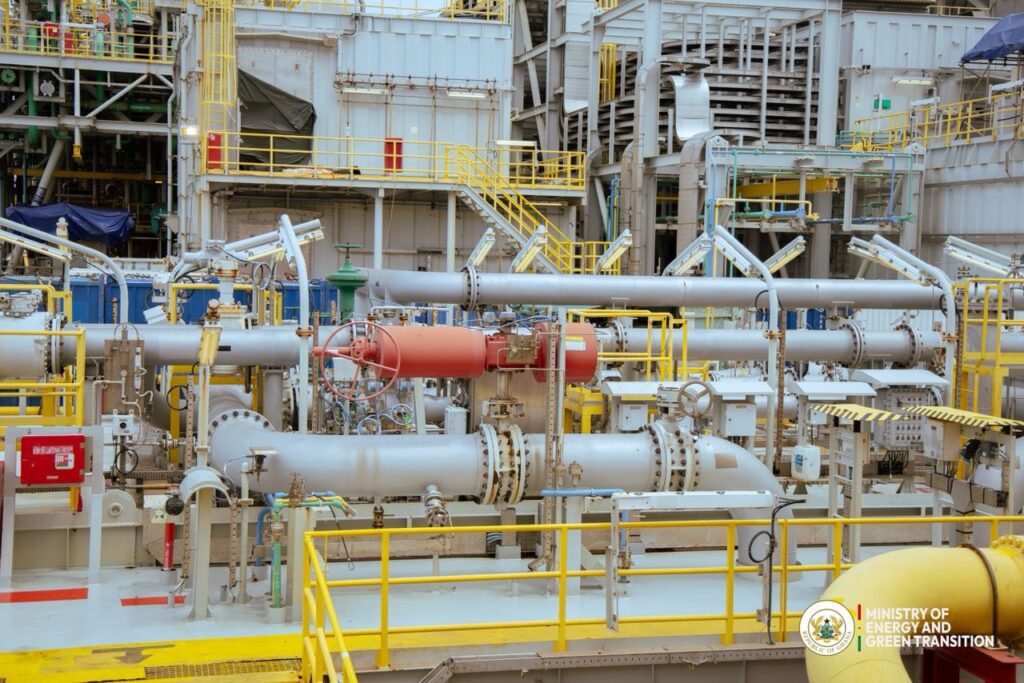
By running domestic crude directly through TOR’s distillation units, Ghana effectively establishes an integrated, self-sustaining energy loop.
Retaining the refining process domestically halts the capital flight associated with international processing fees, keeping the secondary wealth generated by the energy value chain within the local financial ecosystem.
This strategy transforms the domestic oil industry from a simple, extractive enclave into an active catalyst for broader national industrialization.
Job Creation and Industrialization Through Local Processing
The socio-economic implications of localized crude refinement extend deep into the domestic labor market, addressing chronic underemployment within technical fields.
When raw resources are exported, the high-paying, specialized technical roles in chemical engineering, advanced logistics, and refinery maintenance are effectively exported with them to overseas economies.

Reactivating TOR with a steady stream of domestic feedstock forces an immediate expansion of the local industrial workforce. The downstream petroleum sector will see a surge in demand for auxiliary services, including specialized pipeline maintenance, laboratory analysis, industrial safety compliance, and domestic distribution networks.
A refinery cannot function in isolation; its operational viability is inextricably tied to the reliability of the national power grid.
The resolution of the 1.5-billion-dollar debt formerly owed to Independent Power Producers provides the structural foundation required for this industrial leap.
By implementing a transparent, ring-fenced payment schedule and meeting every fiscal milestone, the administration has successfully restored investor confidence and stabilized the generation sector.
READ ALSO: Mahama: Ghana Has Become the Poster Boy for Economic Recovery