Ethiopia is set to hold parliamentary and regional elections on Monday, with Prime Minister Abiy Ahmed’s Prosperity Party widely expected to secure another commanding victory despite ongoing conflicts and political tensions in several parts of the country.
As the East African country attempts to map out its political future amid economic changes, security concerns, and unresolved regional tensions, more than 50 million people have registered to vote in one of Africa’s largest electoral exercises. However, certain unstable areas such as the northern Tigray province, where electoral authorities claim conditions are still inadequate after years of violence and ongoing political unpredictability, will not hold elections.
The election is seen as a significant moment for Abiy, who has dominated Ethiopian politics since coming to power in 2018 after widespread anti-government protests brought an end to the long-standing dominance of the Ethiopian People’s Revolutionary Democratic Front coalition. He later established the Prosperity Party, which won a landslide victory in the 2021 elections, securing 410 of the 484 parliamentary seats.
Political analysts expect a similar outcome this year, with the ruling party benefiting from a fragmented opposition and a nationwide political structure that remains considerably stronger than those of rival parties.
This election comes at a critical time for Ethiopia, Africa’s second-most populous country, which has an estimated population of 135 million people. Nearly half of its citizens are under the age of 18, making employment, economic opportunity and social development central concerns for voters.
Throughout the campaign, Prosperity Party candidates have highlighted the government’s economic record, pointing to improvements in food security, infrastructure investment and growth projections that officials say could exceed 10 per cent in 2026. If achieved, that rate would place Ethiopia among the fastest-growing economies on the continent.
Moreover, government supporters argue that these achievements demonstrate the benefits of reforms introduced under Abiy’s leadership and provide a foundation for continued development despite global economic pressures and domestic challenges.
Yet the election is taking place against a backdrop of persistent insecurity in key regions.
In Oromiya, Ethiopia’s largest region and Abiy’s home region, conflict between government forces and the Oromo Liberation Army has continued for several years. The conflict has resulted in hundreds of deaths and displaced communities, reflecting long-standing disputes over political representation and governance.
Neighbouring Amhara has also experienced significant unrest. Since 2023, the Fano militia has expanded its influence across large areas of the countryside, creating security challenges that have limited government control in some districts.
As a result, voting will not be conducted in at least eight constituencies in Amhara, reducing participation in one of Ethiopia’s most politically influential regions.
The absence of voting in Tigray is expected to be another defining feature of the election. The region was devastated by a civil war between 2020 and 2022 that researchers estimate caused hundreds of thousands of deaths.
Although a peace agreement formally ended the conflict, tensions have persisted. Political uncertainty intensified recently when Tigray’s main political party moved to reassert control over regional administrative structures, prompting warnings from government officials and analysts about the possibility of renewed unrest.
Ethiopia Votes Under Shadow of Conflict
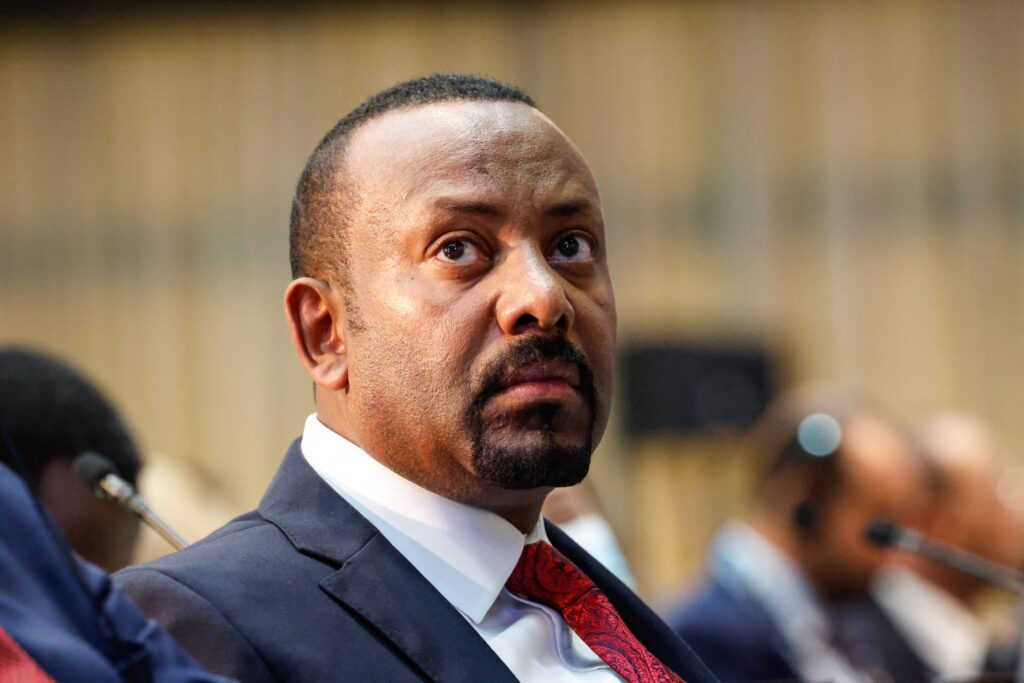
Despite these challenges, the Prosperity Party faces relatively weak opposition nationally.
Many opposition parties remain divided by internal disagreements, leadership rivalries and limited organisational capacity. Several groups have struggled to establish a national presence capable of challenging the ruling party’s dominance.
Opposition leaders have accused the federal government of creating an uneven political environment by arresting political figures and imposing restrictions that limit political activity. However, the government has rejected those allegations, insisting that legal actions taken against individuals are unrelated to their political affiliations.
The election has also renewed debate about Ethiopia’s democratic trajectory under Abiy’s leadership.
When he first entered office, Abiy won widespread praise for introducing political reforms that opened civic space, released political prisoners and relaxed restrictions on journalists and civil society organisations. His efforts to end decades of hostility with neighbouring Eritrea earned him the Nobel Peace Prize in 2019.
However, these early reforms have been reversed in recent years. Human rights organisations and opposition figures have accused the government of restricting civic freedoms, detaining journalists and overseeing military campaigns marked by serious allegations of abuses.
The ruling Prosperity Party has positioned itself as the political party most suited to maintain stability while promoting economic progress. The election will serve as a crucial test of public confidence in Prime Minister Abiy Ahmed’s leadership as Ethiopia struggles with ongoing security challenges, economic pressures, and political uncertainty, even though analysts generally expect the party to maintain its dominance when results are announced on June 11.
READ ALSO: Mahama: Ghana Has Become the Poster Boy for Economic Recovery