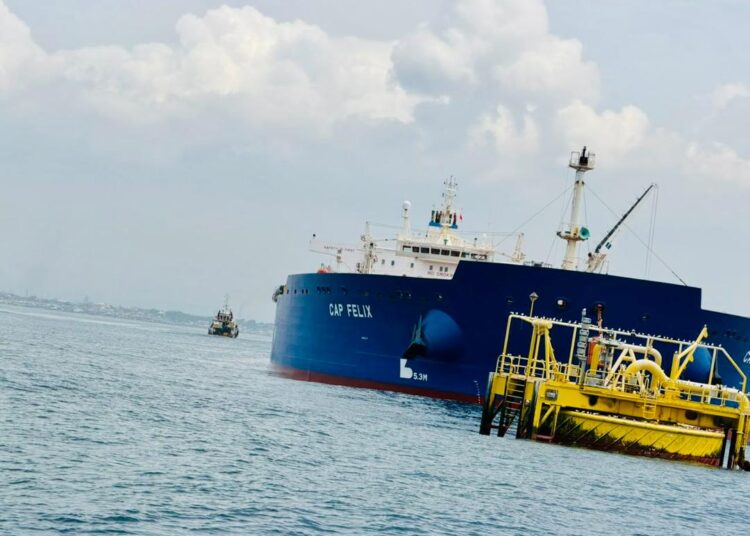
Tema Oil Refinery (TOR) has announced the arrival of approximately 1,000,000 barrels of premium Bonga Crude Oil aboard the vessel MT Cap Felix, a major step forward for the facility’s ongoing refinery revitalization and crude processing program.
The arrival of this massive cargo at the port of Tema on May 27, 2026, signals a critical turning point for the state-owned refinery as it scales up processing capacity to meet urgent local fuel demands.
This strategic injection of industrial feedstock is specifically designed to support the refinery’s operational recovery, driving a sustainable resurgence in domestic fuel production while buffering the local economy against external energy supply shocks.
“The receipt of the Bonga Crude marks another significant milestone in TOR’s efforts to restore stable refining activities, improve national energy security, and reduce Ghana’s dependence on imported refined petroleum products. Management of TOR expressed appreciation to the Government of Ghana, regulatory institutions, financial partners, and all stakeholders whose support continues to contribute to the refinery’s operational resurgence.”
Tema Oil Refinery (TOR)
The crude oil cargo was successfully purchased from Shell and delivered through TOR’s tolling partner, Fujeirah/Triangle Commodities Trading (TCT).
This collaborative transactional arrangement serves as a crucial commercial bridge, enabling the facility to restart its primary processing units without anchoring excessive capital in raw material procurement.
By utilizing a tolling model, the refinery can efficiently process high-grade feedstock on behalf of trading partners, ensuring a steady, reliable stream of refined petroleum products directly into the Ghanaian market.
“TOR further reaffirmed its commitment to transparency, operational excellence, environmental responsibility, and the long-term transformation of the refinery into a competitive and commercially sustainable energy hub for Ghana and West Africa,” the authority assured.
Favorable Refining Yields and Technical Capacity
Bonga Crude, known for its high-quality low-sulphur characteristics and favorable refining yields, is uniquely suited to the configuration of the processing infrastructure at Tema.
Because of its low-sulphur profile, the feedstock requires less extensive desulphurization processing, allowing the refinery to optimize its thermal cracking and distillation units while minimizing wear on industrial catalysts.

This inherent chemical advantage significantly reduces operational overhead costs and maximizes the volumetric output of high-margin products.
The incoming one million barrels are expected to produce substantial volumes of premium petroleum products including liquefied petroleum gas (LPG), gasoline, diesel, kerosene, aviation turbine kerosene (ATK), and heavy fuel oil for the domestic and regional markets.
Localizing the processing of these essential liquids creates an immediate, highly efficient supply chain loop that eliminates long-distance maritime freight fees and premium insurance charges typically attached to imported finished fuels.
Enhancing National Energy Security and Macroeconomic Stability
National energy security stands as the primary beneficiary of this processing campaign, as a fully functional domestic refinery provides an immediate shield against international supply disruptions.
By converting raw crude into consumable fuels locally, the state systematically reduces its vulnerability to volatile geopolitical events that frequently trigger unexpected global energy crises.
Maintaining a reliable stockpile of locally processed gasoline, diesel, and aviation turbine kerosene (ATK) safeguards critical transport networks, manufacturing operations, and emergency services from sudden, unpredictable market shortages.
From an economic perspective, reviving consistent refining activities directly tackles Ghana’s persistent structural trade imbalances by keeping capital within the domestic financial system.

Currently, the continuous bulk purchase of foreign refined petroleum products creates a massive, ongoing demand for hard foreign currencies, putting severe, downward pressure on the local Ghanaian Cedi.
Substituting these expensive finished imports with products refined inside the country significantly eases the burden on national foreign exchange reserves, building long-term macroeconomic resilience and creating a more stable environment for broader commercial investment.
Regional Energy Transformation and Market Competitiveness
The long-term transformation of the refinery into a competitive and commercially sustainable energy hub represents a major strategic shift for the broader West African sub-region.
By proving it can consistently process complex utility-scale cargoes like Bonga crude, the facility builds the operational track record needed to secure larger, multi-year tolling partnerships with international commodity traders.
This growing industrial reliability positions the country as a primary regional supplier, capable of exporting high-quality, low-sulphur fuels to neighboring landlocked nations and regional coastal markets.

Furthermore, this operational resurgence establishes a strong foundation for future infrastructural upgrades, drawing the private sector capital required to expand storage capacities and modernize automated process controls.
As the refinery increases its processing efficiency, it drives down the per-barrel cost of production, making locally refined products highly competitive against European imports.
This steady advance in regional market position supports the overarching goal of turning the industrial zone of Tema into a self-sustaining, highly profitable powerhouse for energy commerce across West Africa.
READ ALSO: GFA President Tight-lipped Over Kobbie Mainoo’s International Allegiance