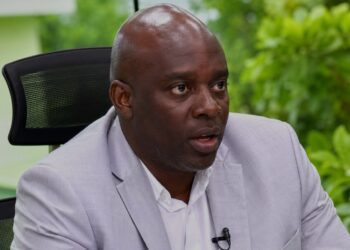
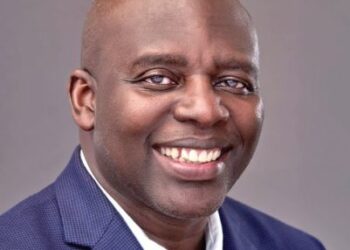
Author: Dr. John Osae-Kwapong, Democracy and Development Fellow, CDD-Ghana, and Project Director, the Democracy Project
When insidious remarks are made about how citizens must reconcile their faith with their political choices — and the consequences thereof — or about what a future president’s faith tradition might mean for the country, it is tempting to let such remarks pass without dignifying them with a response.
However, in a country where our two major faith traditions, Christians and Muslims, have lived in harmony, participated productively in national life, and contributed their fair share to public service, it is incumbent on citizens to raise their voices and push back against any narrative that seeks to weaponize religion as a wedge issue in our political contestation.
Citizens vote for candidates for different reasons, and I can’t begrudge anyone what informs their vote. In Afrobarometer Round 7 (2017), citizens were asked which candidate they voted for in the most recent (2016) election, and their main reason for that choice.
Here are the top three reasons Ghanaians gave: a) the candidate I voted for can do a better job managing the affairs of the country (41%); b) the campaign promises, policies, and programs of the candidate I voted for are more credible (41%); and c) I voted for this candidate because we belong to the same political party (11%).
The question was not repeated in Round 9 (2022) to ask about the 2020 election. Nonetheless, this single data point is perhaps suggestive of a simple point – it is issues, not identity politics, that drive voters to the polls.
Faith, Politics, and Running for President
Over the course of our Fourth Republic, it is no secret that matters of faith have been central to how candidates frame their election-year narratives as they try to win over voters. From slogans such as ‘It is God who elects leaders’ and ‘The battle is the Lord’s,’ to the many religiously themed songs played at campaign rallies, this is illustrative of who we are as a people.
Yes, we are a secular nation, but public life is not divorced from our faith. I often refer to the Attorney General’s submission in the National Cathedral case that came before the Supreme Court. The articulation of how Ghanaians must think about the separation of church and state was brilliantly done, and it only confirmed for me that our brand of secularism is unique.
Perhaps J.S. Mbiti was right when he described the African as “notoriously religious,” a compliment and not a derogatory remark. Candidates have therefore worn their faith overtly in campaigning for public office without this causing unease among citizens.
That is why it is unfortunate that some would have us believe we should feel uneasy, or fear some spiritual repercussion, should we vote for a candidate whose faith tradition differs from our own. Such rhetoric is a distraction from the issues that truly matter, and it must not be allowed to misguide us on election day, when we decide who our next president will be.
Dr. Bawumia and the 2028 Presidential Race
One does not have to agree with Dr. Bawumia’s position on public policy, but any fair-minded person will agree that he is not a candidate who has worn his faith, whether as a candidate or during his time as Vice-President, in a way that suggests he sees it as a political tool to be weaponized to create divisions.
The opposite is true, and his outreach to those of other faith traditions during the 2024 election is testament to this. The 2028 election, therefore, should never be allowed to become a contest about whose faith tradition we feel comfortable with. What is at stake for this country is much bigger than matters of one’s faith tradition.
During the New Patriotic Party’s flagbearer race, and watching it unfold, one thing was clear to me – the true statesman in the race was Dr. Bawumia. The race was surely competitive, but I hold the strong belief that the party did the right thing by choosing him as flagbearer for a second time.
That is half the battle. The next half of the battle is winning the country over in the 2028 presidential election. It will not be an easy task, but that is what competitive elections are about.
What I believe is this: the man who emerged the morning after the 2024 election, who conceded defeat well ahead of an Electoral Commission declaration, who showed statesmanlike qualities and put country first, will show up every day making a case for his presidency based on the issues that matter to Ghanaians.
I hope voters grant him the audience to at least listen to what he has to say. To do that, though, means being discerning enough to recognize this kind of fearmongering for what it is, and resolute enough to reject it.
READ ALSO: Okoe-Boye, COKA, Jeff Konadu, Others Win NPP Regional Chairmanship