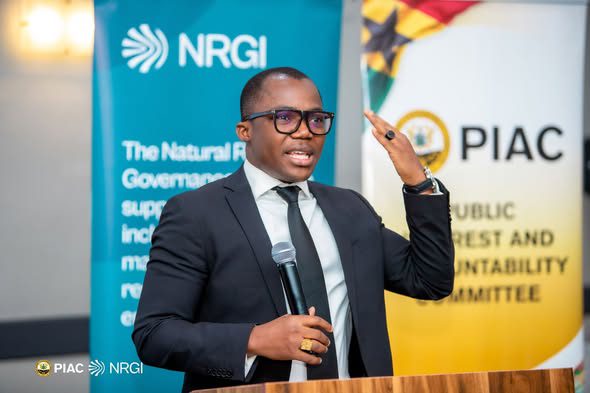
The Natural Resource Governance Institute (NRGI) has warned that persistent regulatory delays and institutional vulnerabilities within Ghana’s extractive sector are actively undermining the state’s capacity to maximize economic and developmental returns from its natural wealth.
Commenting on the recent ownership shifts at the Ewoyaa lithium project, the international think tank highlighted how protracted administrative timelines create market friction, diluting the impact of progressive fiscal reforms.
This warning arrives at a critical turning point for the West African nation as it attempts to manage its transition minerals, demonstrating that administrative bottlenecks can jeopardize the commercial viability and public benefits of long-term mining assets.
“Prolonged uncertainty can be as damaging as suboptimal fiscal terms, as it increases perceived risk, raises financing costs, and ultimately erodes the state’s ability to capture full value from its mineral endowment.”
Natural Resource Governance Institute (NRGI)
Building upon this structural critique, the policy institute observed that the administrative journey surrounding the Ewoyaa mining lease stretching from the foundational 2023 agreement to a late 2025 legislative renegotiation and its subsequent March 2026 ratification unveiled significant institutional weaknesses.
These delays exposed deep coordination gaps between the Executive, Parliament, and mineral regulatory bodies, eroding the predictability required to anchor a stable transition minerals sector.

Although the state eventually adopted a responsive sliding-scale royalty regime to optimize returns, the lengthy bureaucratic impasse exacted clear economic costs, sending mixed signals to international markets regarding Ghana’s governance stability.
The Tangible Toll of Bureaucratic Delays on National and Local Benefits
The direct consequences of regulatory paralysis extend far beyond abstract macroeconomic metrics, manifesting as real socioeconomic losses for both local communities and the central government.
For the host populations residing near the Ewoyaa deposit, the prolonged postponement of active mining operations has directly translated into “deferred employment, delayed compensation frameworks, and stalled local development investments,” which collectively exacerbate regional mistrust.
Nationally, the state has actively forfeited near-term revenues that could have buffered the fiscal budget during a global green energy surge.

By allowing policy stagnation to linger, the government inadvertently inflates the perceived risk profile of its mining sector. T
his structural inefficiency drives up financing costs for ongoing operations and heavily reduces the net financial value the state can eventually capture from its natural resource endowment.
Governance Vulnerabilities and the Risks of Sudden Ownership Shifts
Compounding these operational delays are systemic governance vulnerabilities, which NRGI’s corruption risk assessment identifies as major hazards within Ghana’s lithium value chain.
Systemic flaws such as “opacity in licensing decisions, high levels of political discretion, and weak disclosure practices” create environments ripe for rent-seeking, extending from initial awards into critical post-licensing changes like ownership transfers.
The recent reported transfer of the Ewoyaa project to Zhejiang Huayou Cobalt perfectly illustrates these governance anxieties.
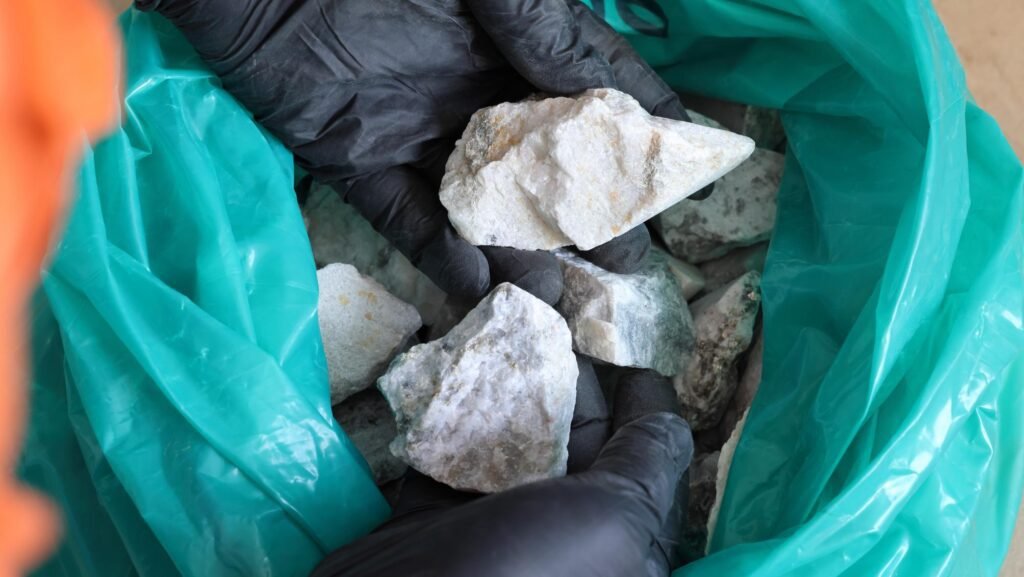
While the entry of this heavily capitalized, vertically integrated global giant could rescue the project from Atlantic Lithium’s financial constraints such as its struggle to secure US$37.7 million in development capital the transaction’s opaque valuation dynamics raise red flags.
Market analysts point to potential undervaluation, suggesting that the state, along with its Minerals Income Investment Fund (MIIF), may fail to realize fair value from its strategic initial investments.
Value Chain Control and the Downstream Processing Dilemma
The structural transformation of Ghana’s lithium sector remains heavily dependent on whether new foreign ownership aligns with national industrialization objectives.
While Zhejiang Huayou Cobalt possesses the technical expertise to establish localized refining infrastructure, its commercial motivations remain heavily questioned.
Observers point to the company’s record in Zimbabwe, where it rapidly completed a US$400 million processing plant in October 2025, yet subsequently exported what was termed “the continent’s first lithium sulphate” rather than fully finished battery-grade materials.
NRGI’s empirical analysis of domestic refining advises a cautious “mine and monitor” strategy, given that short-term local refining could require a state capital commitment of up to US$500 million.
Consequently, without rigid transparency and stringent enforcement of downstream processing agreements, the new owners may opt to ship raw or semi-processed ore back to China, which currently commands nearly 73% of global refining capacity, leaving Ghana isolated from the most lucrative segments of the global battery value chain.
READ ALSO: Ghana’s 6.4% Q1 Growth Hides Looming Moderation Risks