

Motorists across Ghana who have watched fuel prices climb steadily despite being only halfway through the current petroleum pricing window may soon face further increases if global oil market conditions remain unstable, according to the Chief Executive Officer of Star Oil, Kwame Tieku.
In a detailed explanation shared on his social media platform, Mr. Tieku attributed the gradual upward adjustments at fuel stations to soaring international petroleum prices, exchange rate pressures and the operational realities confronting oil marketing companies (OMCs) in Ghana’s deregulated downstream petroleum market.
His remarks come at a time when many consumers have questioned why pump prices have continued to rise before the commencement of the next official pricing window on August 1, traditionally the period when significant fuel price adjustments take effect.
Rather than being driven by arbitrary pricing decisions, the Star Oil CEO argued that the increases reflect mounting replacement costs facing petroleum marketers as global market conditions deteriorate.
World market prices of gasoline have increased by nearly 20 per cent, while diesel prices have risen by approximately 25 per cent. Over the same period, the Ghana cedi has also experienced some depreciation against the US dollar.
Kwame Tieku, Chief Executive Officer, Star Oil
Global Markets Reshape Local Pump Prices
Although Ghana operates a bi-monthly petroleum pricing system under which pump prices are reviewed every two weeks, Mr. Tieku explained that extraordinary movements in international oil markets can compel marketers to make adjustments before a pricing window officially ends.
According to him, the assumption that prices remain fixed throughout an entire pricing cycle only holds under relatively stable global conditions.
Recent developments in the international petroleum market have significantly altered that landscape.

Crude oil prices have experienced renewed upward pressure in recent weeks, pushing refined petroleum product prices higher across global trading markets. Combined with the cedi’s recent depreciation against the US dollar, the currency used for international petroleum transactions, the cost of importing fuel into Ghana has increased considerably.
If those trends continue into the next pricing cycle, Mr. Tieku warned that consumers should expect another round of increases from August 1 unless government introduces temporary interventions similar to measures implemented during the recent geopolitical tensions involving the United States, Israel and Iran.
The comments underscore the extent to which Ghana’s downstream petroleum market remains exposed to international developments despite improvements in domestic macroeconomic stability over recent months.
Replacement Costs Drive Daily Pricing Decisions
The Star Oil CEO also offered a rare insight into how Ghana’s liberalised petroleum market functions behind the scenes.
Unlike regulated pricing systems, Ghana’s downstream sector allows more than 200 licensed OMCs to determine retail prices based largely on prevailing import costs.
According to Mr. Tieku, most marketers purchase petroleum products through daily cash-and-carry transactions.
That means every new consignment is acquired using current international product prices and the prevailing exchange rate.
As replacement costs increase almost daily during periods of market volatility, marketers are compelled to revise pump prices in order to remain commercially viable.
As their replacement cost rises almost every day, these companies have little choice but to adjust pump prices accordingly.
Kwame Tieku, Chief Executive Officer, Star Oil
He explained that failing to reflect rising replacement costs could create arbitrage opportunities, allowing competitors or bulk buyers to exploit price differences across the market.
Consequently, daily price revisions become a commercial necessity rather than a pricing strategy.
Why Star Oil Sometimes Delays Price Adjustments
Mr. Tieku noted, however, that Star Oil follows a different procurement model from many other marketers.
Rather than relying exclusively on daily purchases, the company buys substantial volumes in advance, enabling it to maintain relatively stable prices throughout much of a pricing window.
This approach allows Star Oil to absorb short-term international market fluctuations while offering customers more stable pump prices.
Yet that same strategy can become difficult to sustain when competitors begin increasing prices rapidly.
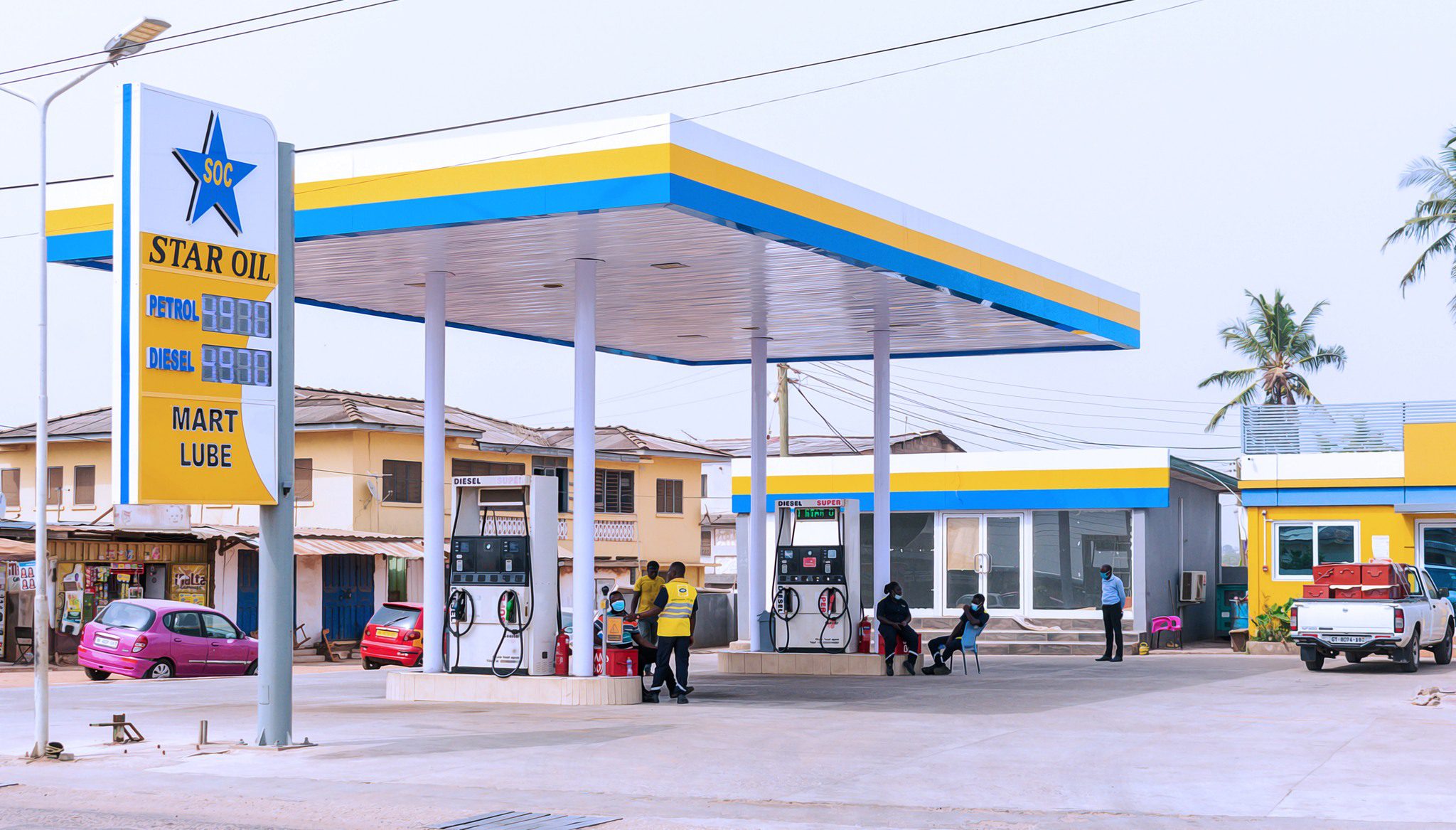
As motorists migrate to stations offering comparatively cheaper fuel, Star Oil’s pre-purchased inventory can be depleted much faster than originally planned.
Once those stocks are exhausted, the company must replenish supplies using significantly higher international replacement prices.
It is at that stage, Mr. Tieku explained, that gradual price increases become unavoidable.
The increases therefore reflect the cost of acquiring new inventories rather than changes in the value of fuel already held in storage.
According to him, the company remains committed to cushioning consumers from global market shocks whenever possible.
Volatility Highlights Ghana’s Import Dependence
Beyond explaining current pump price movements, the developments illustrate Ghana’s continuing dependence on imported refined petroleum products despite ongoing efforts to strengthen domestic refining capacity.
Because international product prices, freight costs and foreign exchange movements determine the import parity price used across the downstream sector, local fuel prices remain highly vulnerable to external economic and geopolitical developments.
This reality reinforces long-standing calls for expanded domestic refining capacity capable of reducing Ghana’s exposure to international supply disruptions.
Government has in recent months renewed efforts to revive the Tema Oil Refinery while advancing plans for the proposed Petroleum Hub project, both aimed at strengthening value addition within Ghana’s petroleum industry.
Although these initiatives are expected to improve long-term energy security, imported refined products continue to dominate domestic fuel supply.
Consequently, fluctuations in global petroleum markets are transmitted relatively quickly to local pump prices.
Market Stability Remains Key for Consumers
For households and businesses already grappling with rising transport and operational costs, the latest developments present another reminder of the delicate balance between international energy markets and domestic economic stability.
While the cedi has shown periods of resilience this year, sustained increases in global petroleum prices can still outweigh exchange rate gains and place upward pressure on fuel costs.
Mr. Tieku expressed hope that international market conditions would stabilise before the commencement of the next pricing window.
Until then, motorists should expect petroleum marketers to continue responding to replacement costs as they seek to balance commercial sustainability with consumer affordability.
His explanation provides one of the clearest public accounts in recent months of why fuel prices can change even within an existing pricing window, offering consumers greater transparency into the market dynamics that ultimately determine the prices displayed at fuel pumps across the country.
READ ALSO: GSE Finishes Unstoppable Week with Stunning Market Explosion