
IMANI Vice President and policy analyst, Bright Simons has raised serious queries regarding claims made by the Finance Minister concerning a dramatic reduction in the operational cost per ounce of gold under the state’s trading mechanism.
Analyzing the recent budget disclosures, Bright Simons questioned the official narrative that cost metrics associated with gold purchases plummeted from 14.5 per cent to 5.0 per cent following administrative restructuring.
He highlighted that the lack of explicit definition surrounding what constitutes “cost” in the ministry’s report undermines the credibility of the reported efficiency gains in Ghana’s extractive governance.
“The Finance Ministry has taken over from the Bank of Ghana in financing the GoldBod trading book. However, the claim that the cost per ounce of gold went down “from 14.5 per cent of gold purchased to 5.0 per cent” (para. 351, p. 38) is curious as they don’t define what “cost” means.”
IMANI Vice President and policy analyst, Bright Simons
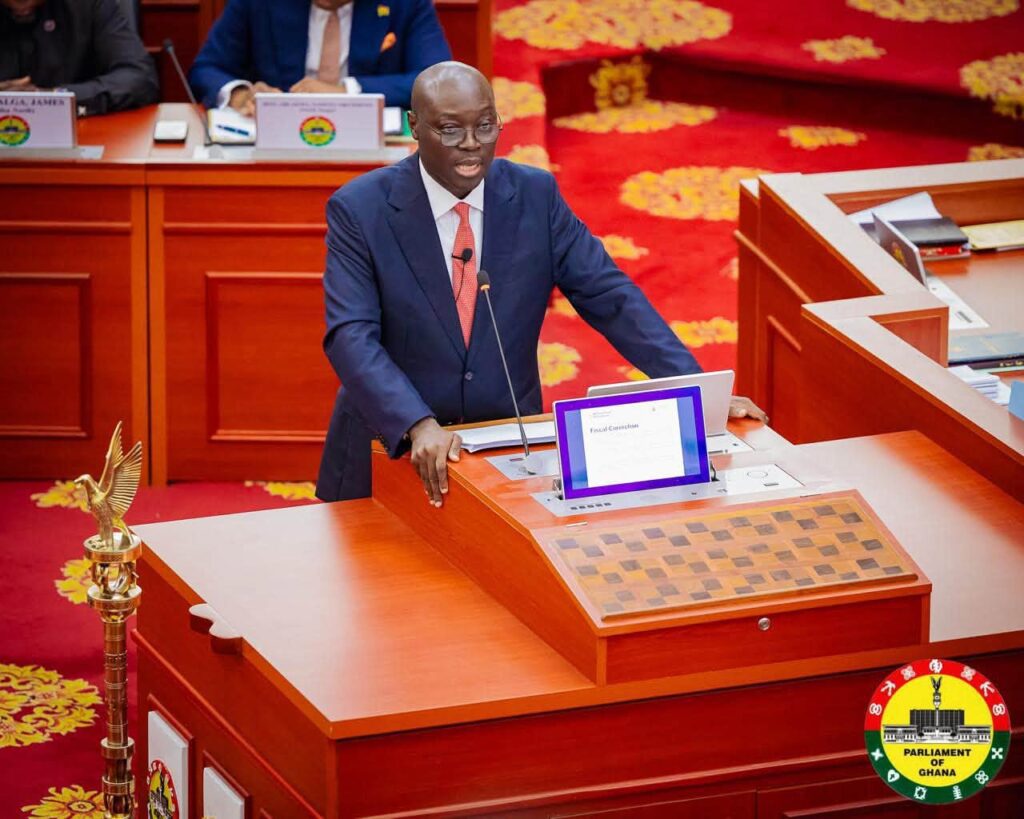
Expanding on his initial critique, the veteran policy expert pointed to a glaring mathematical disconnect between the Finance Ministry’s purported percentages and actual budgetary provisions.
Applying the government’s 5 per cent expenditure figure to the total gold purchase outlay of US$800 million an amount that does not reconcile with the GH¢5 billion allocation set aside for GoldBod in the budget.
This transparency gap comes at a delicate juncture, as the Ministry of Finance officially assumes control over financing GoldBod’s trading book from the Bank of Ghana, directly transferring commercial market risks onto the sovereign balance sheet.
The Finance Minister’s Perspective and GoldBod Shift
From the perspective of the Finance Ministry, the transition of GoldBod’s financial backing from the Bank of Ghana to central government accounts represents a strategic consolidation of state-led gold operations.
Treasury officials contend that streamlining the precious metal trading book under direct ministerial oversight improves accountability, enhances foreign exchange backing, and curbs informal gold leakage.

In paragraph 351 on page 38 of the official policy document, the ministry asserts that structural reforms effectively slashed the unit cost of gold acquisitions from “14.5 per cent of gold purchased to 5.0 per cent.”
The executive maintains that this 9.5 percentage point drop reflects enhanced procurement leverage, optimized supply chain logistics, and reduced intermediary markups within the small-scale mining sector.
However, the ministry’s narrative assumes a standardized cost model without clarifying whether these figures account for refining fees, insurance, transport differentials, or local purchasing bonuses.
By presenting the operational savings as a victory for fiscal prudence, the government aims to assure investors that state intervention in the extractive sector is yielding measurable savings while bolstering national reserves.
Critical Analysis of Discrepancies and Fiscal Risks
In contrast, IMANI’s Bright Simons delivers a sharp counter-narrative, arguing that the reported metrics obscure underlying financial realities.
Bright Simons emphasizes that without defining the precise components of “cost per ounce,” the government’s claims remain analytical abstractions rather than verifiable accounting achievements. His quantitative breakdown exposes a substantial mismatch: if purchasing US800 million.
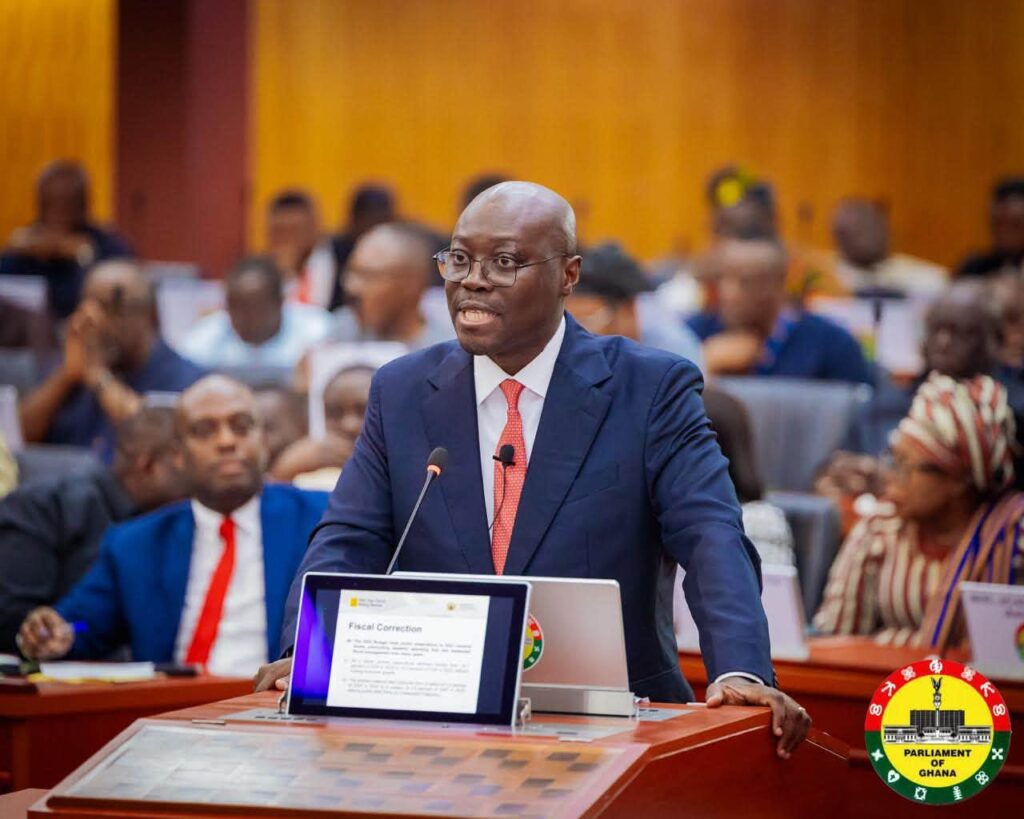
At current exchange rate valuations, this figure drastically exceeds the GH¢5 billion budgeted for GoldBod, signaling either an understated budgetary allocation or an inaccurate cost ratio.
Furthermore, Simons cautions that transferring the trading book from the central bank to the ministry exposes public funds to direct market volatility.
When the Bank of Ghana managed the program under its monetary stabilization mandate, absorption of trading margins occurred off-budget; now, any operational losses or cost miscalculations will directly impact the national fiscal deficit and taxpayer resources.
Debt Dynamics and Vulnerability to Gold Volatility
Beyond the immediate arithmetic of GoldBod, Simons raises deeper concerns regarding Ghana’s broader macroeconomic posture and escalating public debt trajectory.
National debt metrics show that the country’s debt stock has climbed to approximately ~$64 billion, up significantly from the $55 billion reported by Refinitiv Eikon on the eve of the historic 2022 sovereign default.

Bright Simons observes that “much of the improvement” cited by economic managers in recent debt-to-GDP ratios is heavily exchange rate related rather than driven by structural debt reduction.
More critically, the extractive analyst warns that “gold now props up everything” across the entire economy, creating a precarious single-commodity dependency.
With gold revenue single-handedly underpinning the stability of the cedi, international reserves, tax receipts, and sovereign debt servicing, any sudden downturn in global bullion prices would ripple violently through the financial system.
Bright Simons cautions that should gold prices drop, “everything would be hit,” leaving Ghana’s economic stabilization framework exposed to severe external shocks.
READ ALSO: Expenditure Management Key to Transparency and Accountability in Public Finance