Africa will require an estimated $1 trillion in cumulative investment across its natural gas value chain as global energy demand is projected to increase by 20% by 2055, intensifying the need to develop new gas resources and supporting infrastructure.
The investment requirement comes as the Gas Exporting Countries Forum (GECF) projects global energy demand to rise from 641 exajoules (EJ) in 2024 to 768 EJ by 2055, driven by population growth and expanding economic activity.
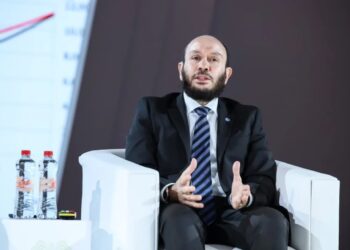
Abubakar Abbas, Senior Energy Forecast Analyst at the GECF, said the anticipated growth would create opportunities for natural gas and renewable energy, reinforcing the need for investment in production, transportation and associated infrastructure.
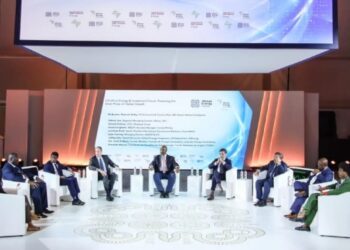
Speaking at the Energy Finance Forum during African Energy Week (AEW) 2026 in Cape Town, Abbas highlighted the scale of the investment challenge, noting that much of the gas needed to meet future demand will have to come from fields that are not yet producing.
The forecast presents African gas producers with an opportunity to attract capital into exploration, processing, pipelines and liquefied natural gas (LNG) facilities.
However, converting projected demand into actual investment will depend on project economics, access to financing, infrastructure readiness and the ability of producers to secure long-term markets.
Future gas supply depends on new projects
The scale of future production requirements is central to the GECF’s outlook.
Abbas said 86% of global natural gas production by 2055 is expected to originate from fields that are not currently producing, highlighting the importance of developing new resources to sustain supply.
The projection has significant implications for investment decisions across the gas industry. Exploration and production projects require substantial upfront capital, while pipelines, processing facilities and LNG terminals must often be developed alongside new supply to transport gas to consumers.
For Africa, the challenge is particularly important because resource availability does not automatically translate into commercially viable production.
Discoveries must be developed, infrastructure financed and markets secured before reserves can generate revenue.
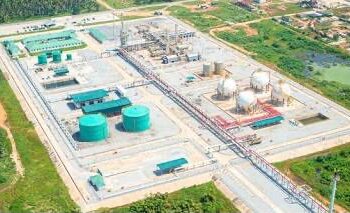
The estimated $1 trillion investment requirement therefore extends beyond drilling new wells. It encompasses the infrastructure needed to connect gas resources to power plants, industrial users, households and export markets.
Failure to coordinate these investments could leave producers with undeveloped resources or insufficient infrastructure to monetise their gas, even as global demand expands.
Power generation to drive changing gas demand
The GECF expects natural gas to retain an important role in the global energy mix, particularly as electricity systems integrate more renewable energy.
According to Abbas, the share of natural gas demand associated with power generation is projected to increase from 35% in 2024 to 39% by 2055.
Meanwhile, the share of gas demand used for residential purposes, including heating, is expected to decline.
Abbas said the changing demand profile would strengthen the importance of gas in electricity systems, where it can provide dispatchable generation to complement variable renewable sources.
“LNG’s share of power generation is projected to increase from 35% currently to 39% by 2055, while its share of demand for domestic use and heating is expected to decline,”
The outlook points to a changing role for gas, with electricity generation expected to become a more significant source of demand.
However, the investment case will differ across markets. Countries with expanding electricity demand and inadequate generation capacity may see opportunities to use gas to support power supply, while the commercial viability of new infrastructure will depend on fuel costs, electricity tariffs, available alternatives and the reliability of transmission networks.
For African economies, this creates a policy question: how can new gas investment support reliable and affordable electricity without creating long-term financial commitments that become difficult to sustain as energy technologies and market conditions change?
LNG to reshape global gas trade
The projected growth in gas demand is also expected to increase the importance of LNG in connecting producers with international markets.
North America, Eurasia, the Middle East, Africa and Latin America are expected to contribute to future supply, while demand growth is anticipated across the Middle East, Eurasia, North America and Africa over the coming three decades.
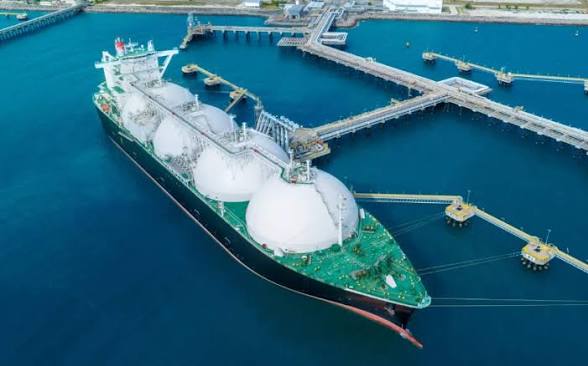
LNG offers producers greater flexibility to supply markets that are not connected by pipelines. But that flexibility comes with substantial capital requirements, including liquefaction plants, specialised vessels, storage facilities and receiving terminals.
For African producers seeking to expand exports, the prospect of stronger global gas demand could improve the case for developing LNG infrastructure.
Yet projects will still need to compete with alternative suppliers and demonstrate that their costs, delivery schedules and contractual arrangements can support acceptable returns.
The projected demand growth should therefore be viewed as a potential market opportunity rather than a guarantee that every proposed African gas project will attract financing.
Africa faces a capital mobilisation test
The $1 trillion investment estimate places financing at the centre of Africa’s gas development ambitions.
Mobilising capital on this scale will require participation from international oil and gas companies, development finance institutions, commercial lenders and domestic investors.
It will also require governments to establish credible regulatory frameworks and ensure that infrastructure projects can recover their costs.

For resource-producing countries, investment decisions must balance export revenues against domestic energy needs.
Gas can support electricity generation, industrial development and access to modern energy services, but export-oriented projects may not automatically improve domestic supply unless local market arrangements and infrastructure are deliberately incorporated.
This distinction matters for African economies seeking to address energy poverty while positioning themselves as suppliers to international markets.
The scale of the financing requirement also raises questions about capital allocation. Investors will assess African projects against competing opportunities elsewhere, taking account of construction costs, political and regulatory risks, financing conditions and expected demand over the life of an asset.
Countries that can demonstrate commercially credible projects, transparent rules and clear market arrangements may be better positioned to attract the investment required to develop their resources.
Energy transition adds uncertainty to long-term investments
The GECF’s outlook anticipates declining demand for coal as natural gas and renewable energy assume larger roles in meeting future energy needs.
The projected shift creates opportunities for gas producers, particularly where gas can displace more carbon-intensive fuels or support electricity systems with growing renewable capacity.
However, long-lived gas infrastructure also faces uncertainty over future climate policies, technological change and the pace of renewable energy deployment.
These factors can affect the long-term demand and profitability assumptions underpinning new investments.
For African governments, the challenge is to assess gas projects against both immediate development needs and the possibility of changing global energy markets over the coming decades.
The central question is not simply whether global energy demand will increase, but whether individual projects can deliver affordable energy, reliable supply and sustainable economic returns under different market conditions.
The GECF’s forecast provides a case for examining the scale of future gas investment, but the projected $1 trillion requirement will only translate into development gains if financing is matched by viable projects and clear domestic energy priorities.
As Africa weighs its role in the future global energy market, the ability to mobilise capital will be important.
Equally important will be ensuring that new gas infrastructure strengthens energy security and industrial capacity while remaining commercially and financially sustainable.
READ ALSO: Mahama Charges New Ambassadors to Champion Ghana’s Interests