African and Caribbean energy leaders are calling for stronger cross-border investment, technology transfer and enforceable local-content rules to help emerging oil and gas producers retain more value from their natural resources, warning that cooperation will deliver limited benefits unless it translates into practical projects and lasting domestic capabilities.
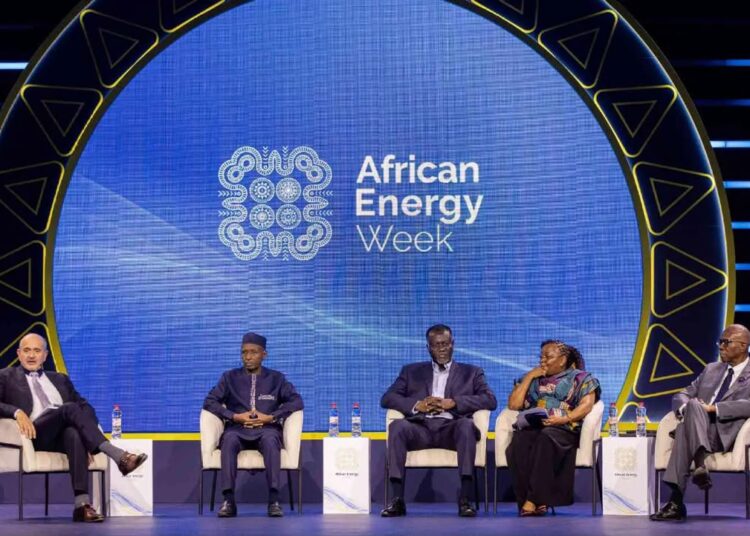
The call was made during a session titled South-South Energy Partnership: Advancing Africa’s Oil and Gas Future in 2026 at African Energy Week (AEW) 2026 in Cape Town, where industry representatives highlighted the need to move beyond resource extraction towards building local industries, sharing technical expertise and distributing project risks and benefits more equitably.
For Ghana, the discussion raises an important policy question as the country seeks to revive upstream production, deepen indigenous participation and attract new investment: how can international partnerships generate lasting domestic capacity rather than leave local businesses dependent on foreign technology, financing and specialist services?
The speakers’ proposals suggest that the value of South-South cooperation should be measured not simply by the number of agreements signed, but by the skills, businesses and industrial capabilities that remain in participating countries.
Partnerships Must Extend Beyond Oil Production
Ndapwilapo Selma Shimutwikeni, Chief Executive Officer of RichAfrica Consultancy, argued that emerging producers such as Namibia could accelerate skills development through joint ventures with countries that have more established petroleum industries.
“From a business perspective, we need to build partnerships that encourage joint ventures between experienced countries and emerging countries like Namibia,”
She added that cooperation should extend across the petroleum value chain rather than concentrate narrowly on extracting crude oil.
“We need to look beyond just oil production and actually look at the entire value chain.”
The distinction matters for countries seeking to maximise the economic returns from petroleum resources.
Exploration and production can generate government revenue and employment, but the wider industrial benefits depend on whether domestic companies can participate in engineering, equipment supply, fabrication, maintenance, logistics and other technical services.
For Ghana, expanding these capabilities could help indigenous businesses secure a greater share of petroleum-sector expenditure.
However, that outcome requires more than encouraging foreign companies to enter the market. Local firms must have access to technical training, finance, technology and contracts that allow them to develop competitive capabilities.
Shared Risk Could Strengthen Regional Cooperation
Gilbert Yevi, Lead Consultant at the Grenada Hydrocarbon Technical Working Group, called for partnerships that distribute risks, technical knowledge and benefits among participants rather than merely substitute one source of finance for another.
“We want cooperation and a collaboration in risk sharing, skill sharing, and sharing in the benefits,” he said.
Yevi also advocated regional training centres that could pool expertise and help emerging producers access established industry capabilities.
Such an approach could be relevant to African countries whose petroleum industries face similar technical and commercial challenges but may lack the scale to support every specialist training facility or service capability independently.
Regional centres could potentially reduce duplicated costs and provide a larger pool of skilled personnel for projects across national boundaries.
Yet their effectiveness would depend on financing arrangements, recognised qualifications, sustained demand from industry and agreement on how participating countries and companies would share the costs and benefits.
For Ghana, regional cooperation could complement domestic training and local-content programmes, particularly in specialist areas where developing expertise independently may be expensive.
It would not remove the need to build a strong national supplier base, but it could widen the opportunities available to local professionals and companies.
Local Content Must Support Industrial Development
Eric Williams, Principal Consultant and President of Royal Triangle Energy Solutions, argued that local-content policies should form part of a broader national development strategy, using petroleum resources to support domestic industries rather than focusing primarily on exports.
“The Trinidad model is about using the molecules to develop the country,” he said.
His argument places the emphasis on what a country produces with its natural resources, not only how much it extracts or exports.
In practical terms, petroleum development can support industrial growth when energy supplies, technical expertise and investment are connected to wider domestic economic activity.
For Ghana, this is relevant to efforts to strengthen indigenous petroleum services and improve the linkages between the upstream industry, manufacturing and other productive sectors.
Domestic companies need opportunities to move beyond low-value subcontracting into more technically demanding work, while government policy must preserve commercial discipline and ensure that local-content requirements are achievable and enforceable.
Local participation targets alone cannot guarantee industrial development. Without adequate skills, financing and access to technology, local firms may struggle to meet project requirements.
Conversely, without credible enforcement and opportunities to compete, domestic companies may find it difficult to build the experience needed to advance.
The policy challenge is therefore to connect local-content rules with measurable progress in technical capability, contract participation, employment and domestic value addition.
National Interests Can Undermine Regional Ambitions
Omar Farouk Ibrahim, Regional Chair for Africa at the World Energy Council, identified national sovereignty concerns as a barrier to practical cooperation among African countries.
“The first question they ask is: ‘Will the industry be in my territory?’ If it’s not, why should I? And for as long as we have this mentality, believe me, this cooperation and collaboration we’re talking about will just be theory,”
His comments highlight a tension between national control over natural resources and the potential gains from regional cooperation.
Governments are accountable for domestic employment, revenue and industrial development, which can make them reluctant to support projects or infrastructure located in neighbouring countries.
Yet some petroleum-sector capabilities are costly to establish and may be more commercially viable when they serve multiple markets.
Shared training facilities, regional technical networks and cross-border supplier partnerships could expand access to expertise while spreading investment costs.

For Ghana, regional collaboration could create opportunities for indigenous service companies to operate beyond the domestic market.
But participation would require commercially sound arrangements that protect national interests while allowing businesses to benefit from a wider customer base.
The central issue is not whether countries should abandon national priorities, but whether they can structure cooperation so that the benefits of shared investment and expertise are sufficiently clear to participating governments and businesses.
Turning Cooperation Into Measurable Results
The AEW discussion placed financing, technology transfer and local capabilities at the centre of the South-South partnership agenda.
These priorities are particularly relevant to emerging producers that want petroleum development to support economic diversification rather than remain concentrated in the extraction and export of raw resources.
For Ghana, progress would mean partnerships that produce identifiable outcomes: more technically capable indigenous companies, improved access to finance, stronger training systems and a greater domestic share of petroleum-sector services and industrial activity.
It would also require accountability. Joint ventures and regional initiatives need clear responsibilities, financing structures and performance expectations if they are to deliver more than broad commitments to cooperation.
The speakers did not announce a specific Ghanaian partnership, financing package or regional training centre arising from the session.
Their remarks instead set out a broader approach to how emerging petroleum producers could organise cooperation to improve their share of the industry’s value.
The message for Ghana is that international partnerships should be assessed by what they enable the country to build.
Investment and production remain important, but the longer-term development gains will depend on whether cooperation strengthens local enterprises, transfers usable expertise and creates industries capable of competing beyond individual petroleum projects.
READ ALSO: GIPA Profiles US$80m North East Investment Projects