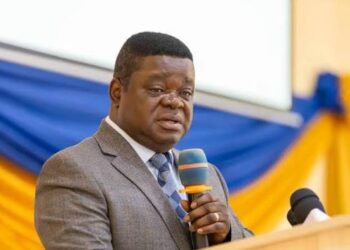
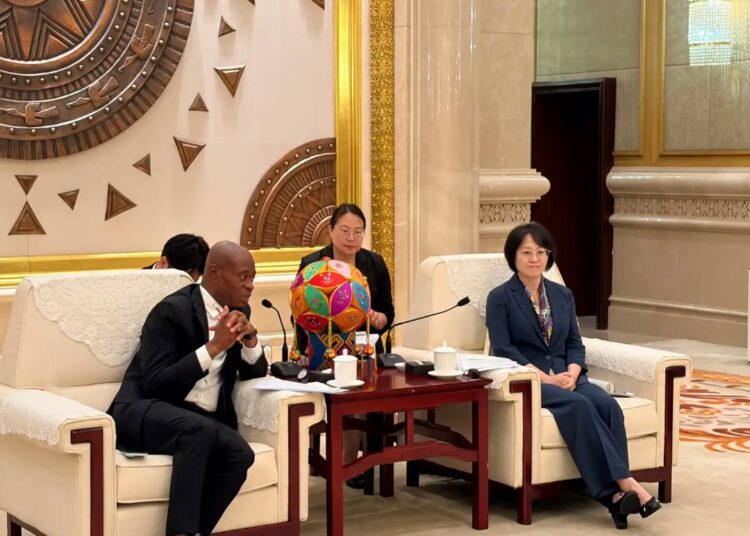
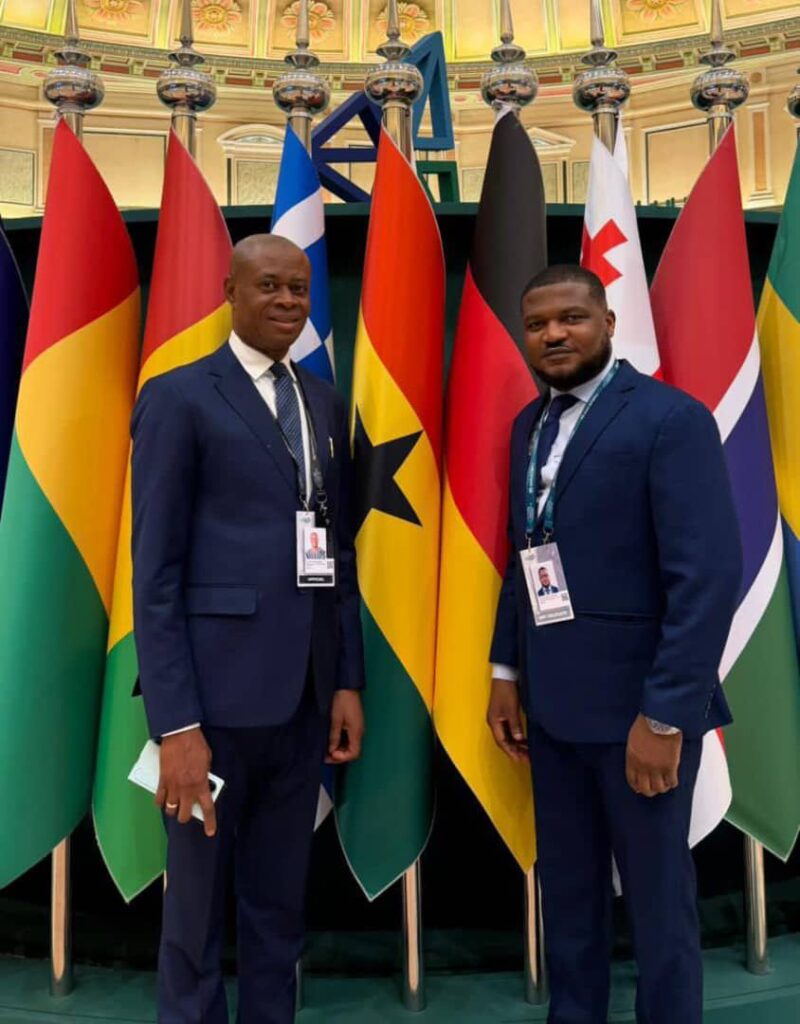
Deputy Minister for Lands and Natural Resources, Hon. Sulemana Yusif, leading a high-powered delegation, has engaged the Vice-Chairperson of the People’s Government of Guangxi Zhuang Autonomous Region, H.E. Sui Guohua, ahead of the China-ASEAN (Guangxi) Mining Cooperation Conference in Nanning.
The crucial meeting aimed at stepping up efforts to attract strategic Chinese investments, drive domestic mineral value addition, and accelerate overall mining sector reforms.
By leveraging international bilateral engagements, the West African nation seeks to reshape its extractives framework from raw material export dependence to an industrial processing economy.
“The courtesy call focused on strengthening government-to-government relations and exploring practical areas of collaboration in mineral exploration, technology transfer, investment and local value addition. Welcoming the Ghanaian delegation, H.E. Sui Guohua highlighted Guangxi’s industrial and mineral processing capabilities and expressed interest in strengthening cooperation with Ghana, particularly in mineral development and industrial partnerships.”
Hon. Sulemana Yusif,
During the high-level courtesy call held on Thursday, November 5, 2026, the discussions centered on solidifying government-to-government bilateral ties while mapping out practical execution frameworks for advanced mineral exploration, institutional technology transfer, and localized industrial processing.
H.E. Sui Guohua welcomed the Ghanaian delegation by pointing to Guangxi’s established industrial infrastructure, refining expertise, and processing capabilities, confirming an eager interest in building resilient mineral development partnerships.
This economic alignment establishes a key foundation for shared technological development and local capital injection in Ghana’s expanding extractives sector.
Transforming the Mining Blueprint: Shift to In-Country Value Creation
For decades, Ghana’s resource governance paradigm suffered from structural extraction traps, where raw gold, bauxite, manganese, and lithium were exported without domestic enrichment.
This traditional pattern left local supply chains vulnerable to global commodity price volatility while losing billions in potential downstream revenue.
Navigating out of this legacy model requires substantial industrial infrastructure, refined processing techniques, and high-capital partnerships capable of setting up local smelters and refineries.
By actively pursuing technology transfer and direct investment from industrial hubs like Guangxi, Ghana aligns its mineral extraction laws with genuine economic transformation. In-country value creation guarantees that high-value jobs, engineering skills, and tax revenues remain within national borders.
Moving up the value chain equips state institutions to turn raw mineral reserves into manufactured battery components, structural metals, and industrial products essential for global supply chains.
Expanding Technological Infrastructure and Regulatory Governance
A central pillar of the Ghana-Guangxi engagement focuses on upgrading industrial technology across exploration, mining operations, and mineral processing.
Modern eco-friendly processing units and advanced geological mapping technology require specialized technical know-how that established industrial regions possess. Partnering with Guangxi enables Ghana to fast-track technical capacity building among domestic engineers, geologists, and regulatory inspectors.

Furthermore, structural mining reforms necessitate robust regulatory updates alongside physical infrastructure investment. Implementing tech-driven oversight mechanisms curbs illicit mining activities, improves environmental compliance, and optimizes royalty collections.
Blending strong state oversight with international industrial expertise provides a stable, transparent atmosphere that builds investor confidence while protecting indigenous communities and natural resources.
Global Alliances and the Road Ahead for African Extractives
Ghana’s strategic presence at the China-ASEAN (Guangxi) Mining Cooperation Conference signals a broader shift across African nations toward competitive, high-value extractive strategies.
As the global transition toward renewable energy and electric vehicles surges demand for critical minerals, resource-rich African economies are leveraging their geological wealth to negotiate processing ownership rather than simple raw concessions.

Through targeted bilateral frameworks, Ghana positions itself as a premier investment destination for sustainable mineral processing within the sub-region.
As implementation unfolds, government officials, private sector actors, and international stakeholders must ensure agreements translate into operational refineries and robust local capacity.
This strategic partnership with Guangxi represents a milestone in converting Ghana’s natural wealth into long-term national prosperity.
READ ALSO: Ministry of Education Partners Finnish Organisation to Strengthen STEM Education