The European Commission has announced a joint task force with Ukraine to accelerate the country’s progress towards European Union membership, following Hungary’s decision to lift its veto on opening additional accession negotiating clusters.
Announced today, the task force will bring together EU and Ukrainian officials to help Kyiv meet the requirements necessary to advance its membership application.
The development follows an agreement among EU member states earlier this week to open two additional negotiating clusters, with the remaining two expected to open by the end of the year.
European Commissioner for Enlargement, Marta Kos announced the initiative after discussions with Ukrainian Prime Minister Serhii Koretskyi, describing Ukraine as one of the countries making the most progress towards EU membership.
“Ukraine is among the countries making most progress towards EU membership. Following the opening of two more negotiating clusters this week, I discussed the next steps with PM Serhii Koretskyi. We agreed to launch a joint Task Force.”
Marta Kos
The task force will focus on the so-called interim benchmarks, which are targets candidate countries must meet before they can begin closing individual negotiating chapters.
Its work will concentrate on outstanding requirements under the fundamentals of accession, particularly the rule of law and anti-corruption reforms.
These areas are central to the EU’s assessment of candidate countries, as the bloc requires prospective members to demonstrate progress in strengthening democratic institutions, judicial independence and accountability.
Kos said that the initiative demonstrated the EU’s commitment to supporting Ukraine’s accession ambitions, adding that success “will require unity and commitment from all involved Ukrainian partners.”
Hungary Lifts Veto After Minority Education Agreement
Hungary’s decision to allow the opening of additional negotiating clusters followed an agreement with Kyiv concerning education rights for the Hungarian minority in Ukraine’s Transcarpathia region.
Ukraine’s parliament passed legislation addressing minority education with a broad majority, and President Volodymyr Zelenskyy subsequently signed it into law.

The issue had been a significant point of contention between the two countries, with Budapest raising concerns about the rights of ethnic Hungarians in Ukraine.
The agreement has helped clear a hurdle in Ukraine’s accession process, although further reforms and negotiations remain necessary before the country can complete its bid for EU membership.
Kyiv is also expected to receive a roadmap outlining the principal steps in the accession process, together with an indicative timeline. These are due to form part of a broader EU enlargement package expected at the beginning of November.
The latest developments mark progress in Ukraine’s efforts to advance its application, which has taken on greater strategic importance amid Russia’s full-scale war against the country.
However, the process remains dependent on meeting the EU’s requirements and securing the agreement of member states at subsequent stages.
Magyar, Zelenskyy Seek To Normalise Relations
The accession breakthrough has coincided with renewed diplomatic engagement between Hungary and Ukraine, as Hungarian Prime Minister Péter Magyar held his first bilateral meeting with Zelenskyy on the sidelines of the European Council summit.
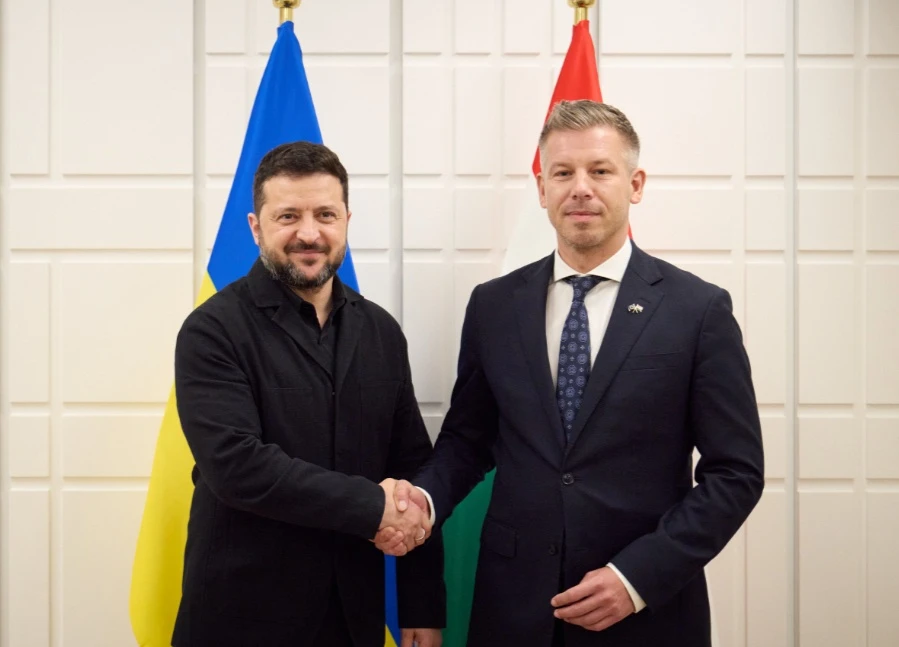
The encounter followed months of negotiations over the timing and location of a meeting between the two leaders and represents a step towards improving relations after years of tension.
Under former Hungarian Prime Minister Viktor Orbán, Budapest repeatedly opposed Ukraine’s EU membership ambitions and portrayed the country as a security threat.
Following his Tisza Party’s election victory, Magyar pledged to pursue a more pragmatic approach and work towards repairing relations with Kyiv.
In a social media statement after meeting Zelenskyy, Magyar said that the Ukrainian parliament had adopted the minority education law in accordance with the agreement between the two sides and had begun implementing it.
He added that further discussions were expected between officials from the two governments at ministerial level. “I assured the Ukrainian President of my full solidarity with the inhuman Russian aggression against her country that has been going on for almost five years,” Magyar said.
Zelenskyy also welcomed the meeting, thanking the Hungarian Prime Minister for expressing solidarity with Ukraine and supporting the opening of two additional negotiating clusters in the country’s EU accession process.
“We are working to open the remaining two by the end of the year. We discussed the diplomatic situation and efforts to end Russia’s war. I am grateful for his solidarity with Ukraine and our people, and for his readiness to work together for peace.”
Volodymyr Zelenskyy
He added that Ukraine remained committed to maintaining good-neighbourly relations and strengthening cooperation with Hungary.
“Ukraine always stands for good-neighborly relations and mutual strengthening. We agreed to resume joint work at various levels and to exchange visits.”
Volodymyr Zelenskyy
The two leaders are expected to meet again, with Magyar suggesting that another encounter could take place in the autumn in Berehove, a city in western Ukraine with a substantial Hungarian minority.
The renewed engagement offers an opportunity for both governments to address outstanding disagreements while advancing cooperation on minority rights, regional security and Ukraine’s European integration.
With the new task force established and Hungary’s veto lifted, Kyiv is seeking to maintain momentum towards opening the remaining negotiating clusters by the end of the year.
READ ALSO: Zelenskyy Seeks €70bn in Additional EU Defence Funding