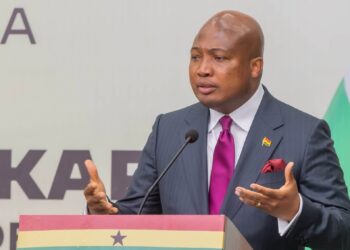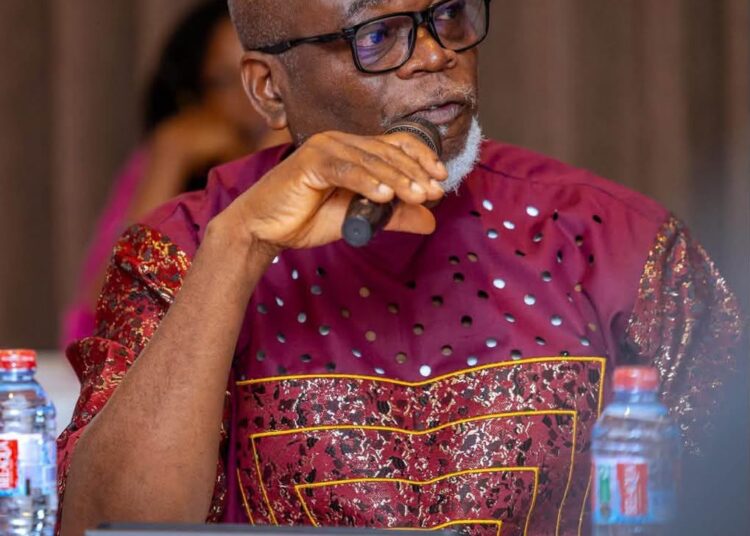
Director-General of the Securities and Exchange Commission, Hon. James Klutse Avedzi, has stressed that sound expenditure management remains central to ensuring transparency and accountability in the handling of public finances, urging Members of Parliament to sharpen their oversight of state institutions.
The former Member of Parliament for Ketu North made the remarks while facilitating a capacity-building workshop for members of the Committee on Public Administration and State Interest, an engagement designed to deepen lawmakers’ understanding of the legal and regulatory framework governing public financial management in Ghana.
Addressing committee members at the workshop, Hon. Avedzi placed particular emphasis on the importance of well-regulated expenditure systems as a safeguard against the misuse of public resources. He pointed specifically to the Imprest System, the mechanism through which petty cash expenditures are managed across government institutions, as a practical example of how proper regulation protects public funds.
“The Imprest System is regulated to manage petty cash expenditures effectively. This framework safeguards public resources and promotes responsible financial management.”
Hon. James Klutse Avedzi
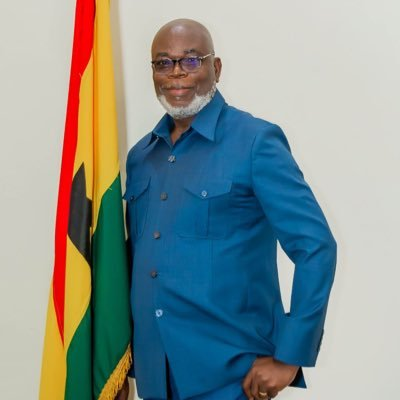
He argued that even seemingly minor expenditure processes, such as petty cash management, carry significant implications for accountability when left unregulated, and that strengthening these systems forms a critical part of broader efforts to protect the public purse.
Workshop Anchored on the Public Financial Management Act
The training session centred on the Public Financial Management Act, 2016 (Act 921), with particular attention paid to how the law can be applied to strengthen parliamentary oversight of State-Owned Enterprises and State Interest Institutions.
Facilitators guided committee members through the Act’s provisions on financial scrutiny, accountability mechanisms, and strategic communication, equipping lawmakers with the technical grounding needed to engage more effectively with the institutions under their oversight.
The choice of Act 921 as the workshop’s foundation reflects its role as the primary legislative instrument governing how public funds are managed, accounted for, and audited across government agencies and enterprises with state interest.
Sharpening Parliament’s Ability to Scrutinise Audited Statements
A central objective of the workshop was to build the capacity of committee members to critically examine audited financial statements produced by State-Owned Enterprises and State Interest Institutions, a task that requires both technical financial literacy and a clear understanding of applicable legal standards.
Organisers of the session appear to have recognised that effective parliamentary oversight depends heavily on lawmakers’ ability to interpret financial disclosures accurately, identify irregularities, and hold public institutions accountable where lapses are found.
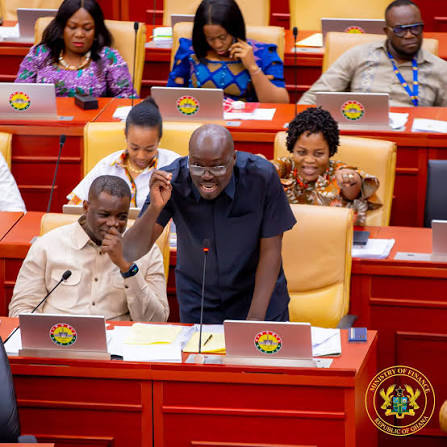
The workshop’s design, combining legal grounding in Act 921 with practical guidance on financial scrutiny, was intended to close gaps that might otherwise limit the effectiveness of Parliament’s oversight role.
Strategic Communication Added to the Curriculum
Beyond financial scrutiny, the workshop also incorporated a component on strategic communication, signalling recognition that oversight work extends beyond technical analysis alone. Committee members were introduced to approaches for communicating findings and recommendations effectively, a skill considered essential when engaging with state institutions, the public, and fellow parliamentarians on matters of financial accountability.
This addition suggests organisers viewed oversight not merely as a matter of catching errors in financial statements, but as an ongoing process of dialogue between Parliament, state enterprises, and the citizens those enterprises are ultimately meant to serve.
Strengthening Oversight of State-Owned Enterprises
The workshop’s focus on State-Owned Enterprises and State Interest Institutions reflects longstanding concerns about the financial performance and governance of such entities in Ghana, many of which have periodically drawn scrutiny over their management practices and reporting standards. By equipping the Committee on Public Administration and State Interest with sharper analytical tools, the training aims to position lawmakers to hold these institutions to a higher standard of financial discipline going forward.
Hon. Avedzi’s involvement in facilitating the session draws on his own background as a former legislator with direct experience in parliamentary processes, lending a practical dimension to the technical content covered during the workshop.
A Step Toward Stronger Accountability Structures
The engagement forms part of broader efforts to strengthen Ghana’s public financial management architecture, an area that has received sustained attention from regulators, Parliament, and civil society alike in recent years.

By targeting committee members directly responsible for oversight of public administration and state interest, the workshop represents a targeted attempt to translate legal provisions on paper into more effective scrutiny in practice.
As the Committee on Public Administration and State Interest continues its oversight functions, the knowledge gained from the session is expected to inform how members approach the review of audited financial statements and engage with State-Owned Enterprises going forward, with accountability and transparency remaining the central themes underpinning the entire exercise.
READ MORE: Star Oil CEO Explains Fuel Price Increases Amid Global Oil Volatility