Ghana’s recovery from the crisis in 2022 was addressed with discipline and a series of stringent measures taken by the Bank of Ghana to streamline policy and restructure the framework of the country’s financial regulator.
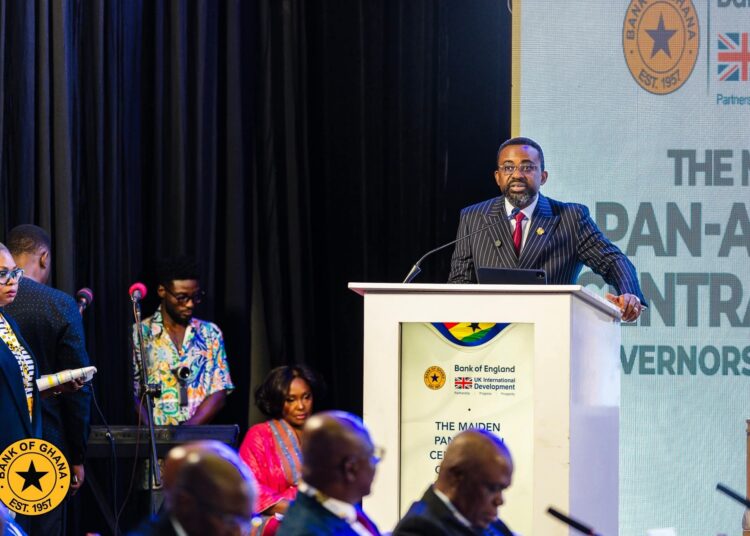
Speaking as the host of the maiden Bank of Ghana/Bank of England Pan-African Central Bank Governors’ Conference held in Accra, the Bank of Ghana (BOG) Governor, Dr. Johnson Pandit Asiama recounted the efforts made by the Bank to steady the course of Ghana’s economic and financial affairs.
He added that Ghana’s outlook has improved from what the World Bank described as a ‘home grown crisis’ country to a recovering and stable economy with renewed confidence in Ghana’s policy initiatives and leadership.
“Ghana was in the grip of what the World Bank called a ‘home-grown crisis.’ Inflation reached 54.1 percent, the cedi had lost half its value, and reserves had fallen to less than one month of import cover. Confidence was evaporating faster than reserves.
“When my team and I assumed office in 2025, our single focus was stabilization. We tightened policy, sterilized liquidity, and spoke frankly with markets and citizens alike. Behind those numbers is the story of a country that chose discipline over despair.”
Dr. Johnson Pandit Asiama, BOG Governor
In his welcome address, he described Ghana’s economic stability as proof of principle: credibility and transparency work. According to him, discipline and patience works. These has paid off in Ghana’s single digit inflation recorded in September (9.5 percent) and October (8.0 percent) since 2021, up to US$11.4 billion built up reserves, Cedi’s 34.9 percent year-to-date appreciation, a tripled trade surplus to US$6.2 billion in the first eight months of 2025, and a projected current account at 5 percent surplus of GDP.
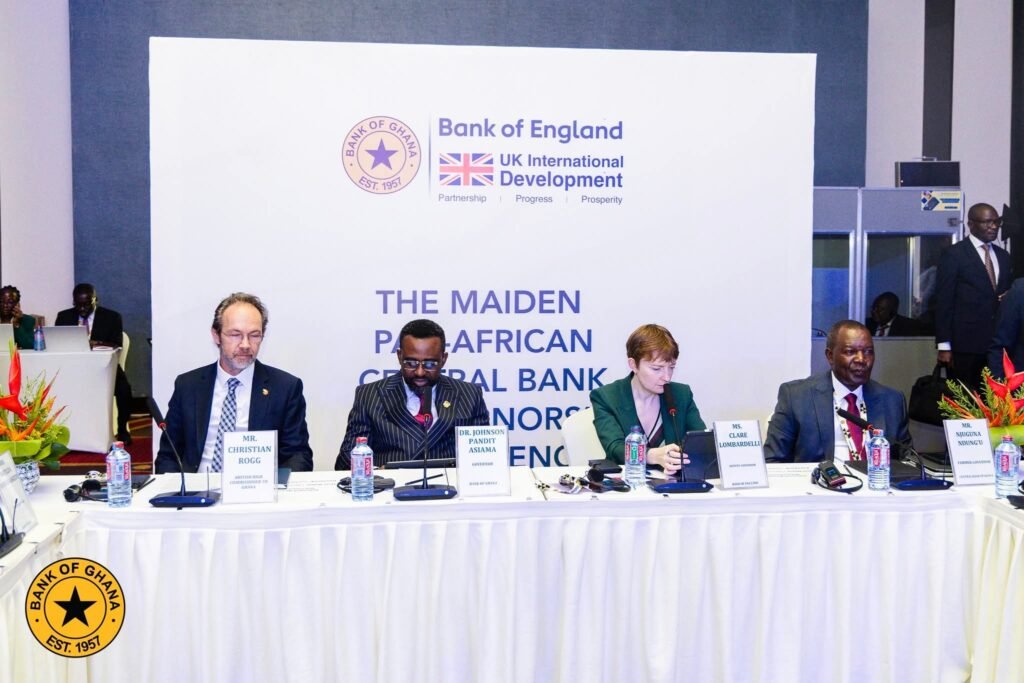
The two-day Conference, which will end today (from November 10-11), has brought together over 20 Central Banks across Africa and beyond to reaffirm the role of Central Banks and the enduring importance of credibility, leadership, and collaboration.
Also, to facilitate peer-to-peer learning on leadership and institutional credibility, deepen understanding of how independence and accountability can coexist, share practical lessons from moments of stress and resilience, and strengthen the regional network of governors for continuous dialogue.
Africa’s Inflection Point
According to the Governor, the African continent is fragile underneath the projected growth of 4.1 percent by the end of 2025 and the easing inflation in Sub-Saharan Africa. Though these projections exceed the global average growth rate, the continent is challenged by many economic issues.
He, therefore, calls on the economic managers to re-strategize to address the growing concerns of over-borrowing and overspending.
“Growth is returning – projected at 4.1 percent in 2025, above the global average – and inflation across Sub-Saharan Africa, which averaged 21.6 percent in 2023, is easing. But beneath this progress lies fragility: high borrowing costs, thin buffers, and fiscal strains that can undo years of reform in months. Our stability is real – but it is still young, still being tested.”
Dr. Johnson Pandit Asiama, BOG Governor
He called for discipline and collaboration among the managers of the various economies gathered. According to him, agreement and cooperation beat individual resolve. While political interference is separated from accountability, discipline must be maintained at all times, he added.

“But conviction alone is not enough. In the end, stability depends not only on the courage to act, but on the discipline to collaborate. At the Bank of Ghana, we have learned that independence is not isolation. Monetary and fiscal authorities are like two drummers playing different rhythms, yet stability demands harmony.”
Dr. Johnson Pandit Asiama, BOG Governor
Dr. Asiama also stressed the need for proper communication, transparency, predictability, and trust. “Monetary truth” must be spoken at all times, as it can lead to speculations and defeat policy instruments and interventions. He urged that, as Central Banks, policies should be localized to fit the realities of the local economy.
“The Bank of England taught the world that transparency breeds predictability, and predictability builds trust. And in our context, transparency must wear local clothes. Our messages travel not just through Bloomberg terminals, but through WhatsApp groups, radio call-ins, and market stalls.”
Dr. Johnson Pandit Asiama, BOG Governor
The Unwavering Central Bank
The Governor of the Bank of Ghana declared that Central Banks are the keepers of public trust and carriers of national expectations in the financial system.
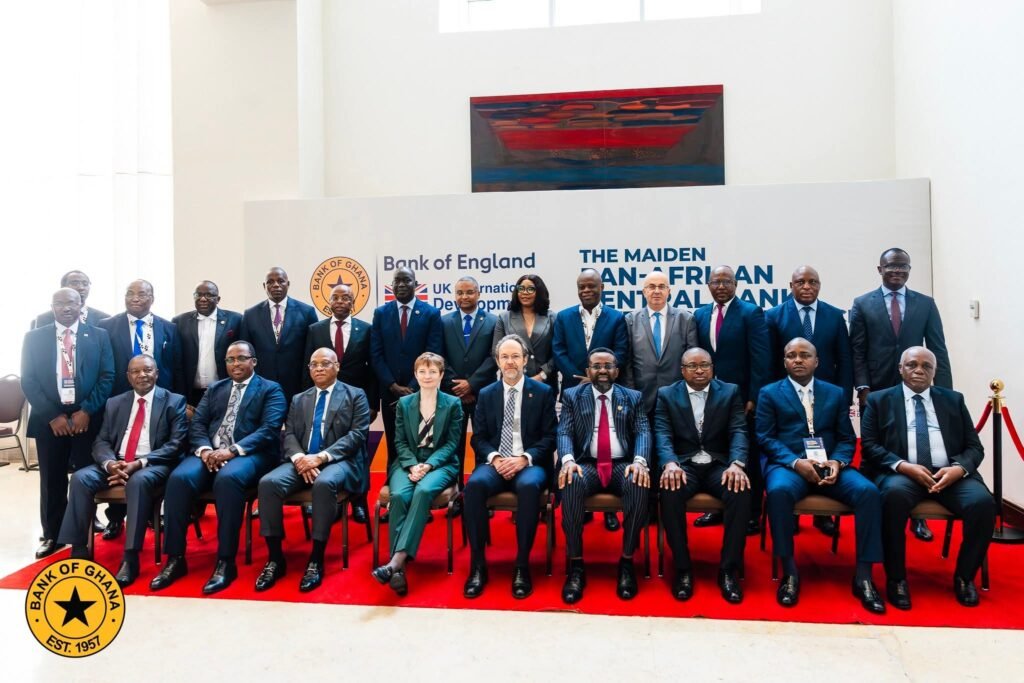
For the Central Bank to carry out its responsibilities effectively, the economic complexities must be navigated through to attain price stability, financial soundness, and economic growth. He added that central Banks need to be mindful that the political economy will be the test and judge as governments and the public seek results and relief.
Furthermore, he called on Central Banks to monitor the market as currencies, commodities, and capital flows move quickly. He urged Banks to “act with speed, but never haste; and with prudence, but never paralysis.”
While executing its mandate, the Central Banks need to communicate with clarity, consistency, and humility due to the harshness of the court of public opinion. He also urged Central banks to leverage technology and interconnectedness because the context of the mandate changes, while the mandate itself does not change.
According to Dr. Asiama, all Central Banks should replicate the discipline and resolve that Ghana has shown, while collaboration is prioritized to expand the economy and remove all the fragilities that cripple the continent’s economic growth and stability.
READ ALSO: WHO Pays Courtesy Call on Health Ministry with Support for Healthcare