
The Government of Ghana has reaffirmed its commitment to ensuring that every Ghanaian household and business has access to affordable, reliable, and sustainable electricity, as part of an ambitious strategy to strengthen the country’s energy security, modernize its power infrastructure, and promote inclusive industrial growth.
During a meeting with a World Bank delegation in Accra, Minister for Energy and Green Transition John Abdulai Jinapor underscored the government’s dedication to advancing key reforms that will deliver a more efficient and resilient energy sector.
“During our engagement, I emphasized that my top priorities are focused on three key areas: reducing system losses, improving operational efficiency, and ensuring affordable and reliable power for all Ghanaians.”
John Abdulai Jinapor, Minister for Energy and Green Transition
The discussions focused on deepening collaboration between Ghana and the World Bank to enhance operational performance, expand generation capacity, and ensure cost-effective electricity for consumers.
The Minister explained that the government is implementing a multi-pronged approach to address structural inefficiencies in the power sector while pursuing long-term solutions to stabilize supply and control costs.
Partnership with the World Bank Strengthened

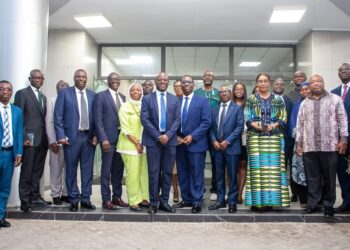
The meeting brought together senior officials from the Ministry of Energy and representatives from the World Bank, led by Dr. Robert Taliercio. The discussions highlighted areas of ongoing cooperation and identified new opportunities to build on the gains achieved in recent years.
Mr. Jinapor said the meeting provided a platform to review progress on current projects supported by the World Bank and to align future initiatives with Ghana’s Energy Transition Framework, which seeks to balance reliable power supply with sustainability and environmental responsibility.
“We discussed various areas of collaboration, ongoing reforms in the energy sector, and strategies to sustain and enhance the gains achieved so far.”
John Abdulai Jinapor, Minister for Energy and Green Transition
According to the Minister, the partnership remains crucial to Ghana’s efforts to ensure fiscal stability within the energy sector while accelerating access to clean and affordable electricity across the country.
The World Bank, for its part, reaffirmed its support for Ghana’s energy agenda, describing the collaboration as strategic and long-standing.
The Bank pledged continued financial and technical assistance to help the Ministry achieve its objectives, particularly in power generation, transmission efficiency, and renewable energy development.
Boosting Generation Capacity at Lower Costs

As part of efforts to enhance energy security, the Minister highlighted government’s plans to expand generation capacity through cost-effective and sustainable investments.
“As a government, our objective is to secure the most cost-effective new power sources to strengthen the sector and deliver lasting benefits to the country.”
John Abdulai Jinapor, Minister for Energy and Green Transition
Mr. Jinapor noted that Ghana’s energy policy emphasizes affordability as a cornerstone for national development, stressing that access to reliable electricity must not come at the expense of consumers or the environment.
By encouraging competitive procurement and private sector participation, the Ministry hopes to achieve a balance between sustainability and cost efficiency.
The government has also taken steps to promote investment in renewable energy, including solar, and hydro, as part of the Energy Transition and Green Growth Plan.

These initiatives are expected to diversify Ghana’s energy mix, reduce dependency on expensive thermal sources, and enhance resilience against global fuel price shocks.
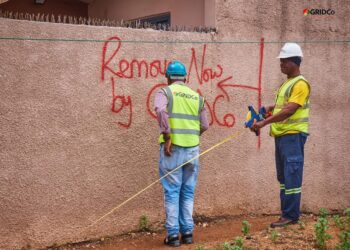
The Energy and Green Transition Ministry has been driving a series of reforms aimed at modernizing Ghana’s power distribution network, reducing losses, and improving transparency in the sector.
These include investments in smart grid systems, digital metering, and enhanced monitoring tools to ensure accountability in energy consumption and billing.
According to the Ministry, such reforms are already yielding positive results, with significant improvements in operational efficiency and customer service delivery across the power distribution network.
The government has also intensified efforts to strengthen financial discipline within the utilities sector through effective revenue collection and better management of subsidies and debts.
By ensuring that electricity companies operate sustainably, Ghana aims to create a more predictable and investor-friendly energy environment.