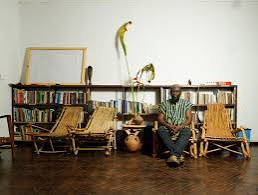
As the art world turns its gaze toward the French capital this autumn, Ghanaian artist Ibrahim Mahama is poised to transform one of Paris’s most prestigious contemporary art venues into a vast meditation on labor, memory, and collective futures.
Titled The Harvest Season (or Le Temps des récoltes), the ambitious exhibition opens on 22 October 2026 at the Fondation Cartier pour l’art contemporain’s striking new space at 2, Place du Palais-Royal and runs through 28 February 2027.
Occupying the foundation’s expansive 6,500-square-metre venue opposite the Louvre, the show marks a significant milestone not only for Mahama but for contemporary African art on the global stage. At 39, the Tamale-born multidisciplinary artist has rapidly ascended to the pinnacle of international recognition.
In 2025, he became the first African to top ArtReview’s influential Power 100 list, received the Art Basel & UBS Artist of the Year Award, and earned the inaugural Gold Medal at the Art Basel Awards. His practice monumental installations fashioned from discarded jute sacks, industrial remnants, and archival materials challenges narratives of extraction, migration, and postcolonial economies while actively redirecting resources back into Ghanaian cultural infrastructure.
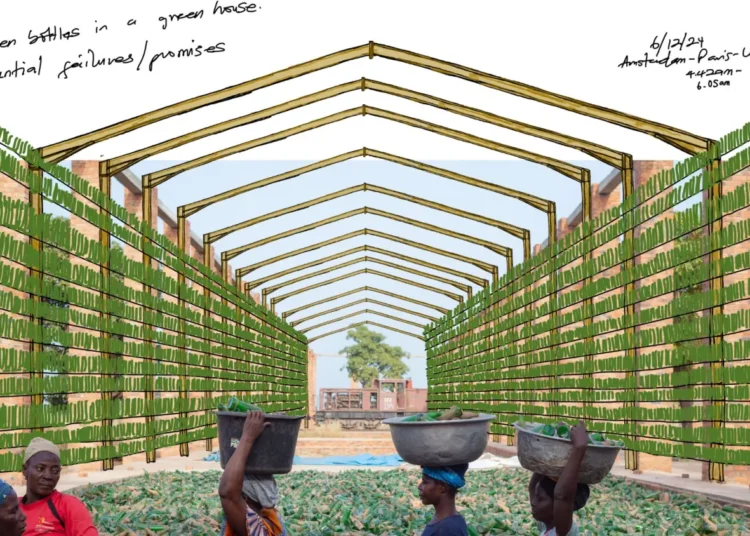
For The Harvest Season, Mahama envisions the exhibition itself as a living entity, mirroring the dynamic ecosystem of the art centers he has founded in northern Ghana since 2019. These include the Savannah Centre for Contemporary Art (SCCA), the open-studio Red Clay Studio, and Nkrumah Volini, institutions dedicated to education, residencies, workshops, and community engagement in Tamale.
“The Harvest Season evokes the patient cycle of creation: sowing ideas, passing on knowledge, harvesting the fruit of collective work,” the Fondation Cartier notes. Mahama will present site-specific installations alongside fresh iterations of his signature works, using materials steeped in histories of trade, labor, and global circulation.

The Nine Collaborations
Central to the project is collaboration. True to his ethos, Mahama has invited nine artists and collectives to contribute, creating a polyphonic dialogue rather than a solo showcase. Among them are Ghanaian photographer James Barnor, whose iconic Ever Young studio captured the optimism of post-independence Ghana and who previously collaborated with Mahama to recreate the studio in Tamale.
Also featured is Dorothy Akpene Amenuke, Mahama’s former teacher at Kwame Nkrumah University of Science and Technology (KNUST) and a pioneering textile artist who has long worked with jute sacks. Painter Gideon Appah draws on archival imagery from Ghana’s independence era, while architect Courage Dzidula Kpodo and the collective Postbox Ghana explore early nation-building archives.
The list extends to Zohra Opoku, whose screen prints on recycled fabrics probe bicultural identity; the Congolese collective le CATPC (Cercle d’Art des Travailleurs de Plantation Congolaise), whose plantation workers’ art center in Lusanga was once wrapped by Mahama in cacao sacks; Slovene artist Tjaša Rener, whose practice intersects with Ghana-Yugoslavia diplomatic histories under the Non-Aligned Movement; and Franco-Afghan architect-artist Feda Wardak, whose work echoes themes of industrial infrastructure and extractivism.
Curated by Aby Gaye for Mahama’s contribution, Jeanne Barral for the invited artists, and Chiara Agradi for the Barnor section, the exhibition delves deeply into Ghana’s colonial and postcolonial legacies. Mahama’s materials often weathered jute sacks once used for cocoa and other commodities carry traces of global supply chains, human labor, and economic inequality.
By repurposing them into immersive architectural interventions, he transforms symbols of exploitation into vessels of memory, resilience, and possibility. The show also touches on degrowth, restitution, and the circulation of goods, questions that resonate far beyond the art world amid ongoing global debates about equity and sustainability.
Mahama’s journey from KNUST graduate (2013) to international force is remarkable. Early breakthroughs included covering parts of the Venice Biennale’s Arsenale with jute sacks in 2015 and participating in Documenta 14 in 2017. Subsequent projects at the High Line in New York, the Barbican in London, and numerous biennials have solidified his reputation for ambitious, site-responsive work.
Yet his greatest impact may lie closer to home. By channeling commercial success into independent cultural spaces in Tamale, Mahama is building infrastructure that nurtures emerging artists and reimagines what artistic success can mean. These centers welcome the public-children, students, and passers-by alike fostering creativity in a region often overlooked by global circuits.
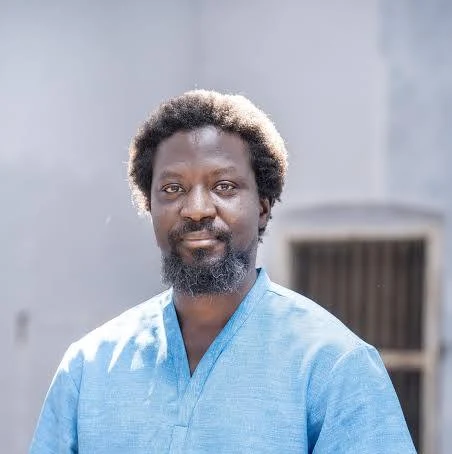
In an era when institutions worldwide grapple with relevance and representation, Mahama’s model offers a compelling alternative: the artist as institution-builder, educator, and community anchor. His approach challenges the extractive tendencies of the art market, insisting that resources and visibility flow back to the contexts that inspire the work.
The Harvest Season arrives at a symbolically charged moment, coinciding with Art Basel Paris and positioned in the heart of a city long central to Western art narratives. By filling the Fondation Cartier’s new flagship with voices, materials, and perspectives rooted in Ghana and beyond, Mahama subtly shifts the geography of contemporary art.
The exhibition promises not merely objects to view but an environment to inhabit one that invites reflection on what we sow, what we harvest, and who ultimately benefits.
As visitors move through the vast spaces this autumn, they will encounter layered histories stitched into fabric, echoes of distant labor embedded in monumental forms, and conversations across generations and geographies. In Mahama’s hands, the harvest is never solitary; it is the culmination of shared effort, accumulated knowledge, and quiet acts of resistance and renewal.
With an accompanying catalogue and likely robust public programming, The Harvest Season is set to be one of the defining exhibitions of the 2026-2027 season. It cements Ibrahim Mahama’s position as a leading voice of his generation-one who not only reflects the complexities of our interconnected world but actively works to reshape its cultural infrastructures for the better.
READ ALSO: Inflation Hits 3.7% as Food Costs Surge