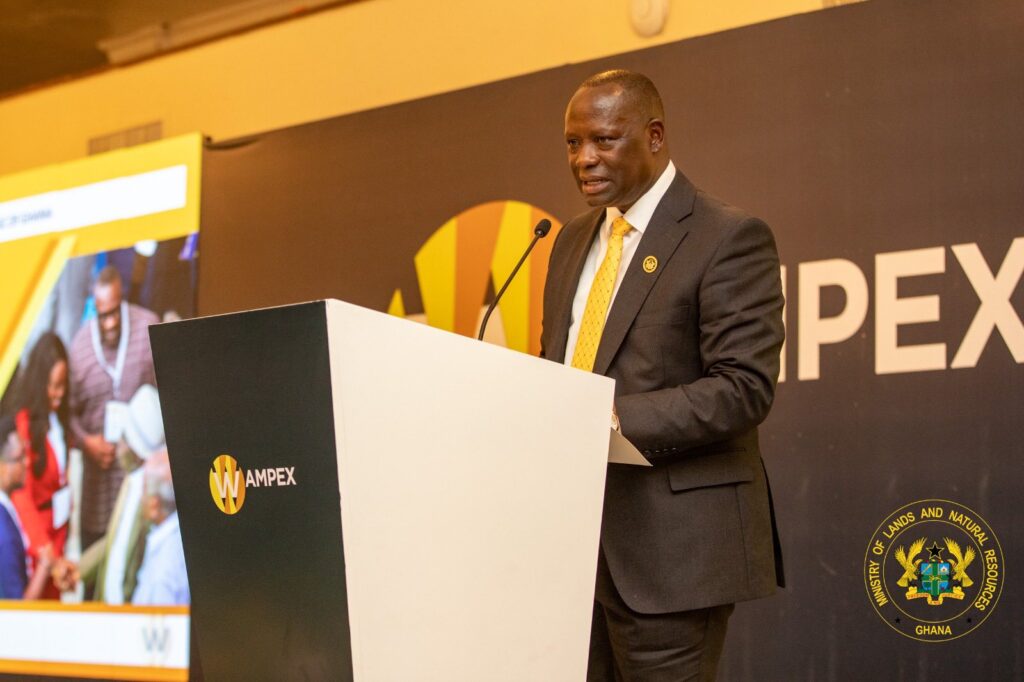
Minister for Lands and Natural Resources, Hon. Emmanuel Armah-Kofi Buah, has emphasized a decisive shift in Ghana’s economic strategy, declaring that the nation is transitioning from a traditional resource-rich economy into a value-driven mining powerhouse.
Speaking at the opening ceremony of the 2026 West African Mining and Power Expo (WAMPEX) in Accra, the Minister emphasized that the true measure of the nation’s mineral wealth must evolve beyond mere raw extraction.
By integrating responsible mining practices with a reliable power infrastructure, the government aims to catalyze industrial growth, generate sustainable employment, and improve the living standards of citizens across the country and the wider sub-region.
“We are moving from a resource-rich economy to a value-driven mining economy in which success will be measured not only by what we extract, but by how mining supports industrialisation, creates jobs, expands local participation and improves the lives of our citizens. West Africa is home to a vast array of minerals, including gold, bauxite, iron ore, diamonds, manganese and lithium. This convergence presents a historic opening for our region.”
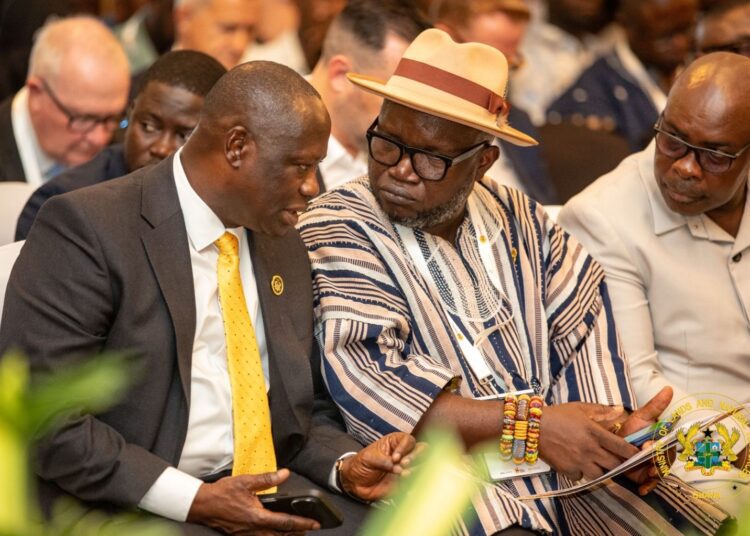
Minister for Lands and Natural Resources, Hon. Emmanuel Armah-Kofi Bua
This strategic pivot comes at a critical juncture as global markets experience unprecedented demand for critical minerals, placing West Africa in a highly competitive position to attract foreign direct investment and advanced technology.
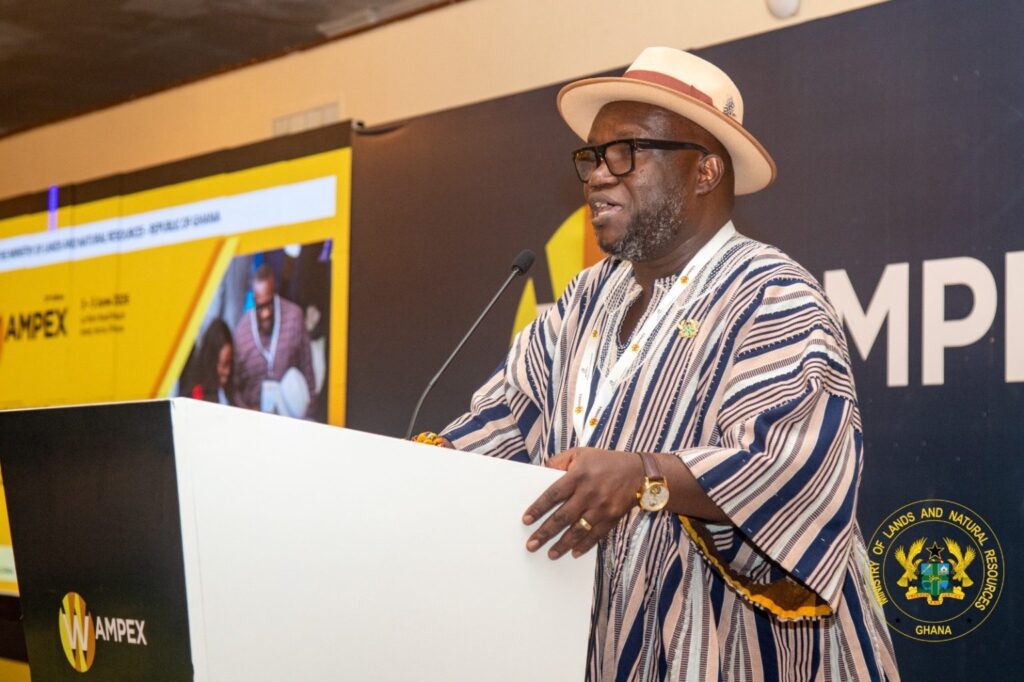
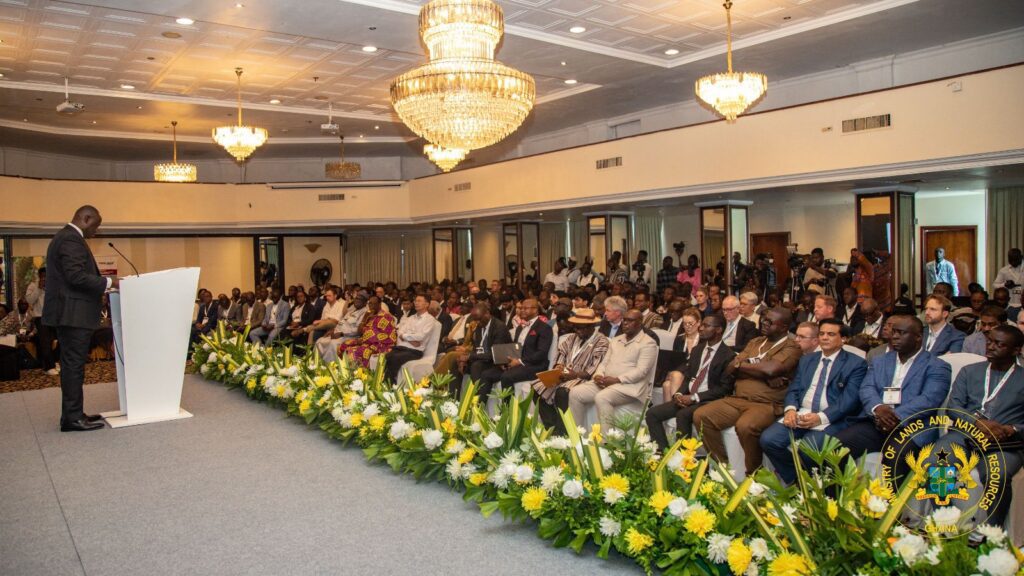
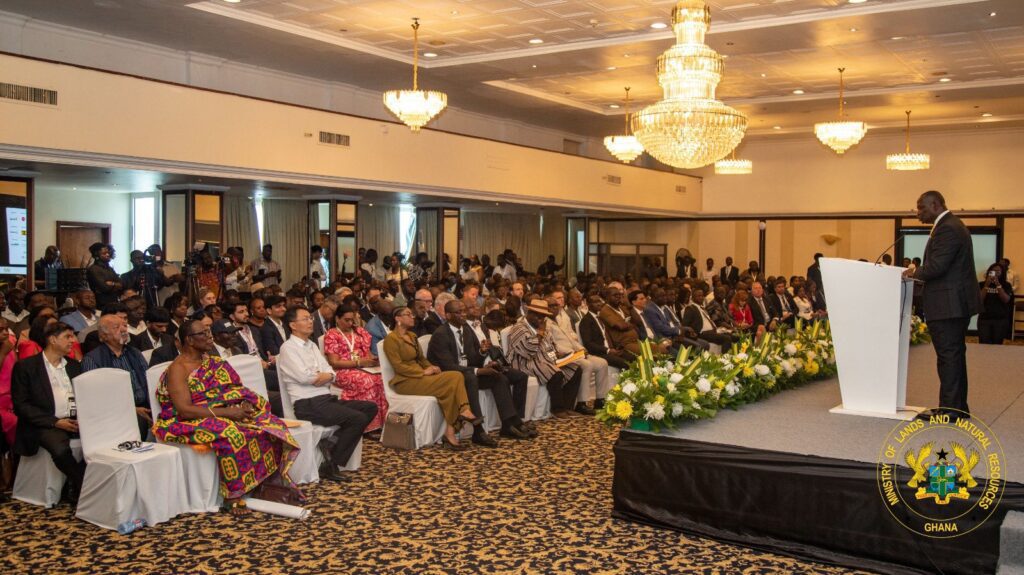
The 2026 WAMPEX event, running from June 3rd to June 5th at the La Palm Beach Resort under the theme “How Can Responsible Mining and Power Accelerate West Africa’s Sustainable Development,” serves as a premier platform for policymakers, international investors, and industry leaders to align on these regional goals.
Hon. Buah noted that the convergence of vital resources creates a historic opening to build an interconnected network of local supply chains, ultimately ensuring that West Africans retain the primary economic benefits of their natural wealth.
The Imperative of Local Value Addition
For decades, resource-rich African nations have been locked in a volatile cycle of exporting raw commodities and importing expensive finished goods, a vulnerability that a value-driven framework directly addresses.
Transitioning away from basic extraction allows Ghana to insulate its economy from the boom-and-bust cycles of global commodity pricing while retaining high-value processing margins domestically.
By refining bauxite into alumina or processing lithium for battery manufacturing locally, the country can build a robust industrial foundation.
This industrialization is vital for sustainable job creation, transforming mining from an isolated enclave sector into an engine that feeds local manufacturing, engineering, and service industries.
Integrating Regional Power and Policy
A core pillar of this economic transformation is the structural integration of mining and energy sectors, as raw mineral processing is inherently energy-intensive.
Hon. Buah underscored the necessity of harmonizing these policies, pointing out that reliable power is the linchpin for domestic factories and refineries to operate efficiently.
Furthermore, the Minister urged West African nations to foster deeper regional cooperation to establish a unified, predictable regulatory environment.
By presenting a synchronized front, the sub-region can strengthen international investor confidence and position itself competitively within volatile global mineral supply chains, ensuring that cross-border energy grids support collective industrial growth.
Environmental Integrity and Sector Enforcement
The transition to a value-driven model cannot succeed without aggressively safeguarding the environment and restoring regulatory integrity to the extraction process itself.
Describing illegal mining as “one of the greatest threats to the sector,” the Minister reaffirmed the government’s unwavering commitment to eradicating illicit activities that degrade land and water bodies.
To protect the environment and maintain market credibility, Ghana is deploying stronger enforcement mechanisms, enhanced technological monitoring, and sweeping institutional reforms.
These measures are designed to ensure that all active mining operations adhere strictly to responsible, transparent protocols, thereby securing long-term sustainability for future generations.
READ ALSO: UK Government Accepts Sweeping Reforms to Tackle Antisemitism and Racism