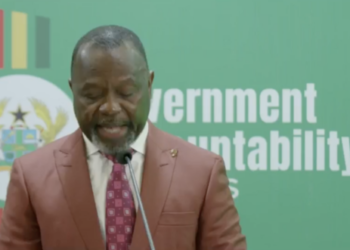

President John Dramani Mahama has cut sod for the construction of the Wa–Tumu–Han-Navrongo Big Push Project, marking the beginning of a major infrastructure transformation that will deliver more than 260 kilometres of roads across the Upper West Region.
Speaking at Guli in Wa, President Mahama said the new phase of the Big Push is a decisive shift from rhetoric to delivery, asserting that his administration is committed to progress rather than promises.
“Under this administration, we’re not here to make speeches. We’re here to make progress and we’re here to deliver on our word. T,he Big Push infrastructure programme we’re launching today marks a decisive step forward.
“It is a bold new chapter in Ghana’s journey towards balanced development. It is our commitment to ensuring that no region, no community or citizen is left behind.”
President John Dramani Mahama
He described the Big Push as far more than an infrastructure slogan. For him, it is a national transformation blueprint, a coordinated programme to modernise Ghana’s infrastructure, to expand opportunities and generate thousands of decent, sustainable jobs for young people.
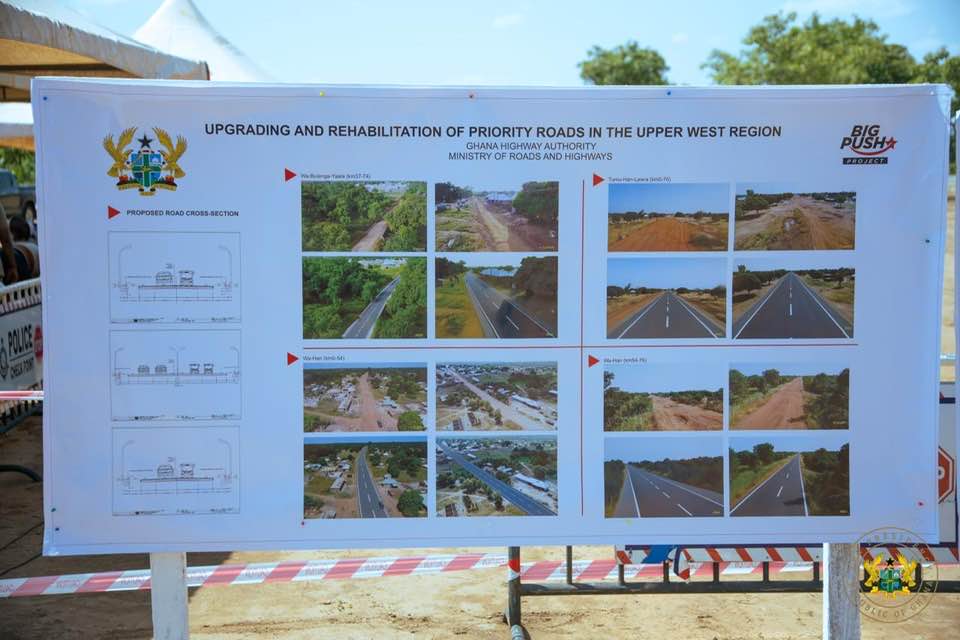
President Mahama explained that the initiative is anchored on the vision of building a new Ghana capable of functioning efficiently round the clock. The Big Push, he said, is the backbone of the government’s 24-hour economy initiative, designed to ensure that Ghana’s economic activities continue seamlessly across day and night.
An Improved Infrastructure and Economic Vibrancy
He highlighted the link between improved infrastructure and economic vibrancy, noting that a 24-hour economy “enables farmers to move their produce even at night, industries to operate multiple shifts, and markets to do business beyond daylight hours.”
According to the President, the Wa–Tumu–Han Big Push Project represents a critical part of a wider transformation agenda for northern Ghana. The government’s plan for the Upper West and Upper East regions will result in over 260 kilometres of newly constructed or upgraded roads in the Upper West alone.
He described these routes as vital arteries that sustain agriculture, trade, education and health care across the north. Among these are the Wa–Han–Navrongo stretch and the Wa–Lawra–Hamile corridor, both of which he said have long been neglected despite their strategic importance.
“For far too long, these roads have been in deplorable condition,” President Mahama said. He lamented the hardships faced by farmers who struggle to transport produce, traders who lose goods to poor roads, children who endure long and unsafe journeys to school, and women attacked by armed robbers while travelling from markets.
“Today, I stand in Guli to say enough is enough. Every Ghanaian, whether in Wa or Accra, Navrongo or Kumasi, deserves the same quality of roads and the same dignity of access.”
President John Dramani Mahama
Major Upgrades: Dualisation of the Wa–UDS City Centre Road
President Mahama announced that the project will include major upgrades, such as the dualisation of the Wa–UDS city centre road to decongest and beautify the regional capital. “From the roundabout where the fire service is, we’re going to dualise that road all the way to the UDS campus,” he stated.

The project will also deliver bridge works over the Kanigwe and Betuluhu rivers to ensure year-round access, as well as modern drainage, culverts, lighting, signage and pedestrian crossings. He emphasised that these are not cosmetic works but “durable, engineered solutions designed for sustainability and safety.”
Travel time on the Wa–Tumu road, he noted, will fall from four hours to less than two and a half hours after completion. In addition, transport costs will drop and accident rates are expected to decline.
He projected that over 800,000 people will directly benefit from the improved infrastructure, while another 1.5 million will gain indirectly through better trade, education and healthcare.
President Mahama listed the specific roads earmarked for upgrading, including the Wa–Bulenga–Yaala Road, Wa–Han Road, Tumu–Han–Lawra Road, Tumu–Hamile Road, Tumu–Sissili–Navrongo Road, Tumu–Chuchuliga–Navrongo Road, and the Navrongo–Tumu–Sandema Road.
Together, he said, these will form “the first continuous asphalted corridor” linking major towns in the Upper West and connecting Ghana’s northwest to Burkina Faso and the Sahel. This will, in his view, establish northern Ghana as a strategic hub under the African Continental Free Trade Area (AfCFTA).

Job Creation
Beyond infrastructure, President Mahama emphasised the project’s role in job creation, disclosing that the construction will generate over 2,500 direct jobs for engineers, artisans, welders, machine operators and technicians, and an additional 7,000 indirect jobs for suppliers, food vendors and service providers.
He reaffirmed the government’s commitment to local content, stating, “Every cedi invested must circulate within our communities to stimulate local enterprise.” He also emphasised strict adherence to specifications, saying, “Every bitumen, every material that is used on this road is the right specification.”
President Mahama issued a stern warning to contractors that the era of poor construction, inflated claims, and abandoned projects “is over.” He assured Ghanaians that payments will not hinder progress.
With GH¢13.8 billion allocated to the Big Push this year and GH¢30.8 billion planned for next year, he said contractors will be paid promptly once their certificates are verified. “If a contractor is not working, it’s not because he’s not being paid,” President Mahama asserted.
The President called on chiefs and community members to support the construction process, protect materials, and cooperate with engineers. He reminded them that the roads are being built not only for current residents but “for your children and your great-grandchildren.”
President Mahama noted that the Big Push is part of a nationwide network of infrastructure projects. Just last week, he cut sod for the Wenchi–Bamboi–Sawla–Wa road, highlighting that all projects are interconnected and contribute to enhancing national and regional competitiveness.
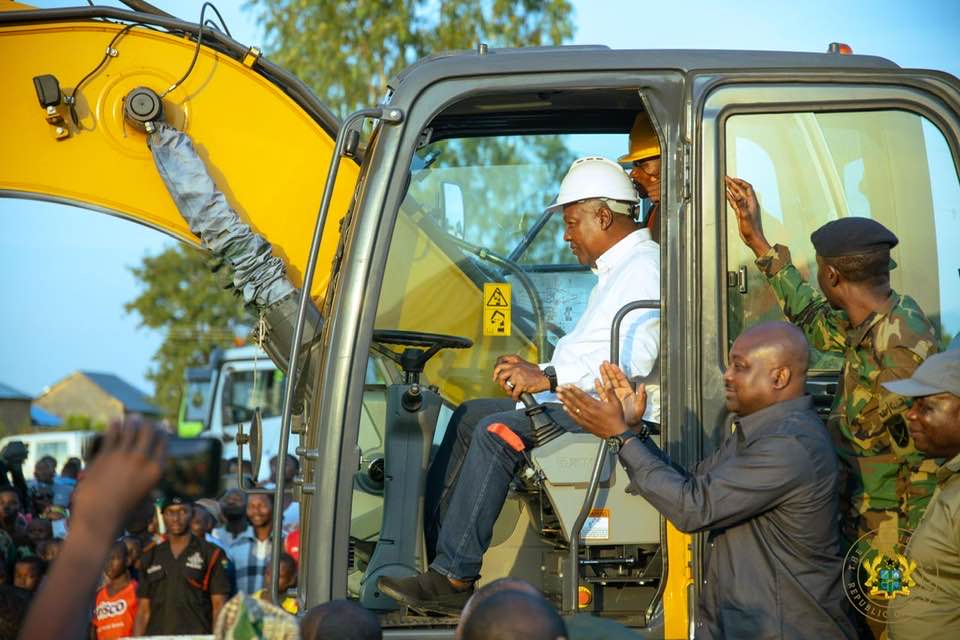
Making Ghana a Regional Logistics Gateway
Once completed, the Wa–Tumu–Han corridor will link the north to the middle belt and further to Burkina Faso, Mali and Niger, positioning Ghana as a key regional logistics gateway. The President concluded by describing the Big Push as a philosophy of governance built on inclusion, fairness, and shared prosperity.
“Across Ghana, new roads, new bridges, hospitals, schools, and water systems are being put in place again under this government, Let the Big Push drive the engines of growth, justice, and national unity.
And let us prove once again that when the NDC says we will build Ghana, we do not just speak, but we act.”
President John Dramani Mahama
President John Dramani Mahama’s launch of the Wa–Tumu–Han-Navrongo Big Push Project signals a renewed national commitment to equitable development driven by infrastructure, opportunity, and accountability.
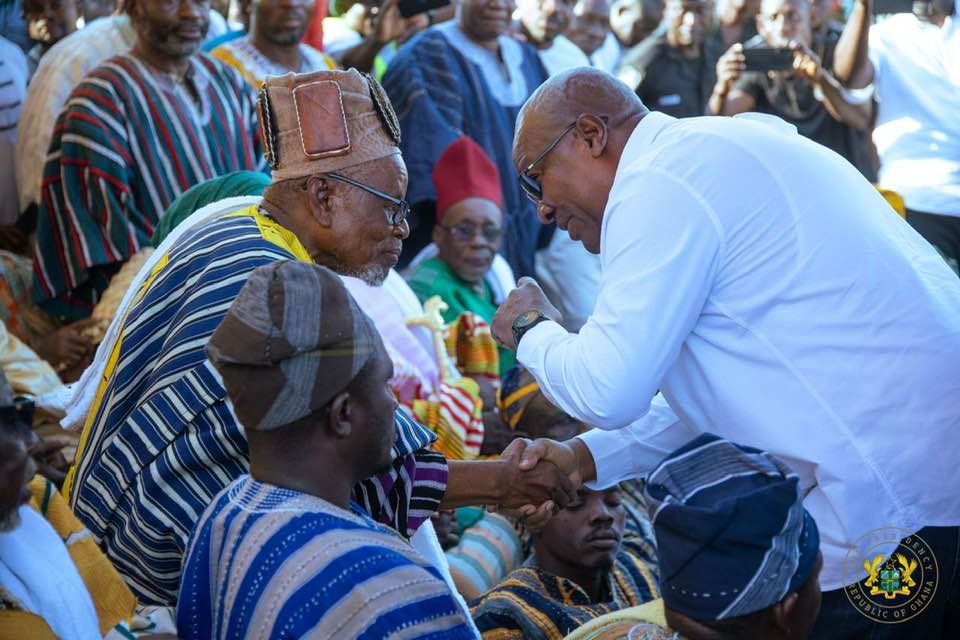
As the Upper West and Upper East regions prepare to benefit from transformative road networks, the President’s message is unmistakable: Ghana’s progress will be built on quality, inclusion, and shared prosperity.
READ ALSO: World Bank Endorses Ghana’s ‘Reset,’ Spurs Upheaval