

Ghana’s Minister for Finance is scheduled to present the 2026 National Budget to Parliament today, setting the tone for the country’s economic and fiscal direction in the year ahead.
Expectations are high as stakeholders anticipate key policy measures to stabilize the economy, enhance energy security, and promote accountability in public spending.
In an interview with Vaultz News ahead of the presentation, Executive Director of the Centre for Environmental Management and Sustainable Energy (CEMSE), Benjamin Nsiah, shared some critical insights on government’s fiscal performance, the energy sector’s prospects, and the need for strong budgetary commitments to revive the Tema Oil Refinery (TOR).
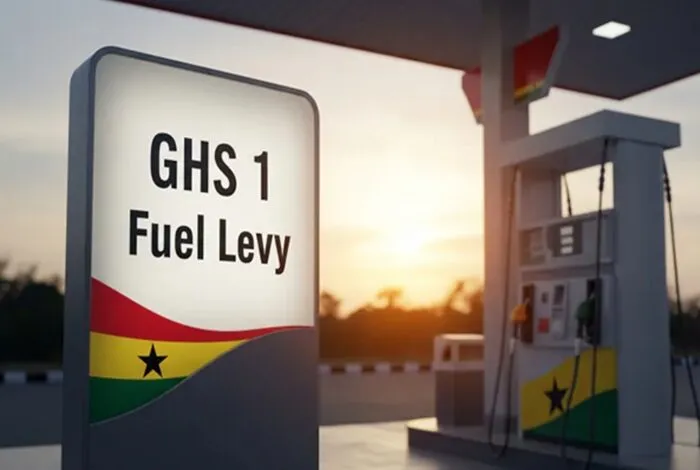
Mr. Nsiah projected that government would fall significantly short of its expected revenue target from the GH₵1 energy levy introduced in 2025. “Most of the targets were not met so I think we shall continue from 2025,” he said.
“Government will miss the target of 6 billion expected from the GHC1 levy because of the delay in implementation.
“We project that the government would get about 2.9 billion for the year 2025.”
Benjamin Nsiah, Executive Director of CEMSE
The levy, which was designed to boost funding for energy sector initiatives, particularly in fuel procurement and debt management, faced delays in rollout, contributing to the underperformance.
Mr. Nsiah cautioned that such shortfalls could hinder progress in achieving energy sustainability goals and weaken fiscal stability in the sector.
Accountability in ESLA Mobilisation
Mr. Nsiah did not only highlight revenue shortfalls, but also challenged the government to live up to its accountability commitments.
With respect to mobilisation and usage of funds from the Energy Sector Levies Act (ESLA), he noted that the upcoming ESLA annual report is expected to provide “details on mobilization and utilization.”
“We urge the government to use the money for their intended purpose, and not diversifying that into other areas of the economy other than the procurement of fuel.”
Benjamin Nsiah, Executive Director of CEMSE
For Mr. Nsiah, there is an urgent need for transparent reporting that tracks whether funds are directed toward energy sector transformation rather than short-term fiscal relief.
Renewable Energy and Natural Gas

CEMSE’s Executive Director also emphasized the need for the 2026 budget to address Ghana’s overreliance on fossil fuels. “Reduction of fuel dependency is hinged on two factors,” he explained.
The first, according to him, is the development of renewable energy sources.
“The ministry has a 10% target for renewable energy in 2026. To meet this target, the 2026 budget must address the source of funding for renewable energy.”
Benjamin Nsiah, Executive Director of CEMSE
The second factor is ensuring a reliable natural gas supply to feed power plants. “Natural gas is comparatively cheaper, so their availability at all times will reduce the dependence on fossil fuels which are more expensive,” he added.
By prioritizing renewable energy and securing stable natural gas supply, Ghana can make meaningful progress toward a cleaner, more resilient energy future.
Call for $100 Million Commitment to Revive TOR
Mr. Nsiah called for a decisive budgetary allocation to restore operations at the Tema Oil Refinery—seen as a strategic move to strengthen Ghana’s energy security.
“There must be a clear budgetary commitment—perhaps around $100 million—to enable TOR to purchase crude for refining.”
Benjamin Nsiah, Executive Director of CEMSE
He argued that given TOR’s current financial challenges, private lenders and suppliers are unlikely to finance crude purchases without state backing. “Given TOR’s current financial position, no bank or supplier will readily provide crude worth $100 million for refining,” he stated.
“That is why the Government of Ghana, particularly the Ministry of Finance, must demonstrate commitment in the upcoming budget by assisting TOR to procure crude for its operations.”
Benjamin Nsiah, Executive Director of CEMSE
Mr. Nsiah also suggested that government could explore redirecting crude liftings from the Ghana National Petroleum Corporation (GNPC) or other state-linked entities to TOR for processing. Such a measure, he said, would ensure TOR’s sustainability while retaining value within Ghana’s economy.
The potential revival of the Tema Oil Refinery is widely regarded as a game-changer for Ghana’s energy sector.
Industry experts estimate that TOR’s return to full operations could supply between 45% and 60% of national fuel demand, significantly cutting down on the importation of refined petroleum products.
The move could save the country an estimated US$400 million monthly in import costs, freeing up foreign exchange reserves and strengthening the cedi.
As Ghanaians await the Finance Minister’s presentation, stakeholders are calling for a balanced budget that stimulates growth while ensuring fiscal responsibility.
For Mr. Nsiah, the 2026 budget represents a pivotal opportunity to realign government’s priorities toward sustainability, accountability, and energy independence.
READ ALSO: IC Research Predicts a Further Decline in Inflation to 6.5% for November