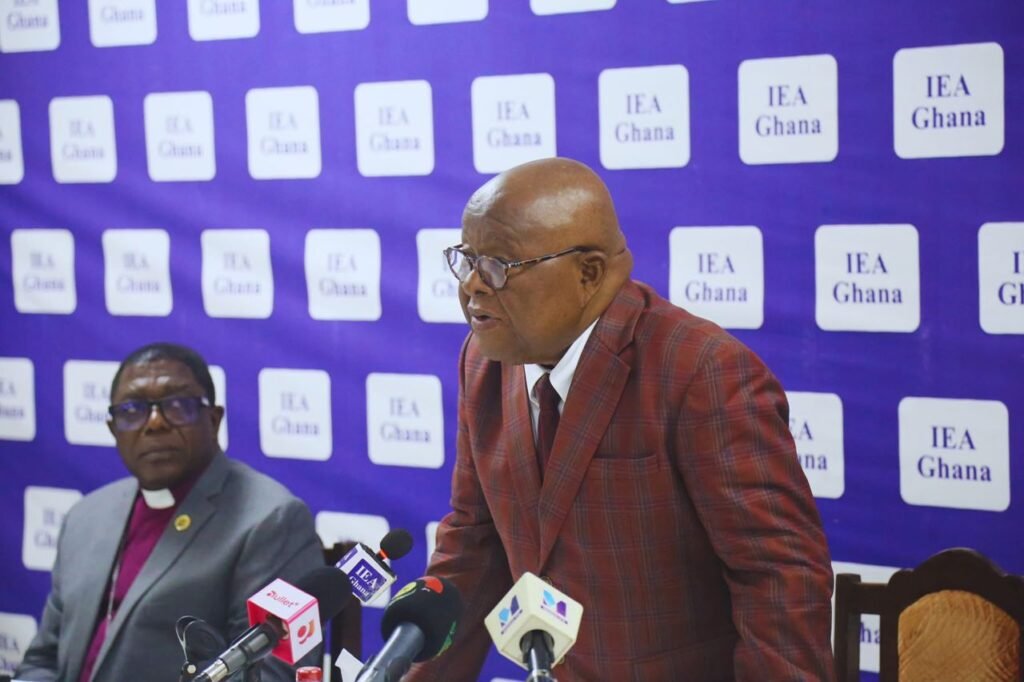
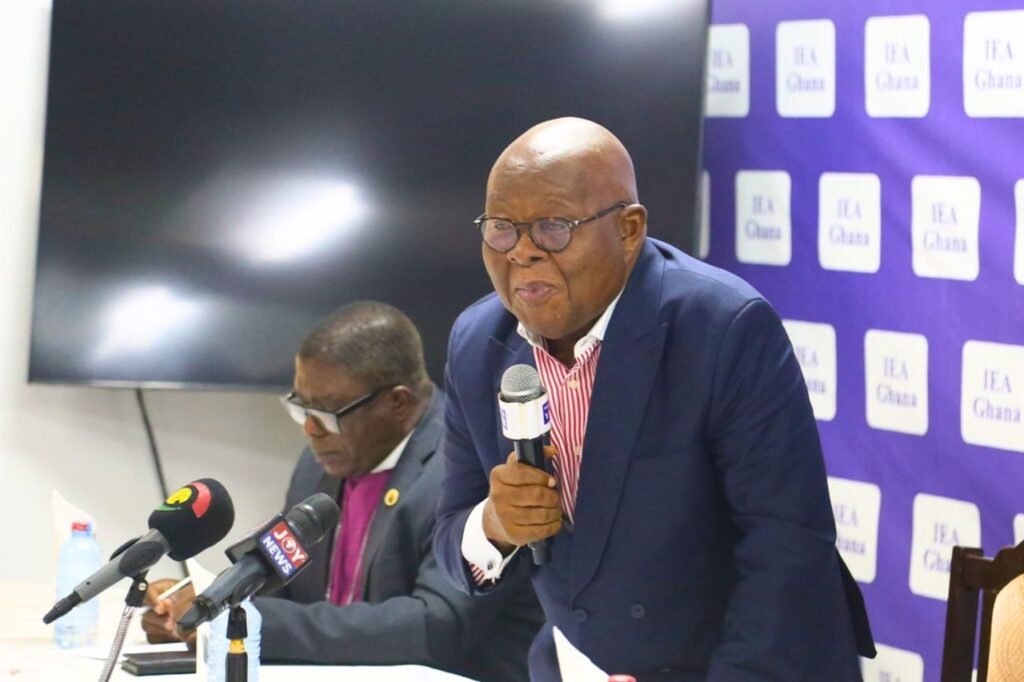
Prof. Aaron Mike Oquaye, a distinguished fellow at the Institute of Economic Affairs (IEA) and former Speaker of Parliament, has asserted that the Minerals Income Investment Fund (MIIF) possesses robust financial capabilities to fund complete local ownership of mineral concessions i.e Gold Field’s Tarkwa Gold mine whose multi-decade leases expire by April 2027.
He noted that the Sovereign Wealth Fund is heavily capitalized and has already demonstrated its structural agility by successfully making equity payments, including a recent cash outlay of thirty-two million dollars under an interim resource participation framework.
According to the venerable statesman, this financial strength positions the country perfectly to absorb expiring foreign mining leases, thereby transitioning Ghana away from traditional concessional licensing toward full state and indigenous equity control without damaging the nation’s international capital reputation.
“We have enough money in our Mineral Income Investment Fund to go about being sovereign participants rather than passive rent collectors. If we should ask these foreign corporate gentlemen to stay put and let us own our own thing, our mineral wealth becomes the primary bargaining chip to attract non-debt international capital. We must realize that if we do not give these concessions away to external actors, our lifeblood remains ours to control and utilize permanently.”
Prof. Aaron Mike Oquaye
The seasoned legal scholar explained that the impending expiration of major multinational mining contracts presents an unprecedented historical window for economic self-determination that must not be squandered by renewing leases for another twenty years.
He stressed that Ghana currently holds the ultimate bargaining chip because the physical minerals belong inherently to the sovereign state as primary capital, which can be leveraged on the Ghana Stock Exchange to allow ordinary citizens to purchase corporate shares.
By using MIIF as an anchor investor and leveraging equity on the stock market, the nation can easily contract international technical partners on a service fee or strict joint-venture basis, thereby overturning the current asymmetrical model where multi-billion-dollar entities operate with unchecked fiscal autonomy while declaring zero profits and withholding state dividends.
The Legacy of Extractive Asymmetry and Economic Dependency
The structural underdevelopment of Ghana’s primary mining enclaves stems from a historical policy paradigm that prioritizes foreign profit repatriation over local value retention, a reality that continues to drive widespread joblessness and infrastructure deficits across rural communities.
While foreign corporations continue to lobby traditional authorities and present glowing public relations assurances, host communities remain trapped in a continuous cycle of poverty, inadequate housing, and environmental degradation.
The structural difference between domestic economic stagnation and the rapid modernization seen in global resource hubs lies entirely in asset ownership, as external corporate entities have no inherent intention to build the local economy beyond their core commercial motivations.
Historical precedents from the Middle East and North Africa show that sovereign nations can successfully renegotiate contracts at the sole instance of the raw material owners to rescue their populations from perpetual economic vulnerability.
Ghana’s continuous reliance on external financial interventions is a direct consequence of this systemic failure to capture the true value of its gold, diamond, bauxite, manganese, lithium, and petroleum reserves over successive political eras.
According to Prof Oquaye, every single governance regime in the Ghana’s post-independence history, spanning from the National Liberation Council in 1966 to modern political administrations, has been forced to seek macroeconomic bailouts from the International Monetary Fund due to a structural lack of domestic revenue.
Because the nation missed the historical milestones of the industrial revolution and remains largely marginalized in the contemporary knowledge and information technology revolutions, its economic survival depends entirely on how it manages its physical natural resources. Failing to claim total ownership of these strategic assets at this critical juncture will permanently condemn the domestic population to severe socioeconomic misery, substandard living conditions, and national indignity.
Asserting Sovereign Control to Protect National Flagship Programmes
The absolute necessity for state and indigenous control over extractive assets is further highlighted by the continuous tax avoidance and legal operational strategies employed by international mining and petroleum companies.
For example, recent international arbitration disputes involving major operators like Tullow Oil show how foreign firms can bypass domestic tax assessments by forcing the state into external legal jurisdictions, subsequently declaring consecutive years of zero profit to avoid dividend payouts.
To overcome these structural fiscal challenges, civil society organizations, corporate regulatory bodies, and members of Parliament must unite behind a bold paradigm shift that establishes complete sovereign control over the nation’s natural resources.
Ghana does not need to aggressively cancel or breach existing legal frameworks, as the natural expiration of these agreements automatically terminates their legal effects and dissolves all external corporate claims.
Rather than allowing foreign companies to maintain their dominant market positions, the state must fully implement its statutory ownership mechanisms, use MIIF as a primary funding vehicle, and actively manage its resource wealth.
Transitioning from passive regulatory oversight to active commercial ownership is the only viable path for Ghana to build a resilient, self-sustaining economy and achieve the level of widespread prosperity seen in advanced resource-rich nations.
READ ALSO: Vice President Pitches Business-Driven Frameworks At Oxford