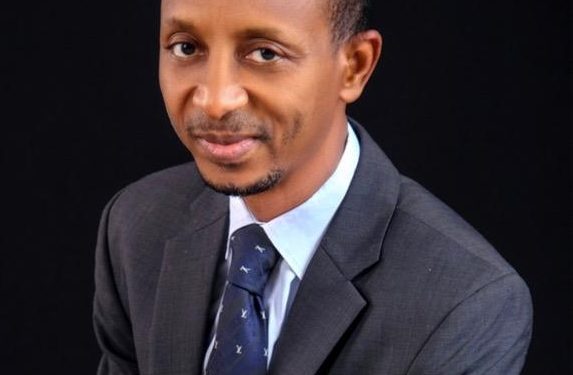
Ghana could unlock a significant new source of investment capital by giving non-interest banking and finance a stronger place within its financial system, according to Dr Attahiru Maccido, Managing Director and Chief Executive Officer of Trustmark Capital Limited.
Dr Maccido believes Ghana’s understanding of non-interest finance must move beyond its religious origins and focus more closely on the commercial principles that make the model attractive to investors, businesses and development institutions.
Speaking at a national dialogue on non-interest banking and finance, he argued that fairness, equity and risk-sharing could position the model as an alternative financing channel for Ghanaians irrespective of their religious background.
Beyond Religion Lies a Bigger Financial Opportunity
For years, non-interest banking has often been associated primarily with Islamic finance and Muslim communities. Dr Maccido, however, believes that such an interpretation could cause Ghana to overlook the wider economic opportunities available through the model.
He explained that while non-interest banking has roots in Abrahamic commercial principles, its benefits are not restricted to people of a particular faith.
“With respect to those people that are not actually that probably may be traditionalists, we know the other features of non-interest banking and finance is to make sure that there is fairness to everybody who is actually going to participate in it.”
Dr Attahiru Maccido
For Ghana, that distinction could be important at a time when businesses are searching for cheaper and more flexible sources of capital, while infrastructure and other development projects require long-term funding.
Rather than seeing non-interest finance as a niche product, Dr Maccido wants the country to view it as another mechanism for mobilising investment.
Risk-Sharing Could Change How Businesses Access Capital
One of the biggest attractions of non-interest finance is its emphasis on risk-sharing.
Under certain financing arrangements, the financial institution and entrepreneur can enter into a partnership where returns and losses are shared according to the agreed capital contributions and contractual terms.
Dr Maccido explained that this structure can create a relationship that differs significantly from the traditional lender-borrower arrangement.
“There is also risk sharing, where some of the contracts of financing are actually embedded into risk sharing between the parties.”
Dr Attahiru Maccido
He added that under some structures, the bank provides the financing while the entrepreneur manages the underlying business.
“The bank will be the financier, while the entrepreneur, who is the customer, will be the manager, and they go into a venture based on the partnership agreement.”
Dr Attahiru Maccido
The parties then share the outcome of the venture. “They share profit as well as the loss following the capital contribution,” he said.
For small and medium-sized enterprises, this could provide an important alternative where conventional loans remain difficult to secure because of high interest costs or demanding collateral requirements.
Ghana Could Learn From Global Success Stories
Dr Maccido pointed to international examples to demonstrate that non-interest finance can attract investors outside Muslim-majority countries.
He cited the United Kingdom, where the Islamic Bank of Britain was established in 2004 before being renamed Al Rayan Bank.
More importantly, he highlighted the UK government’s experience with Sukuk, a financial instrument structured around non-interest financing principles.
According to Dr Maccido, the UK raised £200 million through a Sukuk issuance in 2014, but investor demand reportedly exceeded £2.3 billion.
“The same UK, they came in 2014 to issue Sukuk by the government of UK, where they came to raise 200 million pounds, and they were able to get over 2.3 billion pounds subscription of that particular Sukuk.”
Dr Attahiru Maccido
He also pointed to Hong Kong, which sought to raise US$1 billion through a Sukuk issuance in 2014 but attracted demand of approximately US$4.7 billion.
For Dr Maccido, those numbers raise an obvious question: if the demand was several times larger than the amount being raised, could the appetite have come exclusively from Muslim investors?
The answer, he suggested, is clearly no.
Billions Could Be Waiting Beyond Ghana’s Traditional Markets
The wider implication is significant for Ghana.
The country has traditionally relied heavily on conventional debt markets and bank financing to support government operations, businesses and development projects. Expanding the range of financing instruments could therefore help diversify the sources of capital available to both public and private-sector borrowers.
Non-interest instruments could potentially attract domestic investors as well as international funds looking for alternative investment opportunities.
Agriculture, housing, infrastructure and private-sector expansion could all benefit if appropriate financing structures are developed and supported by strong institutions.
For Ghanaian SMEs in particular, the opportunity could be substantial. Businesses that struggle to meet conventional lending requirements may find partnership-based financing more suitable to their circumstances.
Regulation and Education Will Decide the Outcome
However, unlocking this opportunity will require more than introducing financial products with new names.
Ghana would need a clear regulatory framework, transparent asset structures and professionals with the technical expertise to design, manage and supervise non-interest financial products.
Banks, fund managers, investment advisers and regulators would all need to understand how the system works.
Public education would also be critical. If potential customers continue to view non-interest finance exclusively through a religious lens, many may never explore its commercial benefits.
Dr Maccido stressed that the model can serve everyone.
“You can see that actually the advantage is for everybody, irrespective of the religion, the region, or the faith that they do actually worship.”
He believes fairness, equity and risk-sharing could contribute not only to financial inclusion but also to broader economic development.
Ghana Cannot Afford to Miss the Opportunity
As Ghana searches for sustainable ways to finance economic growth, the conversation around non-interest finance is becoming increasingly relevant.
Dr Maccido’s message is straightforward. Ghana should not allow misconceptions about the origins of non-interest finance to overshadow its potential commercial value.
“Ghanaians should not let these particular issues of misunderstanding and demystification actually hide these benefits to the Ghanaians.”
Dr Attahiru Maccido
If Ghana succeeds in building the necessary regulatory and institutional foundation, non-interest finance could evolve from a relatively unfamiliar concept into a mainstream source of long-term capital.
READ ALSO: Christmas Dollar Demand Tests Ghana’s External Buffer