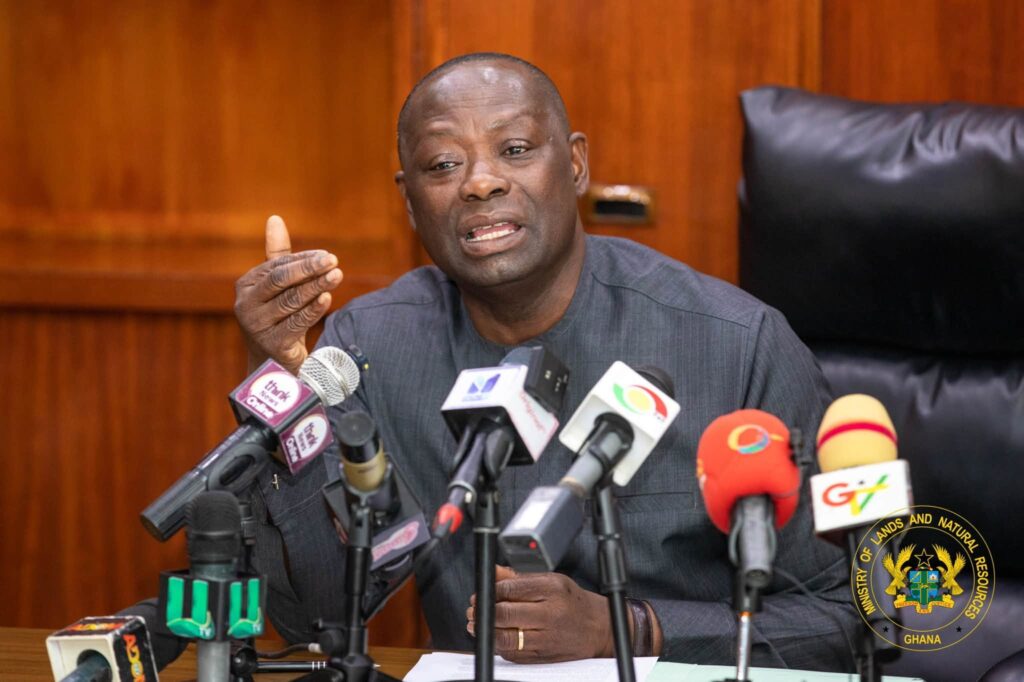
The Overlord and elders of the North East Region has presented a formal petition to the Ministry of Lands and Natural Resources calling on the government to restructure mining operations through strategic partnerships.
The traditional council advocates for a tripartite collaboration involving traditional authorities, the State, and private investors to establish responsible and sustainable mineral extraction that benefits host communities.
“The petition advocates for collaboration between the Traditional Council, the State, and potential investors to drive responsible and sustainable mineral extraction for the benefit of local communities.”
Minerals Commission
Curbing Illegal Operations and Economic Stagnation
The leadership highlighted severe economic losses caused by corporate entities holding prospecting licences for over 16 years without initiating actual mining activities.
Traditional authorities noted that formalising the region’s gold mining sector would effectively eliminate illegal operations, prevent environmental degradation, stem youth migration through local job creation, and generate essential tax and royalty revenues for the State.

Extractive sector data indicates that speculative landholding deprives rural communities of industrial development.
Holding mineral exploration rights without project execution ties up vital natural resource concessions, preventing both local artisanal workers and bona fide commercial investors from developing the land productively.
Addressing these non-performing prospecting licences will unlock trapped mineral wealth across Northern Ghana. Formalising the regional gold market directly aligns with national resource management policies, ensuring that artisanal operators transition into structured, legal business frameworks.
Driving Regional Economic Transformation
Formalising gold extraction offers a direct pathway to industrializing the North East Region’s local economy.
Unregulated mining practices currently degrade agricultural lands and pollute primary water bodies, whereas a structured, state-backed regulatory framework enforces environmental compliance, occupational health safeguards, and land reclamation obligations.

Local youth employment remains a central motivation behind the petition. Establishing legal, organized mining entities creates stable jobs, directly addressing youth unemployment and halting forced rural-to-urban migration toward commercial centers like Accra and Kumasi.
Commercial gold production under legal oversight will guarantee continuous royalty payments to traditional authorities and local municipal assemblies. These revenues fund infrastructure development, including roads, healthcare facilities, and schools, while boosting the national treasury’s tax collection.
Fostering Strategic State-Local Partnerships
Strategic partnerships between traditional custodians, state regulators, and commercial investors establish strong community buy-in and operational stability.
Traditional leaders serve as custodians of the land, making their active involvement in mining governance essential for preventing chieftaincy land disputes and corporate social responsibility friction.
Transitioning informal gold operations into legal enterprises ensures that precious metals pass through official state channels, such as the Ghana Gold Board (GoldBod). This systematically eliminates cross-border gold smuggling, trade-based money laundering, and illicit financial flows that deprive the nation of foreign exchange reserves.
Reforming the North East Region’s mining framework provides a blueprint for sustainable resource governance across the country. Granting legal mining operational pathways to local communities transforms raw mineral wealth into shared economic prosperity.
READ ALSO: Prez. Mahama Cuts Sod for $1.3bn Sentuo Airport Garden City Project