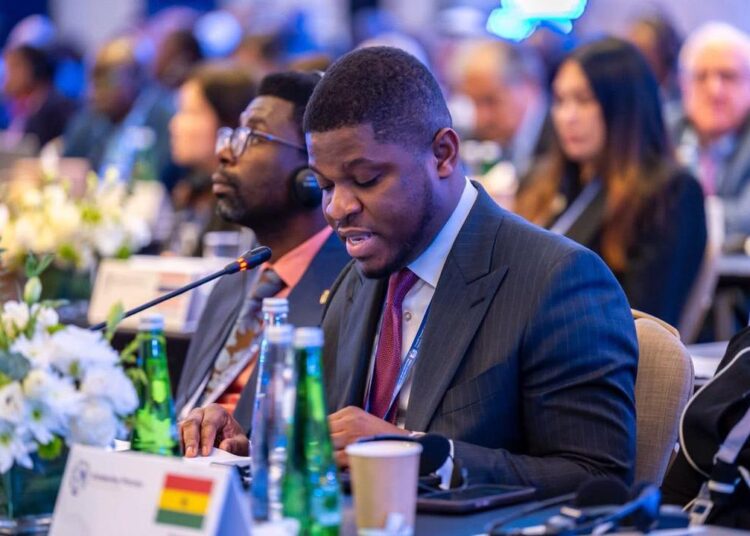
The Chief Executive Officer of the Ghana Gold Board, Sammy Gyamfi, has asserted that host mining communities across the country must no longer be treated as passive land donors, but rather as critical development partners and economic shareholders in the nation’s mineral resources.
Speaking at the National Mining Dialogue conference held in Accra, Gyamfi declared that the traditional social license to operate requires an urgent paradigm shift from a mere industry slogan into a binding political, moral, and economic compact.
He noted that natural resources represent a divine gift intended to uplift the livelihoods of local populations, warning that failure to convert these extraction activities into tangible local development represents a fundamental breakdown in managing Ghana’s strategic wealth.
“The social justice to operate is built not only on legal authority but on the confidence that mineral wealth serves both the national interest and host communities. We cannot continue to mine gold from the soil of our communities while poverty, lack of access to potable water, poor roads, youth unemployment, and weak local economies remain the daily reality of too many mining communities in our country. This is the reason why the visionary John Dramani Mahama established the Ghana Gold Board.”
Chief Executive Officer of the Ghana Gold Board, Sammy Gyamfi,
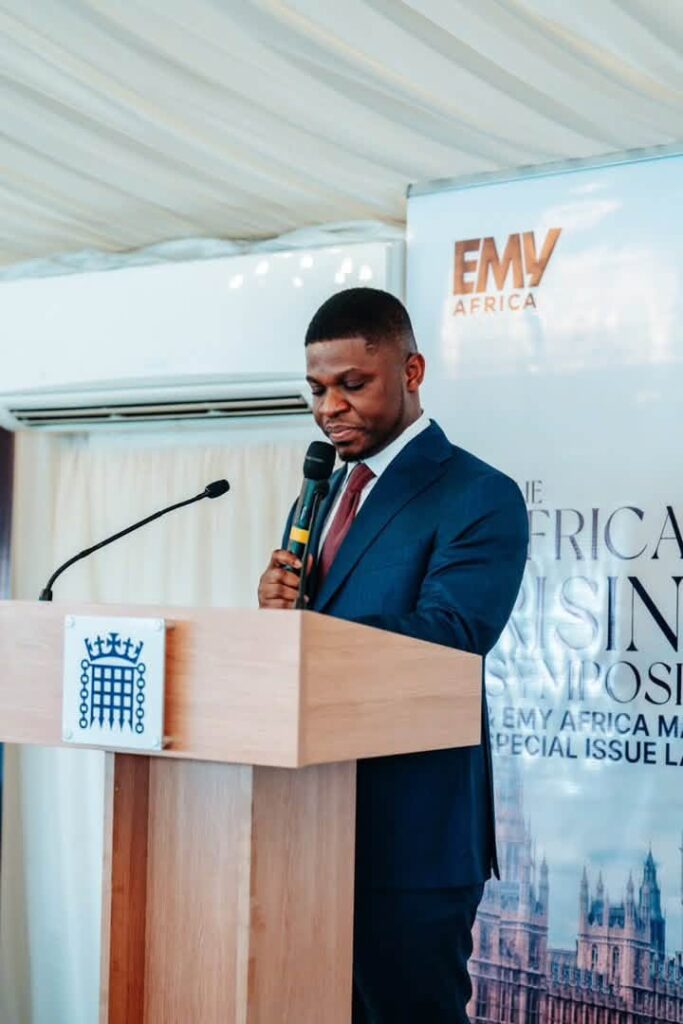
Expanding on this position, the Gold Board CEO emphasized that true legal authority to mine must be accompanied by deep-rooted local confidence that mineral extraction serves both host communities and the broader national interest.
He decried the lingering paradox in historical mining enclaves, where substantial quantities of gold are systematically extracted while host populations continue to endure severe deprivations, including inadequate road infrastructure, lack of access to potable water, systemic youth unemployment, and stagnant local economies.
To rectify these systemic inequities, Sammy Gyamfi highlighted the visionary establishment of the Ghana Gold Board by former President John Dramani Mahama.
This institution was explicitly crafted to pioneer a transformative management approach one that retains greater resource value locally, strengthens national gold reserves, fosters responsible downstream industries, and formalizes artisanal and small-scale mining to turn extractive wealth into sustainable economic transformation.
The Imperative for a Reimagined Social License
The call to overhaul the operational dynamic between mining conglomerates and host regions stems from decades of socio-economic friction across resource-rich corridors.
For generations, traditional extraction models prioritized state revenue export and corporate dividends, while leaving host enclaves to grapple with environmental degradation and economic dislocation.
Modern resource governance demands that the social license to operate evolves beyond superficial corporate social responsibility (CSR) projects such as building isolated community centers into structural equity participation.
When local populations are excluded from the financial value chain of the minerals extracted directly beneath their soil, the social contract breaks down, fueling hostility, illegal operations, and civic agitation.
Establishing host communities as primary economic shareholders aligns extractive operations with modern international sustainability standards, ensuring that wealth creation directly mitigates local poverty while stimulating surrounding commercial ecosystems.
Integrating Youth as Key Development Partners
Central to this structural reform is addressing the acute economic disillusionment experienced by young people within host regions.
In many extraction zones, local youth watch millions of dollars in mineral wealth transported out of their communities daily, yet find themselves shut out from meaningful employment, skills acquisition, or business ownership opportunities.

As Sammy Gyamfi forcefully argued during his address, viewing young residents merely as “casual laborers and bystanders” or writing them off as “troublesome agitators and security risks“ creates an untenable and dangerous dynamic.
Reimagining the social license requires establishing a dedicated youth development compact that actively integrates young people into the formal mining value chain through technical capacity building, support for local procurement enterprises, and opening secondary service markets around production sites.
Giving local youth a tangible stake in resource management transforms potential social volatility into productive economic participation.
Institutional Reforms for Local Value Retention
Achieving this equitable distribution of resource wealth requires robust regulatory frameworks and dedicated state bodies focused on localized value creation.
The establishment of specialized institutions like the Ghana Gold Board signals a deliberate shift away from raw material export toward comprehensive value addition and sector formalization.
By formalizing artisanal and small-scale mining (ASM), regulatory authorities can convert informal, often hazardous, extraction practices into structured, environmentally responsible local enterprise.
Furthermore, retaining a higher percentage of refined gold within national reserves and expanding domestic processing capacity ensures that downstream benefits such as precious metal refining, jewelry manufacturing, and financial services remain within the domestic economy.
Ultimately, treating mining communities as legitimate custodians and shareholders guarantees that Ghana’s mineral endowments yield long-term, multi-generational prosperity well beyond the lifecycle of individual mining concessions.
READ ALSO: Ghana Launches E-Visa Portal to Boost Trade, Tourism and AfCFTA