The Finance Minister, Hon. Dr. Cassiel Ato Baah Forson, has announced that the Electricity Company of Ghana (ECG) has seen a remarkable turnaround in its revenue by securing a staggering 90% increase in its monthly revenues.
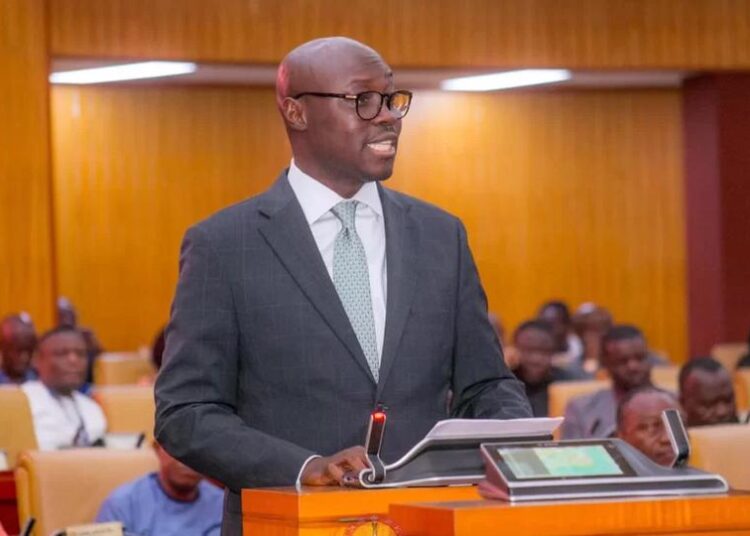
The finance minister revealed this during the presentation of the 2026 Budget Statement and Economic Policy before parliament in Accra.
This significant development comes as the government continues to implement strategic reforms aimed at enhancing the financial sustainability and operational efficiency of the country’s power utility.
“Mr. Speaker, I repeat, ECG’s revenue has improved by almost 90 percent per month from 900 million Ghana cedis per month in 2024 to 1.7 billion Ghana cedis per calendar month in 2025.”
Hon. Ato Forson, Finance Minister.
According to Hon. Ato Forson, when the John Mahama administration took office earlier this year, the energy sector was plunged into a staggering $1.4 billion debt owed to independent power producers, a fiscal burden that has since been alleviated through decisive action.
Debts and Ensuring Timely Payments
The Minister responsible for finance also disclosed that ECG’S burden has been lessened following the government’s renegotiation of all Power Purchase Agreements (PPA), led by Ghanaian experts, at no cost to the State.
According to him, the renegotiation Saved the country over 250 million USD and restructuring 1.1 billion Ghana cedis over a four-year period.
Hon. Ato Forson also revealed that Cabinet approved a strategy to open the power-distribution segment to private participation, with concessions expected to be awarded in 2026.
According to him, these measures have stabilised electricity supply and reduced fiscal risks associated with the sector.
Alongside the revenue growth, the government has also overseen a significant reduction in solar tariffs on projects like BXC and Meinergy, with the rates dropping from 18 cents to 6.5 cents per kilowatt hour.
“Cutting costs and expanding access, Mr. Speaker, this was achieved as part of the renegotiation,” the finance minister noted.
ECG Finances and Government Initiatives

The Electricity Company of Ghana (ECG) has long been a critical player in the country’s energy landscape, responsible for the distribution and supply of electricity to millions of Ghanaians.
However, the utility’s financial struggles, marked by revenue losses and accumulating debt, have been a persistent challenge for successive governments.
The current administration’s decisive actions to renegotiate power purchase agreements, clear outstanding debts, and improve revenue collection through the cash waterfall mechanism have had a transformative impact on ECG’s financial standing.
By cutting costs and expanding access, the government has not only strengthened the utility’s bottom line but also laid the foundation for a more sustainable and affordable energy future for Ghanaian consumers.
The 90% increase in ECG’s monthly revenue is a testament to the government’s commitment to reforming the energy sector and ensuring its long-term viability.
This remarkable achievement not only bolsters the company’s financial resilience but also paves the way for further investments and improvements in Ghana’s power infrastructure, ultimately benefiting businesses and households alike.
READ ALSO: Ghana’s Fixed Income Market Powers Through Debt Crisis to GH¢1.2 Trillion Glory