
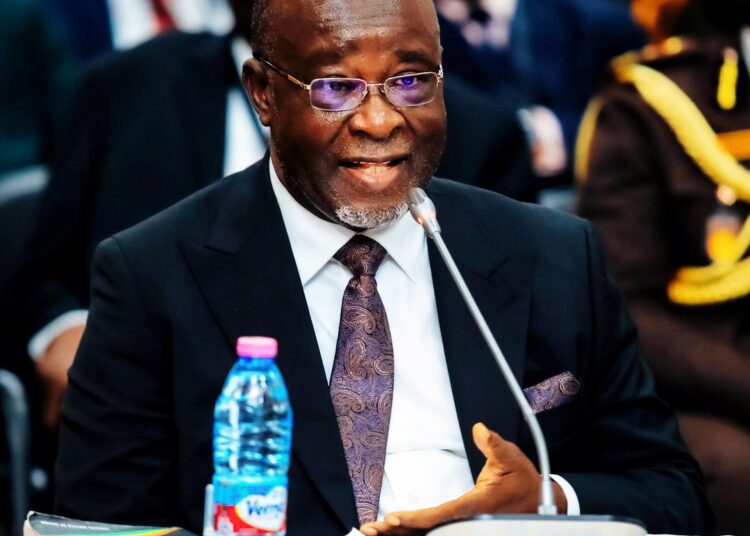
Parliament has approved Justice Paul Baffoe-Bonnie as the new Chief Justice of the Republic of Ghana following a headcount vote that saw 163 Members of Parliament voting in favour and 62 voting against.
The approval, which came after intense debate and procedural exchanges, solidifies Justice Baffoe-Bonnie’s ascension to the highest judicial office in accordance with Article 144(1) of the 1992 Constitution.
The voting process was not without controversy. An initial voice vote announced by Speaker Alban Kingsford Sumana Bagbin was immediately challenged by the Minority Caucus, prompting a headcount.
Following the headcount, which confirmed the majority’s endorsement, the Minority made another call for a vote by division. However, this request was overruled by the Speaker, who described it as an “unnecessarily invoked procedure.”
“This House has accordingly approved the nomination of Justice Paul Baffoe-Bonnie as the Chief Justice of the Republic of Ghana in accordance with Article 144(1) of the 1992 Constitution of Ghana.”
Speaker Alban Kingsford Sumana Bagbin
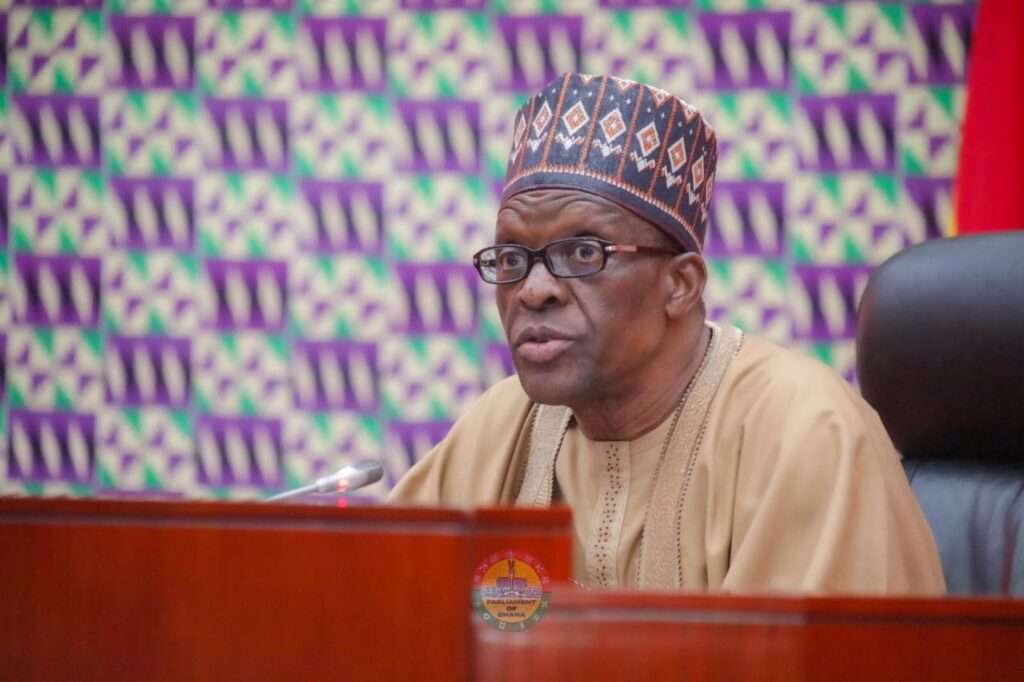
In delivering his remarks after the announcement, Speaker Bagbin congratulated Justice Baffoe-Bonnie on his approval and urged him to uphold the integrity of Ghana’s judicial system.
“You have been entrusted with the sacred duty to protect the laws of this land, to strengthen justice delivery, and to serve the people of Ghana with fairness and humility.”
Speaker Alban Kingsford Sumana Bagbin
The 1st Deputy Speaker and Chairman of the Appointments Committee, Hon. Bernard Ahiafor, also expressed appreciation to the Members of Parliament for their participation in the process.
“We are grateful to the Honourable Members for their diligence and commitment throughout this process,” he said, reiterating that the committee’s recommendation for Justice Baffoe-Bonnie’s approval was based on his demonstrated competence, integrity, and deep knowledge of the law.
Justice Paul Baffoe-Bonnie’s approval marks the culmination of a rigorous vetting process before Parliament’s Appointments Committee on November 10, during which he presented himself as a jurist ready to lead the judiciary into a new era of transparency and accountability.
In that session, the committee observed that he demonstrated an outstanding grasp of constitutional principles, judicial ethics, and professionalism, qualities they believed were essential for restoring public confidence in the justice system.
President John Dramani Mahama is now expected to swear him into office, officially installing him as the next Chief Justice of Ghana. Justice Baffoe-Bonnie will assume office at a crucial juncture for the judiciary, a time when public confidence in the justice system is at a historic low.

According to the 2021–2023 Afrobarometer survey, an alarming 62 percent of Ghanaians say they have little or no trust in the courts—more than double the 30 percent recorded in 2005–2006. The report also revealed that 97 percent of citizens believe judges and magistrates engage in some form of corruption.
These perceptions, analysts argue, reflect long-standing concerns about political interference, inefficiencies in case management, and a lack of transparency within the judiciary.
Governance experts note that several politically sensitive cases handled under the previous administration deepened public mistrust in the courts. Critics claim that the judiciary’s decisions during the Akufo-Addo administration often appeared to favour the executive branch, reinforcing perceptions that the judiciary had become politically compromised.
Justice Baffoe-Bonnie’s track record at the Supreme Court has earned him widespread respect among legal practitioners for his intellectual depth and independence of thought. His rulings in constitutional and criminal cases have been described as balanced and well-reasoned, characteristics that many believe make him well-suited to lead the judiciary at this critical time.
In Parliament, reactions to his approval reflected the political divide. Members of the ruling National Democratic Congress (NDC) majority expressed confidence in his ability to reform the judiciary. Dr. Dominic Ayine, Minister of Justice and Attorney General, described Justice Baffoe-Bonnie as “a man of high moral character, proven integrity, and exceptional judicial experience.”
The Minister for the Interior and Member of Parliament for Asawase, Mohammed Muntaka Mubarak, also commended the appointment, noting that “Justice Baffoe-Bonnie has an impeccable record; one would wonder why he wasn’t made Chief Justice long ago, but this is his time. We must support and encourage him.”
However, opposition Members of Parliament from the New Patriotic Party (NPP) maintained their earlier position of disapproval.
Kwame Anyimadu-Antwi, MP for Asante Akim Central, explained that their dissent was based on unresolved concerns surrounding ongoing court proceedings at different jurisdictions, including the ECOWAS Court. “Ghana is a member of ECOWAS and must respect its court. What will happen if these pending cases are decided against the government?” he questioned.
Despite the partisan divide, Justice Paul Baffoe-Bonnie’s approval marks a significant step toward stabilizing the leadership of the judiciary.
As he prepares to take the oath of office, the challenge before him is to rebuild public trust in the judicial system, ensure impartial justice, and restore faith in the courts as the ultimate guardians of Ghana’s democracy.
READ ALSO: Ato Forson Applauded for Creating Over GHȻ10b Expenditure Gap