For centuries, the story of Africa has been told largely through foreign lenses, colonial administrators, Western media, international NGOs, and global institutions.
While some of these narratives have been sympathetic or well-intentioned, many have reduced the continent to simplistic tropes of poverty, conflict, and dependence.
In recent years, however, African scholars, entrepreneurs, activists, and artists have increasingly called for the continent to “own its story.” This call is not merely symbolic; it represents a strategic imperative for sovereignty, dignity, and development.
Owning its story means Africa must become the primary author of its narratives, politically, culturally, technologically, and economically.
Ghana has taken centre stage in a renewed continental push to redefine how Africa’s cultural and historical heritage is interpreted, as experts, policymakers and international partners convened in Accra for the Regional Workshop on the Interpretation of World Heritage in Africa.
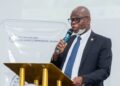
Opening the week-long event, Minister for Tourism, Culture and Creative Arts, Abla Dzifa Gomashie, issued a call for Africa to take full ownership of its narratives, stressing that heritage interpretation must evolve to reflect the lived experiences, voices and identities of African communities.
“We must be in charge of our own narrative,” she told participants. “Until the lion learns to write, the story will always glorify the hunter.”
The workshop in Accra brought together site managers, cultural experts and institutional representatives from across the continent. It is being organised by the Ministry of Tourism, Culture and Creative Arts in collaboration with the Ghana Museums and Monuments Board, the African World Heritage Fund, WHIPIC, the Ghana Commission for UNESCO and UNESCO Accra, with support from the Korea Heritage Service.
Gomashie, speaking on behalf of President John Dramani Mahama, said the gathering aligns with Ghana’s commitment to championing cultural preservation and strengthening capacity across the continent. She said heritage interpretation must move beyond dates and events to connect directly with people and empower communities to tell their own stories.
The Minister also celebrated Ghana’s recent inscription of the Amphitheatre textile tradition onto the UNESCO World Heritage list, describing it as a milestone that demonstrates the need for interpretation rooted in authenticity and driven by local custodianship.
Global narratives about Africa have historically emerged from a power imbalance. During colonialism, European powers portrayed Africa as a “dark” and “undeveloped” continent to justify exploitation.
Post-independence, Western media often focused disproportionately on crises, civil wars, famines, epidemics, creating a narrative that equates Africa with dysfunction. These depictions shape global investment decisions, diplomatic priorities, and even domestic policy debates in African states.
Such narratives also affect how Africans see themselves. Young people growing up under a steady stream of negative portrayals internalizes limitations that do not reflect the continent’s creativity, resilience, or progress. In short, narrative distortion becomes a development issue.
Power of Narrative Ownership

Owning one’s story is an act of self-determination. Authentic African storytelling corrects misconceptions and highlight the continent’s innovation, diversity, and dynamism. This reframing attracts partners, investors, and collaborators who see Africa not as a burden, but as a rising global actor.
By celebrating indigenous knowledge systems, languages, and histories, Africans reinforce a sense of pride and self-worth essential for nation-building and social cohesion.
The creative and cultural industries, film, fashion, music, literature, are among the world’s fastest-growing sectors. Nollywood, Afrobeats, and African fashion houses have already demonstrated how storytelling becomes a powerful economic engine.
Meanwhile, Africa needs robust, independent media institutions that. produces high-quality journalism, documentaries, and digital content. Local ownership of media reduces dependency on external narratives.
Writers, filmmakers, musicians, and visual artists are essential custodians of the African narrative. Funding, training, and regional distribution networks will allow creative voices to thrive.
Challenges to Narrative Ownership
The movement is not without obstacles. Many African media outlets face funding constraints, political interference, or foreign ownership. Global information flows remain dominated by Western corporations.
Additionally, internal divisions, ethnic, linguistic, political, fragments the storytelling landscape. Yet these challenges make narrative reclamation even more urgent.
Africa’s call to own its story is, at its core, a call for liberation,intellectual, cultural, and economic. It is an invitation for Africans to define who they are, where they have come from, and where they are going.
By reclaiming narrative power, Africa does more than correct misconceptions; it lays the foundation for a future defined by dignity, innovation, and self-determination.
The continent’s story is vibrant, complex, and still unfolding and only Africans themselves can tell it in all its fullness.
READ ALSO:Mahama Charges New Chief Justice to Lead Judiciary Reset