The Institute of Statistical, Social and Economic Research (ISSER) has cautioned that Ghana’s newly renegotiated power agreements, though financially beneficial in the short term, will not resolve the country’s recurring energy-sector crisis unless accompanied by comprehensive structural reforms.
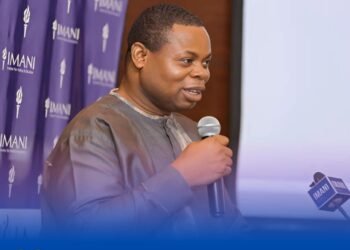
ISSER Director, Prof. Robert Darko Osei warned during ISSER’s Post-Budget Discussion held on Wednesday, November 19, 2025, where the institute examined the government’s 2026 Budget and its implications for the energy sector.
“While these renegotiations provide breathing space, they offer only temporary relief.
“The underlying weaknesses of the power sector particularly the technical and operational losses in the distribution chain must be addressed.”
ISSER Director, Prof. Robert Darko Osei
The government announced in the 2026 Budget that it had successfully renegotiated all power purchase agreements (PPAs) with Independent Power Producers (IPPs).
According to the budget, these renegotiations are expected to unlock more than US$250 million in savings while restructuring GH¢1.1 billion of energy-sector debt over a four-year period.
The measures were presented as part of efforts to improve liquidity in the sector and ease the financial burden associated with legacy contracts.
Transmission and Distribution Losses Major Culprit
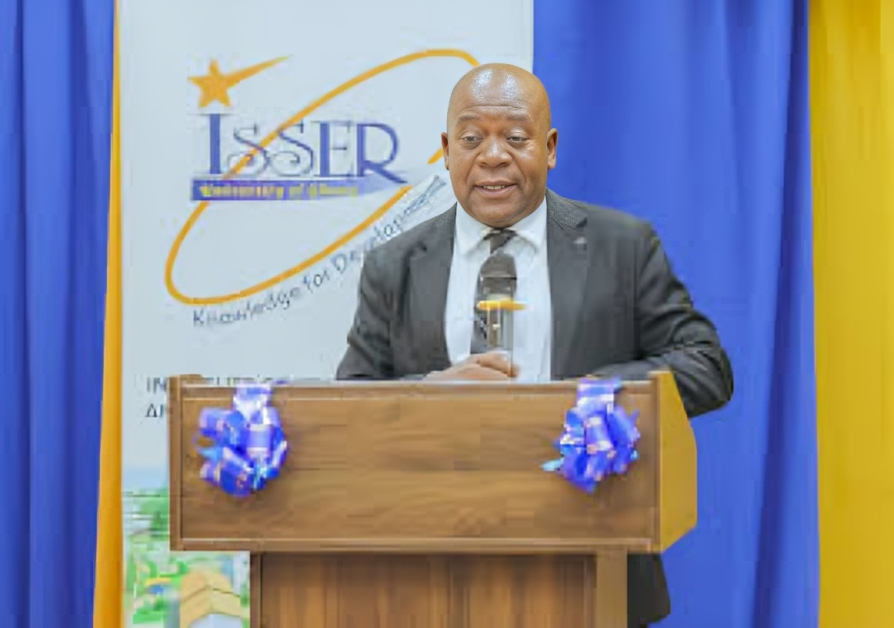


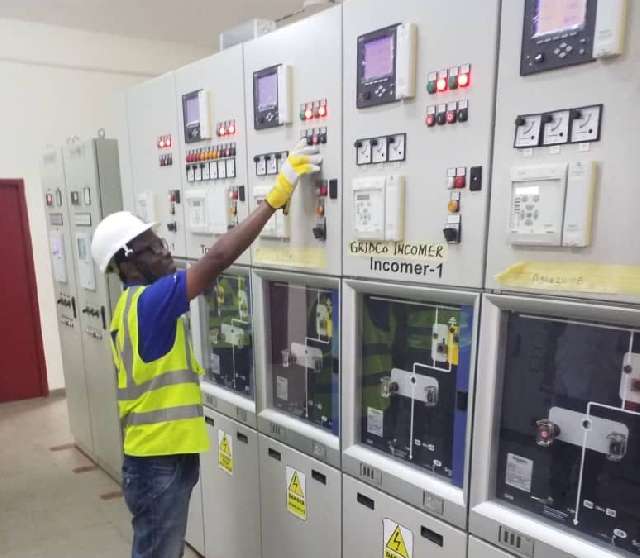
Prof. Osei stressed that Ghana’s staggering distribution and transmission losses remain a key factor undermining financial sustainability in the power sector.
“Your transmission and distribution losses are huge. Our transmission losses are around 27% or so. That is significant.”
ISSER Director, Prof. Robert Darko Osei
These losses among the highest in the subregion translate into substantial revenue shortfalls for utility companies and force government into repeated bailout cycles.
Prof. Osei acknowledged that the Electricity Company of Ghana (ECG) has made some progress in reducing commercial losses and improving revenue collection, but he insisted that such improvements are still insufficient given the scale of the problem.
“That is not to say that you can get away with such high transmission costs. So the ECG discussions will have to go on.”
ISSER Director, Prof. Robert Darko Osei
He pointed to the need for continued debate and reform around ECG’s operations, efficiency, and governance.
Prolonged Debt Cycle Likely
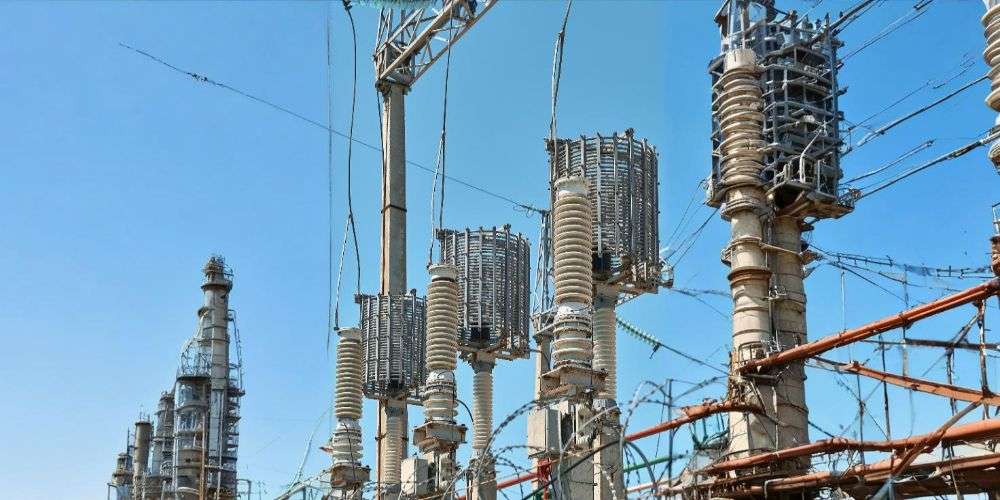
The ISSER director warned that unless Ghana undertakes a comprehensive restructuring of the distribution segment, the country risks returning to the same financial distress that has plagued the sector for years.
He explained that even with renegotiated contracts that reduce costs and extend debt repayment timelines, the underlying inefficiencies in the distribution chain will continue to erode revenue and generate new liabilities.
“If we don’t get our distribution right… We’ll still negotiate with the IPPs and pay, spreading our debts over a longer period.
“But we’ll still have debt to pay because it will not translate to making the IPPs profitable.”
ISSER Director, Prof. Robert Darko Osei
According to him, the expected savings from renegotiated PPAs will not transform into long-term stability unless technical losses are curbed and distribution systems modernised.

ISSER concluded that the fiscal space created through the IPP renegotiations should be strategically reinvested to strengthen governance across the power sector.
The institute argued that Ghana needs stronger planning, efficient pricing frameworks, and improved oversight mechanisms to ensure that power infrastructure and financial flows are managed more sustainably.
Additionally, Prof. Osei stressed the importance of developing a power-sector framework capable of supporting industrial expansion.
He warned that Ghana’s industrialization ambitions could be undermined if the energy sector continues to drain public finances while providing unreliable service to households and businesses.
ISSER’s message to policymakers was clear: short-term savings cannot substitute for deep reforms.
If Ghana hopes to break the cycle of debt and build a resilient energy sector, then fixing transmission and distribution losses alongside strengthening governance, must become the government’s top priority in the coming years.
READ ALSO: Newmont Confirms Commitment to Development in Ghana as GH₵2.3b Payment is Made to the Government