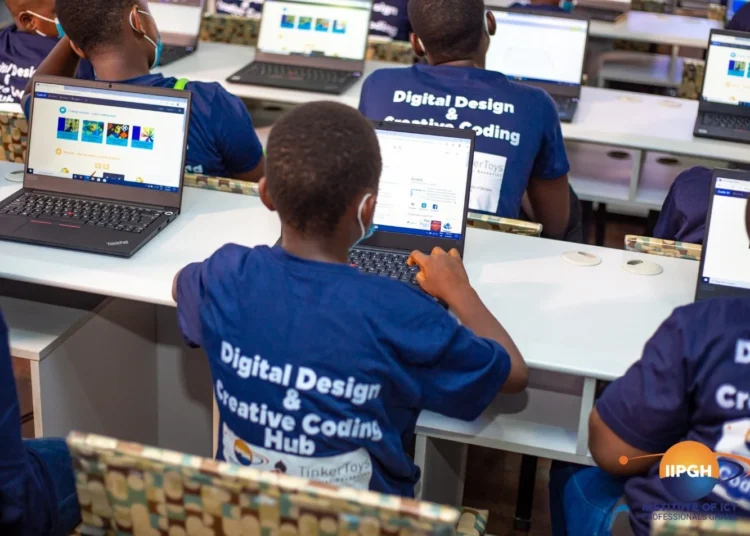
The World Bank is advocating for youth development promotion in Ghana through digital technologies to boost jobs and growth for the country’s greatest wealth, its abundant youth.
In an article, the World Bank placed much emphasis on Africa’s youth potential, especially with its youthful population. Ghana’s population is youthful and embodies all the potential to transform the country’s joblessness into a wealth of productive opportunities.
“In a world increasingly shaped by digital technologies and artificial intelligence (AI), millions of young Africans remain disconnected, not by choice, but due to a lack of opportunity. This is not just a missed opportunity. It’s a call to action.”
World Bank
With the influence of digital technology and AI, jobs must expand while new jobs are created daily to absorb the youth in Ghana and improve the general standard of living.
According to the World Bank, the greatest wealth of Ghana, and Africa in general, is not in the untapped abundance of resources but in its youth, who are full of energy, creativity, and potential.
“What if Africa’s greatest wealth was not its minerals, its oil, or its land, but rather its youth? With 60 percent of its population under the age of 25, the continent is brimming with energy, creativity, and potential.”
World Bank
Ghana is at a crucial juncture in its digital transformation journey. “By 2030, Sub-Saharan Africa is expected to generate 230 million digital jobs, driven by the rapid expansion of digital services,” the World Bank projected.
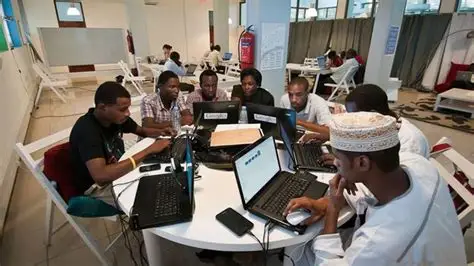
Ghana, on the other hand, is projected to have over 9 million jobs by 2030 that will require digital skills, according to the International Finance Corporation (IFC) report. This translates to about 20 million training opportunities, representing nearly US$ 4 billion in revenue potential through 2030. This is expected to create about 500,000 new direct jobs by 2029 across key sectors.
Boosting Skilled Digital Services
The potential of the digital revolution is massive and requires all stakeholders for effective implementation. The government, in partnership with the private sector, must bridge the digital divide and unlock this great potential.
“In 2024, internet penetration in Africa reached 40 percent, up from 3.2 percent in 2005. Today, more than 600 million people on the continent use mobile broadband internet.
“Despite progress, more than 900 million people remain offline, and 76 percent face a ‘usage gap’. They live in areas covered by the network but lack the means or skills to access digital services. In rural areas, access is only 28 percent.”
World Bank
Most people use the internet for Google searches and social media, but there is more to it, and training is required to unearth these opportunities.
According to DataReportal, as of January 2025, Ghana’s internet penetration was about 69.9 percent, with about 24.3 million internet users out of the 34.7 million people living in Ghana. 30.1 percent of the population remains offline (10.5 million people). Between January 2024 and January 2025, internet users increased by about 446,000 (around 1.9 percent).

The World Bank revealed that bridging the digital divide requires both a social and an economic imperative. “Digitalization is democratizing access to education, health, financial services, and markets,” the Bank added. It also reduces inequality, empowers communities, and creates millions of jobs.
“The arrival of international submarine cables and mobile broadband internet has already expanded labor force participation and raised incomes in several African countries [including Ghana]. The spillover effects on agriculture, industry, and tourism can be profoundly transformative.”
World Bank
The World Bank has organized several community-based training programs to help thousands of people learn digital skills across West Africa and Central Africa. Beneficiaries have access to online learning and mentorship platforms, opening opportunities for individuals and the community in education, entrepreneurship, and citizenship.
These successes need not be exceptions, the World Bank declared. They must become the norm across the region and communities in Ghana if we are to strengthen digital inclusion sustainably. A lot more Ghanaians are not using the internet, and those who have are underusing it productively. “Access alone is not enough; we [Ghana] need to go beyond that by making data affordable, services relevant, and strengthening digital education,” the World Bank alluded.

Digital Transformation for Jobs and Growth
According to the World Bank, renewed commitment to inclusive digital progress, which includes closing the digital divide, developing AI capabilities, and creating digital jobs in Ghana through accelerated digitization and deeper regional integration are ambitious but achievable goal.
“Through collective action, we can build an inclusive, innovative, and resilient digital future. Governments and their partners, including the World Bank, the private sector, and civil society, are forging new partnerships and mobilizing investments, including through digital compacts.”
World Bank
The Ghanaian market must not only adopt digital technologies but must also be about adaptation and creation. The technologies must be tailored to meet the local needs of the Ghanaian and to provide local solutions to the country’s challenges. The World Bank notices Ghana’s dynamism and potential in digital technologies.
“To amplify these innovations, we also need investments in STEM (science, technology, engineering, and mathematics) education, in basic infrastructure, and in enabling regulatory frameworks.”
World Bank
More job opportunities await the youth in Ghana through digital technologies and AI. Authorities must tap into it and translate it to the needs of each level of society for maximum benefit. Economic growth requires economic expansion and job creation. A digital revolution offers both.
READ ALSO: Govt’s Commitment to Social Protection Unquestionable – Adongo