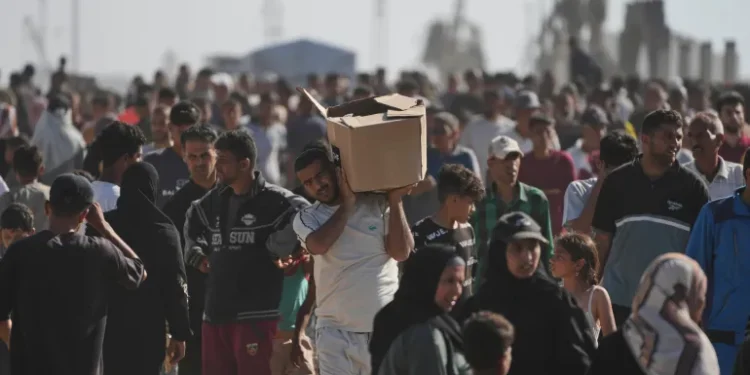
The Gaza Humanitarian Foundation(GHF) has announced that it is ending its “mission” in Gaza.
GHF Executive Director, John Acree said in a statement that from the outset, the GHF’s goal was to meet an “urgent need, prove that a new approach could succeed where others had failed, and ultimately hand off that success to the broader international community.”
The statement from the Israeli- and United States-backed GHF pointed to provisions in the ceasefire between Israel and Hamas that went into effect in October as the reason for ending its operations.
That included the creation of the US-backed Civil-Military Coordination Center, which is meant to coordinate aid to Gaza, and Israel allowing UN-backed aid distribution efforts to partially resume.
“As a result, we are winding down our operations as we have succeeded in our mission of showing there’s a better way to deliver aid to Gazans.”
Gaza Humanitarian Foundation
It claimed to be the “only aid operation that reliably and safely provided free meals directly to Palestinian people in Gaza, at scale and without diversion.”
The group sparked controversy after it began distributing food in the Palestinian enclave in May.
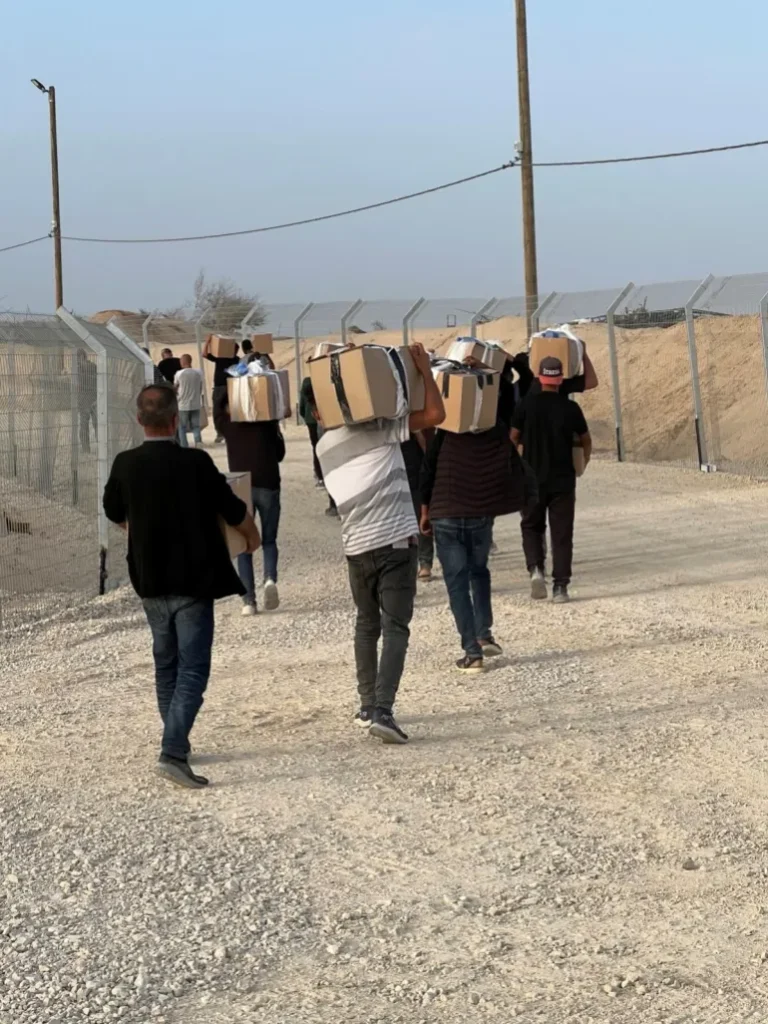
It has been widely condemned for bypassing the United Nations and other humanitarian aid infrastructure in Gaza and for deadly violence that regularly broke out at or near its crowded distribution sites by Israeli soldiers and its own security contractors.
The statement directly contradicted many top figures in the international humanitarian community.
In August, 28 UN experts appealed for the GHF to be dismantled, calling the scheme an “utterly disturbing example of how humanitarian relief can be exploited for covert military and geopolitical agendas in serious breach of international law.”
They added that “Israeli forces and foreign military contractors continue to open indiscriminate fire on people seeking aid at so-called ‘distribution sites’ operated by GHF.”
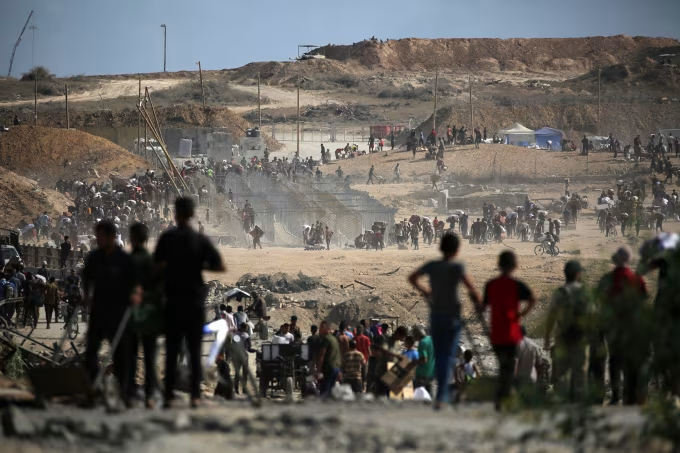
At the time, the experts reported at least 859 Palestinians had been killed around GHF sites since the beginning of its operations in late May.
Among other issues, the experts noted that the scheme required aid seekers to make long, dangerous journeys to a handful of GHF sites to receive supplies, departing from the UN aid delivery model, which emphasises bringing aid more directly to affected communities.
In the statement, the GHF acknowledged that it opened only four distribution sites in Gaza, three in southern Gaza and one near Gaza City. Still, it hailed its operations as a model for future aid deliveries.
It added that GHF leaders “will maintain readiness to reconstitute if new humanitarian needs are identified” and will remain a registered nongovernmental organisation.
Pigott Hails GHF’s Role
US State Department Deputy Spokesperson, Tommy Pigott said in a social media post, “GHF has shared valuable lessons learned with us and our partners.”
“GHF’s model, in which Hamas could no longer loot and profit from stealing aid, played a huge role in getting Hamas to the table and achieving a ceasefire. We thank them for all that they provided to Gazans.”
Tommy Pigott
The US had presented the GHF as a solution to delivering aid in Gaza at a time when Israel’s restrictions on humanitarian operations were causing famine in parts of the war-torn territory, according to the world hunger monitor, the Integrated Food Security Phase Classification system.
UN officials maintained that allowing independent aid workers unfettered access to the enclave was the best way to address the crisis.
READ ALSO: Nyindam Rejects Kpandai Rerun, Insists He Remains Constituency MP