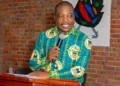
President John Dramani Mahama has issued a strong call for African nations to reclaim full control over their natural resources, arguing that the continent must no longer feel obliged to justify its pursuit of economic sovereignty.
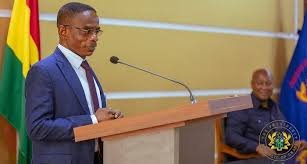
Speaking at the Annual Conference of the African Association of Accountants General in Accra, he said Africa’s path to true development depends on the bold and deliberate management of the wealth beneath its soil.
President Mahama declared, “Africa should not be ashamed of the control of its natural resources,” stressing that improved governance and firm oversight are essential to ending decades of external exploitation and leakages in resource revenue.
President Mahama used Ghana’s gold sector to illustrate the importance of national resource sovereignty.
Recalling events during his previous administration, he revealed that significant inconsistencies in gold export data had exposed the loopholes that allowed billions in potential revenue to slip out of the country.
He narrated an incident involving a state visit by his then-Vice President to India, where discrepancies between Ghana’s reported gold exports and India’s recorded imports became impossible to ignore.


“He mentioned a certain value of that gold. And then… the Indian minister of commerce also came to give his speech… but the fly in the ointment was that there was a disparity in how much gold was reported to have been exported from Ghana and how much gold was received in India.”
President John Dramani Mahama
The revelation, he said, was a turning point. The inconsistencies pointed to widespread under-declaration of the weight and purity of gold leaving the country. According to him, this was not an isolated issue.
“We also found a disparity where a mining company’s figures of exported gold was different from the gold exported by that same mining company to Canada.”
President John Dramani Mahama
Gold Board Creation Ends “Free-for-All” Gold Export Regime

In response to the systemic revenue losses, President Mahama’s administration implemented sweeping reforms to end what he described as a “free-for-all” gold export system dominated by unregulated traders.
Under the old regime, he said, “we had people called gold traders, and they would go into the bushes and buy gold from our small-scale miners.”
These buyers often acted outside the formal market, enabling large-scale smuggling and underreporting at the point of export.
To close the gap, the government established the Ghana Gold Board, a statutory institution designed to regulate, streamline and oversee all gold trading activities in the country.
The reforms also made it illegal to export gold without formal authorisation and introduced stringent penalties for infractions.
“And so this government took the bold decision to establish the Gold Board and make it illegal to take any gold out of Ghana with stringent penalties.
“And you wouldn’t believe it, the amount of foreign exchange that we get from the gold trade has suddenly jumped so high.”
President John Dramani Mahama
He noted that the surge in foreign exchange earnings since the reforms demonstrates the value of strict oversight. “It just shows what greater control of your natural resources can do,” he emphasised.
A Call for African Economic Confidence

Throughout his address, President Mahama urged African countries not only to protect their resources but also to embrace the confidence that comes with asserting economic sovereignty.
For decades, resource-rich African countries have struggled with revenue leakages, illicit financial flows and weak oversight, allowing corporations and foreign traders to benefit disproportionately from Africa’s mineral wealth.
Mahama argued that reforms like Ghana’s Gold Board are proof that African nations can reverse this pattern. “Africa should not be ashamed of it,” he reiterated, urging the continent’s leaders and financial managers to champion transparency, accountability and national control in resource governance.
The President’s remarks resonate at a time when many African economies are exploring new strategies to finance development amid global economic uncertainty.
For the accountants general gathered in Accra, his message was clear: managing natural resources responsibly is not only a financial imperative but a moral one, central to safeguarding the continent’s wealth for future generations.
As Africa continues to position itself in the global economy, Mahama’s call for confidence, control and accountability highlights a growing shift toward assertive resource governance on the continent.
READ ALSO: T-bill Undersubscription Trend Persists as Tight Liquidity Chokes Market