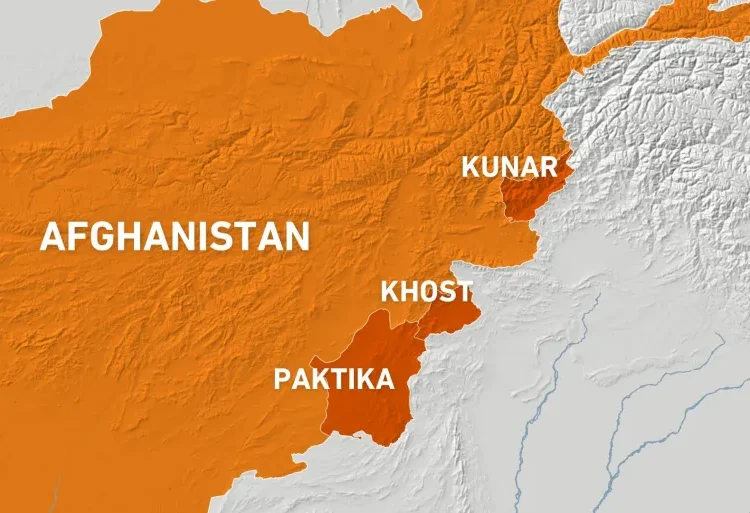
Afghanistan’s Taliban government has accused Pakistan of launching overnight airstrikes in three eastern provinces, killing 10 civilians, including nine children.
Zabihullah Mujahid, the Chief Spokesperson for the Afghan government, said on X that Pakistan “bombed” the home of a civilian in Khost province, killing nine children and a woman.
He said that additional strikes were carried out in the provinces of Kunar and Paktika, injuring four others.
The bombardment in Afghanistan comes a day after a suicide attack that targeted the headquarters of Pakistan’s paramilitary Federal Constabulary force in Peshawar.
The Jamaat-ul-Ahrar – which is a splinter group of the Pakistan Taliban, known by the acronym TTP – claimed responsibility for that attack. Pakistan’s State broadcaster reported that the attackers were Afghan nationals, and President Asif Zardari blamed the “foreign-backed Fitna al-Khawarij” – Islamabad’s term for the TTP fighters it accuses of operating from Afghan soil.
Another suicide attack in the Pakistani capital, Islamabad, earlier this month killed at least 12 people and was also claimed by a faction of the Pakistan Taliban.
Pakistan blamed a cell that was “guided at every step by the … high command based in Afghanistan” for the attack on the capital.
Relations between Pakistan and Afghanistan have been fraught since the Taliban swept back to power in 2021, and worsened after deadly border clashes in October that killed about 70 people on both sides.
The fighting ended with a ceasefire brokered by Qatar and Turkiye, but talks in Istanbul failed to produce a lasting deal, with security issues, especially Pakistan’s demand that Kabul curb TTP fighters proving a sticking point.
Pakistan accuses the Taliban of sheltering fighters behind a surge in attacks, including the TTP, which has waged a bloody campaign against the country for years.
Afghanistan denies the charge and counters that Pakistan harbours groups hostile to the country and does not respect its sovereignty.
Pakistan has intensified intelligence-based operations against militants in recent weeks.On Tuesday, the military said security forces killed 22 militants during a raid on what it described as a hideout of “Indian-backed” fighters in Bannu, a district in Pakistan’s northwestern Khyber Pakhtunkhwa province near the Afghan border.
In a statement, the army referred to the killed insurgents as Khawarij, a term the government and the military use for militants they allege are supported by Afghanistan and India.
Kabul and New Delhi deny providing any support to such groups. The statement said Pakistan “will continue at full pace to wipe out the menace of foreign-sponsored and supported terrorism from the country.”
Ceasefire Between Afghanistan and Pakistan Hangs By A Thread
The ceasefire brokered by Qatar and Turkey between the two sides in October was still holding despite the alleged overnight strikes by Pakistan deep inside Afghanistan.
However, the latest attack risks triggering renewed hostilities and comes as a fragile ceasefire between the two nations hangs by a thread, with each side blaming the other for the impasse in the negotiations.
Relations further deteriorated after Afghanistan blamed Pakistan for the Oct. 9 drone strikes on its capital and threatened retaliation. The clashes that followed killed dozens of soldiers, civilians and militants before the sides agreed to the Oct. 19 ceasefire.
Two subsequent rounds of talks in Istanbul failed to resolve the dispute, when Pakistan said Afghanistan had refused to provide a written guarantee that TTP fighters would not operate from Afghan soil. The Afghan government, in recent years, has said that it does not allow anyone to use its soil for attacks against any country, including Pakistan.
The lingering tension has stalled bilateral trade between Pakistan and Afghanistan, with all border crossings between the two neighbors remaining shut since last month. It has also affected movement of people, as residents from both sides have been unable to travel to meet with relatives and friends since early October.
READ ALSO: Mahama Pushes Tougher Procurement, Audit Reforms to Curb Public Sector Leakages