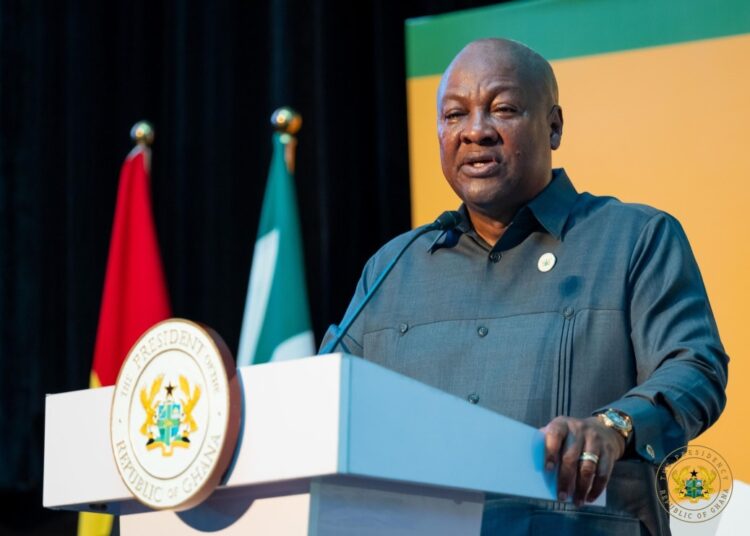
President John Dramani Mahama has outlined a new wave of public financial management reforms aimed at sealing systemic leakages in Ghana’s procurement and audit systems, warning that without stricter controls, African economies will continue to lose millions to inflated contracts and weak oversight.
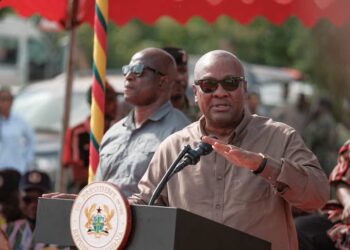
Speaking at the Annual Conference of the African Association of Accountants General in Accra, the President said procurement reform, value-for-money auditing, and strengthened internal audit systems are now central pillars of Ghana’s fiscal reset.
Building on his earlier remarks about Ghana’s recent journey from debt distress to fiscal discipline, President Mahama said the next critical step in the country’s recovery involves confronting deep-seated weaknesses in procurement processes.
“We are also amending the Public Procurement Act in order to reduce the amount of sole sourcing that is done,” he told participants, stressing that limiting uncompetitive procurement is essential for saving public funds.
He described procurement as “one of the biggest sources of leakages in public financial management,” noting that inflated pricing remains a persistent problem.
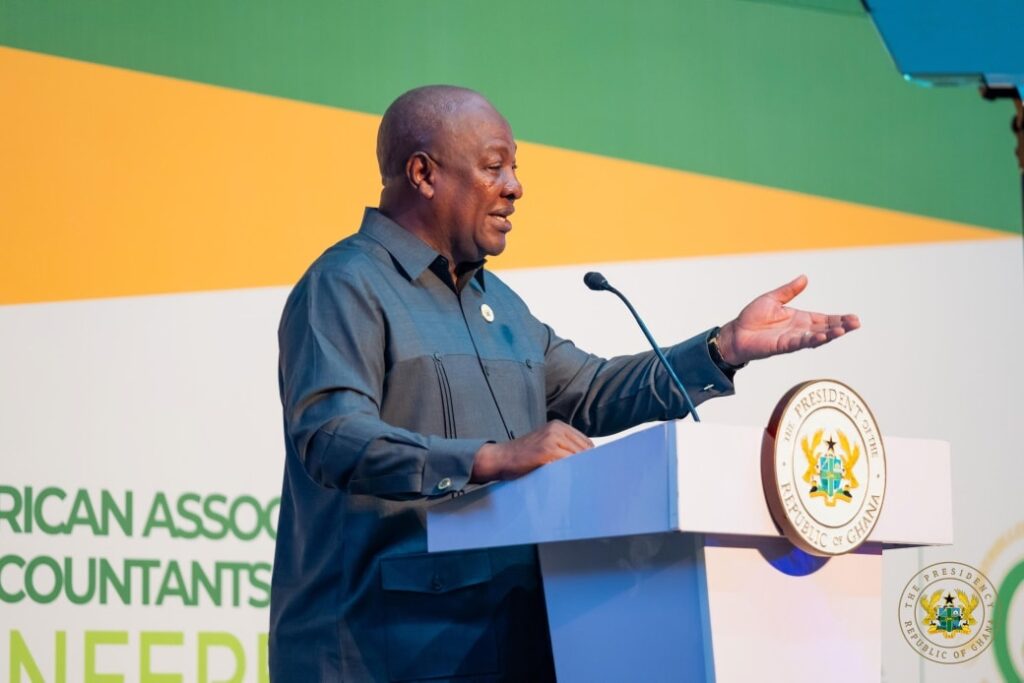
“The private sector goes and procures something, and government goes and procures the same thing at ten times the price,” he said. According to him, such distortions erode public trust, weaken fiscal stability, and create opportunities for corruption. Tightening procurement rules, he emphasized, is therefore not optional but fundamental to responsible governance.
Establishing Value for Money Office
In addition to the amendments, President Mahama announced the introduction of a value-for-money (VFM) audit system that will require all major government contracts to undergo independent scrutiny before public funds are committed.
“Parliament is going to pass a VFM bill so that any procurement that is above a certain amount must go for value for money audits before expenditure can take place”.
President John Dramani Mahama
The measure, he explained, is designed to prevent inflated costing and ensure that government only pays fair and justifiable prices for goods and services. The President linked this reform to broader legal safeguards aimed at preventing reckless expenditure and unsustainable borrowing.
He restated his administration’s commitment to legislating strict debt ceilings to ensure that future Finance Ministers cannot plunge the nation into another debt accumulation crisis. This, he argued, is a vital safeguard for long-term national stability.

Internal Audit Reforms
President Mahama then shifted to another structural weakness he believes Africa must confront: the ineffectiveness of internal audit systems.
He noted that Ghana has two key audit institutions — the Internal Audit Agency and the Auditor-General’s Department — but questioned why the internal audits conducted within ministries, departments, and agencies fail to detect or prevent the violations that later appear in the Auditor-General’s annual reports.
“The Auditor General waits at the end of every year, he audits all state enterprises, and he comes out with either misappropriation of funds or wrongful procurement procedures.
“But the question I ask myself is, in every department, we have an internal auditor. How is it that the internal audit process does not work effectively so that at the end of the year, the Auditor General’s Department comes in with a whole list of malfeasance that has taken place in public organisations?”
President John Dramani Mahama
President Mahama called for urgent reforms to ensure that internal audits function as the first line of defence against financial irregularities, rather than a mere procedural formality. “There is something that we must look at,” he said. “How do we strengthen internal audits so that we don’t, at the end of every year, have that long litany of misappropriation?”
His comments resonated strongly with the role of the African Association of Accountants General, whose offices are responsible for enforcing expenditure controls, monitoring fiscal operations, and ensuring the integrity of public accounts.

By highlighting procurement corruption and audit weaknesses — problems shared across many African public sectors — President Mahama underscored the need for coordinated reforms to secure the continent’s economic future.
The President’s focus on procurement and internal audit reforms forms part of his broader agenda to institutionalize discipline in Ghana’s public financial management systems after years of fiscal laxity.
He expressed hope that Ghana’s experience will stimulate deeper dialogue among African countries and spark continent-wide reforms capable of reducing waste, curbing corruption, and reinforcing accountability across all levels of government.
READ ALSO: Cedi Support Strengthens as BoG Pushes Reserves to $11.41b