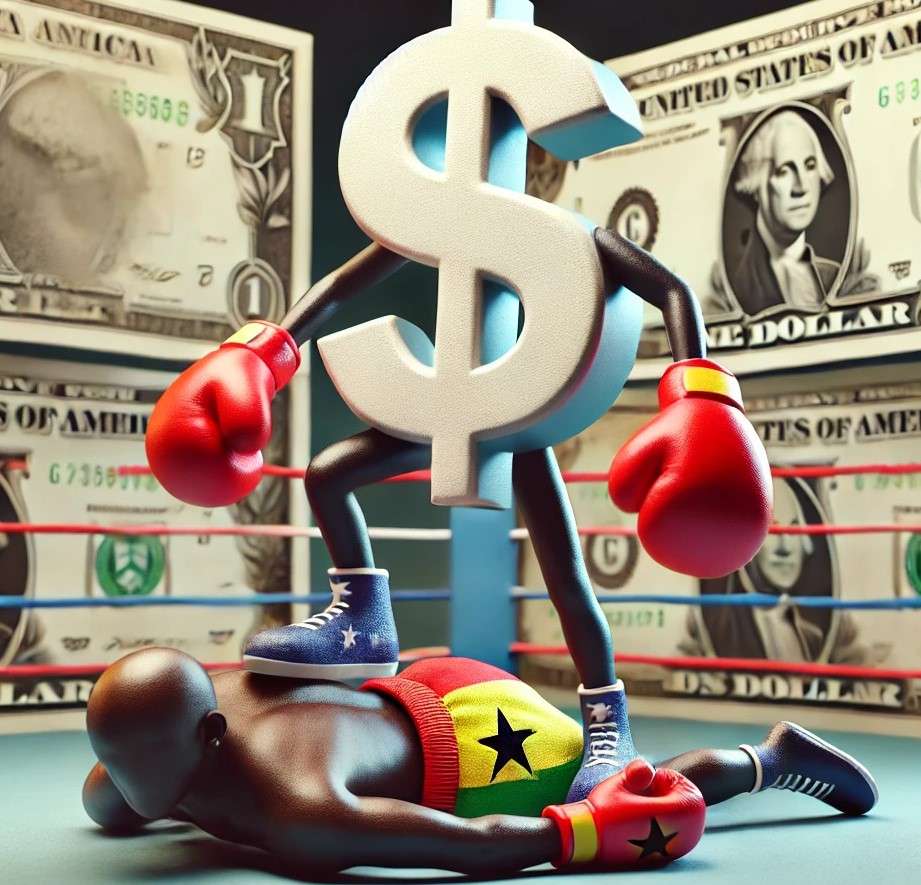
Ghana’s currency, the cedi, is approaching one of its most crucial tests yet as the country prepares for elevated external debt service obligations beginning in 2026.
A new market analysis by IC Research has warned that the medium-term stability of the cedi will depend heavily on the Bank of Ghana’s (BoG) ability to sustain reserve accumulation and enforce strict fiscal discipline after the IMF programme.
The report underscores that while near-term currency stability appears achievable under Ghana’s newly approved foreign exchange (FX) operations framework, the post-IMF period will determine whether these gains can endure.
The findings highlight growing concern that the country’s external position will come under renewed pressure as significant debt repayments kick in. This situation, according to the report, elevates the importance of the BoG’s new FX governance model and Ghana’s commitment to maintaining a disciplined fiscal posture in the years ahead.
New FX Framework Raises Hopes for Transparency and Market Confidence
At the heart of the improving sentiment around the cedi is the Bank of Ghana’s recently approved FX operations framework. The framework is designed to enhance market transparency, increase investor confidence, and strengthen macroeconomic stability.
IC Research emphasises that the predictable and market-neutral nature of the framework is likely to reduce intraday volatility and align market expectations, much like the transparency benefits achieved under Ghana’s inflation-targeting regime.


“This should sustain the near-term stability of the Ghanaian cedi, and we reiterate our view for the exchange rate to remain anchored below the GH¢12.0/US dollar mark in the near term, possibly into late-2026,” the research firm noted. This projection offers a cautiously optimistic outlook at a time when global and domestic uncertainties continue to weigh heavily on emerging market currencies.
The new framework moves away from ad hoc interventions and instead introduces well-defined principles that guide how and when the central bank intervenes in the market. The rules-based structure signals a pivot from emergency-driven FX support to policy-driven currency management—an approach analysts believe is long overdue.
A Three-Pillar Strategy for FX Stability
IC Research outlined three core targets that form the backbone of the BoG’s new FX operations model. The first pillar focuses on reserve buildup, which is expected to provide a cushion against future external shocks. This is critical for Ghana, as reserve adequacy remains a major vulnerability.
The second pillar centres on volatility smoothing. Rather than attempting to peg the currency, the BoG plans to reduce extreme short-term fluctuations without undermining the flexibility of the exchange rate regime. The third pillar emphasizes market-neutral flow intermediation. Under this approach, the BoG positions itself as a disciplined market participant, not a price setter, thereby instilling greater confidence among traders and investors.
According to IC Research, these pillars mirror the disciplined structure of the Inflation Targeting Framework introduced in 2007, which helped stabilise price levels over time. The central bank’s “discretion under constraint” approach is expected to preserve room for intervention while reinforcing market-driven discipline.
Reserves: The Currency’s Lifeline Ahead of 2026
While IC Research holds a positive near-term view, it also delivers a stern warning: the real test of the framework’s effectiveness will come when Ghana enters the era of elevated external debt service from 2026. Under the Gold-for-Reserves programme and export surrender requirements, foreign exchange inflows are expected to support reserve buildup. However, these flows must be strong and consistent enough to offset future outflows tied to debt payments.
The report stresses that reserves will be the single most important buffer protecting the cedi in the medium term. Without continuous accumulation, the pressure from external payments—especially at a time when global financial markets remain tight—could cause renewed instability. This makes the sustainability of inflows from gold production, exports, and investment even more crucial.
Post-IMF Fiscal Discipline Will Make or Break the Cedi
The other linchpin of the cedi’s medium-term health is fiscal discipline, particularly after Ghana exits the current IMF programme in 2026. IC Research points out that once the programme ends, investor perceptions of policy credibility will be central to determining the cedi’s trajectory. Any hint of fiscal slippage or policy reversal could trigger capital flight and undermine the currency’s stability.
With the IMF providing a policy anchor for the moment, Ghana’s challenge will be to institutionalise discipline so that the gains achieved do not unravel. The report warns that markets will be quick to react to any deviation from commitments, especially given Ghana’s recent history of fiscal pressures.
In its final analysis, IC Research argues that the Bank of Ghana’s new FX operations framework strengthens institutional credibility and marks a major step toward a more transparent and predictable currency management regime. However, the sustainability of this progress hinges on two critical factors: robust reserve accumulation and unwavering fiscal discipline after the IMF programme concludes.
As Ghana approaches 2026, the cedi enters a defining period, one where sound policy choices could secure long-term stability, but missteps could expose the currency to renewed volatility. The path may be narrow, but with sustained discipline and consistent inflows, the cedi can withstand the looming debt wave and preserve the fragile stability achieved so far.
READ ALSO:Investors Rush Back: Ghana’s T-Bill Market Explodes With GH¢6bn Bids Amid Reduced Target