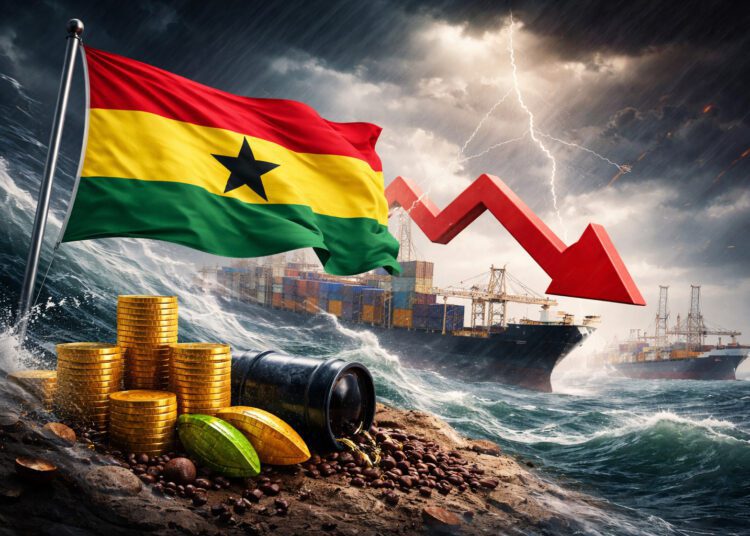
Ghana’s economic outlook for 2026 is increasingly shaped by developments beyond its borders, following the World Bank’s projection that global growth will slow to 2.6 percent next year.
According to the January 2026 edition of the Global Economic Prospects report, the expected moderation reflects fading supportive factors that had buoyed the global economy in recent years, including strong trade momentum and elevated investor risk appetite.
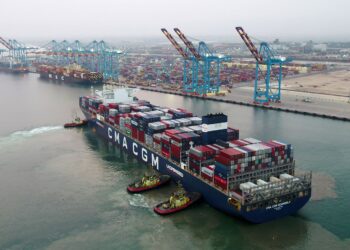
The World Bank notes that trade growth is likely to weaken as firms scale back inventory accumulation and the effects of tariffs intensify across major economies. For a trade dependent economy like Ghana, which relies on exports of gold, cocoa, oil and other commodities, softer global demand and rising trade barriers could translate into slower export growth and heightened balance of payments pressures.
Trade Tensions Pose Risks to Ghana’s Exports
One of the key downside risks identified by the World Bank is the potential escalation of trade tensions. The report cautions that growth could falter if barriers rise further or if financial market sentiment deteriorates due to asset price declines, fiscal concerns or unexpected inflation outcomes.
For Ghana, these risks are particularly relevant. The country’s exports are closely linked to global price movements and demand conditions in advanced economies and emerging markets. Any slowdown in global trade could affect export earnings, foreign exchange inflows and government revenues, complicating fiscal consolidation efforts and debt sustainability objectives.
While Ghana has made progress in stabilising its economy in recent years, external shocks remain a major vulnerability. Weaker global trade conditions could also impact sectors such as manufacturing and agribusiness, where access to international markets is critical for growth and job creation.
Global Resilience Masks Uneven Recovery
Despite the cautionary outlook, the World Bank highlights that the global economy has shown notable resilience in the face of heightened trade tensions and policy uncertainty. Last year, stockpiling of traded goods, strong risk appetite and a surge in artificial intelligence spending supported economic activity, while global supply chains adapted to rising trade barriers.
The Bank observes that the faster than expected pace of growth capped a five year global recovery from the 2020 recession that is unmatched in more than six decades. However, this headline recovery masks a sharp divergence between advanced economies and emerging market and developing economies.
Nearly 90 percent of advanced economies have now surpassed their pre pandemic per capita income levels. In contrast, more than one quarter of emerging market and developing economies remain below their 2019 income levels. Many of these are low income countries or economies affected by fragility and conflict.
Implications for Ghana and Emerging Economies
Ghana falls within the group of emerging market economies still navigating the after effects of the pandemic, global inflation shocks and tighter financial conditions. The World Bank’s findings underscore the risk that slower global growth could prolong income gaps and delay development progress if domestic reforms are not accelerated.
Tighter global financial conditions could also raise borrowing costs for countries like Ghana, limiting access to external financing and increasing pressure on domestic interest rates. This could affect private sector investment, credit growth and overall economic activity, especially for small and medium sized enterprises.
At the same time, subdued global growth may constrain foreign direct investment flows, making it more challenging for Ghana to attract capital into priority sectors such as manufacturing, energy, technology and agribusiness.
While the risks are tilted to the downside, the World Bank identifies potential upside factors that could support global and national growth. It notes that artificial intelligence related activity could broaden further, while firms’ adaptability to new trade conditions could help sustain economic momentum.
For Ghana, this presents both an opportunity and a challenge. Leveraging digital technologies, improving productivity and supporting innovation could help mitigate some of the external headwinds. Investments in digital infrastructure, skills development and technology driven services could position the economy to benefit from emerging global trends, even in a slower growth environment.
World Bank Calls for Reforms in EMDEs
The World Bank emphasises that global efforts are needed to improve the trade environment, ease financing constraints and mitigate climate related risks. At the national level, it urges policymakers in emerging market and developing economies to advance domestic reforms to catalyse investment and support long term growth.
According to the report, policymakers should focus on diversifying trade, strengthening macroeconomic frameworks and removing structural bottlenecks. Without stronger economic dynamism, many emerging economies will struggle to create enough jobs for expanding working age populations.
For Ghana, this reinforces the importance of structural reforms aimed at boosting productivity, expanding value addition and enhancing export competitiveness. Strengthening macroeconomic stability, deepening financial markets and improving the business environment will be critical in navigating the uncertain global outlook projected for 2026.
As the World Bank flags downside risks to global growth, Ghana’s economic prospects will depend on its ability to manage external shocks while advancing domestic reforms.
While global conditions may be less supportive in 2026, prudent policy choices, diversification efforts and strategic investments could help cushion the impact and sustain the country’s recovery trajectory. In an increasingly uncertain global environment, resilience, adaptability,, and reform-driven growth will be central to Ghana’s economic story in the years ahead.
READ ALSO: Investors Stay Selective on GSE as NewGold ETF Shines in Low-Volume Session