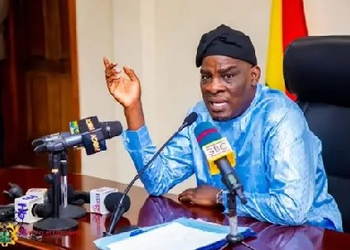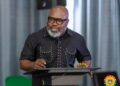

Former Roads Minister and Bantama Member of Parliament (MP) Hon. Francis Asenso-Boakye, has vehemently denied claims that he advised President John Dramani Mahama to halt the planned Accra-Kumasi Expressway project.
In a clarifying interview, Hon. Asenso-Boakye pushed back against allegations made by Finance Minister Dr. Cassiel Ato Forson, who suggested that the former Minister had labelled the proposed expressway as “unnecessary and potentially wasteful.”
He insisted that his letter to the President was not an act of political opposition but a necessary call for due diligence, proper technical planning, and responsible prioritization to prevent the massive waste of taxpayers’ money – arguing that the Finance Minister’s interpretation of his intervention was misleading.
“I never said they should stop the project. He (Finance Minister) also said that I indicated in the letter that the proposed project is wasteful. I never said that. There are two important issues I raised in the letter: the project’s feasibility and the risk of abandoning existing investments”
Hon. Francis Asenso-Boakye, Former Roads Minister and MP for Bantama
The former Roads Minister first took issue with the government’s public announcement of a three-year duration for the ambitious 200-kilometer expressway, planned for construction on a “greenfield area.” He argued that committing to such a short timeline before any technical groundwork had been laid showed a lack of serious analysis.
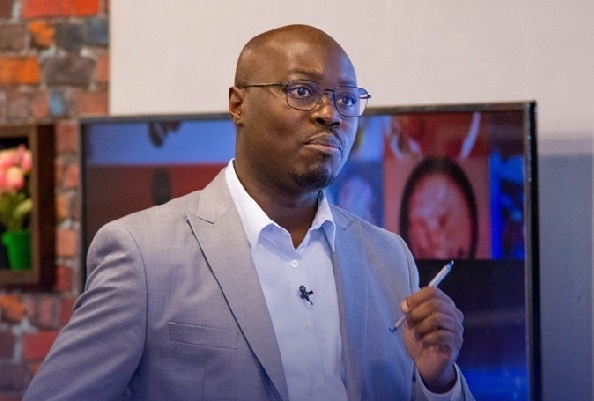
Hon. Asenso-Boakye expressed shock that the President announced the project’s completion date while the Roads Minister concurrently indicated that the government was still in the process of hiring a consultant to undertake the required feasibility studies.
“As long as feasibility studies had not been done, on what basis are they able to determine the duration of the project,” he questioned, stressing that without a feasibility study, a project lacks fundamental information needed for proper execution.
“What it means is that there is no final design, cost estimate, secure funding and not to talk of the various milestones in the construction process; procurement, mobilisation, compensation, relocation and all that. I thought that it was a mere political statement, not one that had gone through serious analysis to determine its duration”
Hon. Francis Asenso-Boakye, Former Roads Minister and MP for Bantama
Hon. Asenso-Boakye maintained that his intervention was purely aimed at ensuring the proposed project was “feasible and thought-through,” and not simply a rush to score political points by the current government.
Abandoning a 64% Complete Project
The second, and perhaps more critical, point raised in the Bantama MP’s letter concerned the government’s perceived intention to abandon the ongoing dualization of the existing Accra-Kumasi Highway in favor of the new expressway.

Hon. Asenso-Boakye emphasized that with limited fiscal space and competing national needs, continuity – not costly duplication – must be the responsible approach.
He pointed out that the existing highway upgrade had benefited from significant investments by successive governments, beginning during the Kufuor administration with major interventions like the bypasses at Nkawkaw and Nsawam, and the Nkawkaw-Apedwa highway. The project was revived under President Akufo-Addo.
“So, I implored on the government to continue the project,” Hon. Asenso-Boakye explained, revealing that the dualization of the existing highway had already achieved 64% physical completion. He warned that discarding an asset with such substantial investment would be an unforgivable financial error at the expense of taxpayers.
“I wrote to President Mahama that – having spent these resources only to then abandon it, is going to be a problem especially if that highway is going to serve the same purpose as the newly proposed one”
Hon. Francis Asenso-Boakye, Former Roads Minister and MP for Bantama

The former Minister’s clarification maintained that his intervention was focused on promoting fiscal prudence and ensuring that national resources are efficiently prioritized by the government and the Finance Ministry, rather than undermining the development goals of the current administration.
READ ALSO: Non-Interest Banking Era Nears Reality as BoG, SEC and NIC Unveil Joint Regulatory Push