Africa’s natural gas sector is entering what industry leaders describe as a defining phase, with new projections pointing to rapid growth in production, rising domestic demand, and emerging export opportunities.
According to African Energy Chamber (AEC) Executive Chairman NJ Ayuk, the continent is poised for a gas-powered transformation, provided governments can address structural barriers that have long held the industry back.
Speaking on the release of the Chamber’s 2026 Outlook Report: The State of African Energy, Mr Ayuk described natural gas as “a pivotal component of Africa’s energy future,” stressing that the fuel remains uniquely positioned for expansion even as global markets shift toward surplus LNG supply.
“African demand for gas is forecast to rise 60% by 2050.
“In fact, gas is the only fossil fuel expected to expand its share of primary energy demand globally.”
NJ Ayuk, Executive Chairman of the African Energy Chamber
Today, nearly two-thirds of African gas production originates in North Africa, led by Algeria, Egypt, and Libya. However, the AEC report forecasts a major shift over the next decade as emerging producers scale up activity.
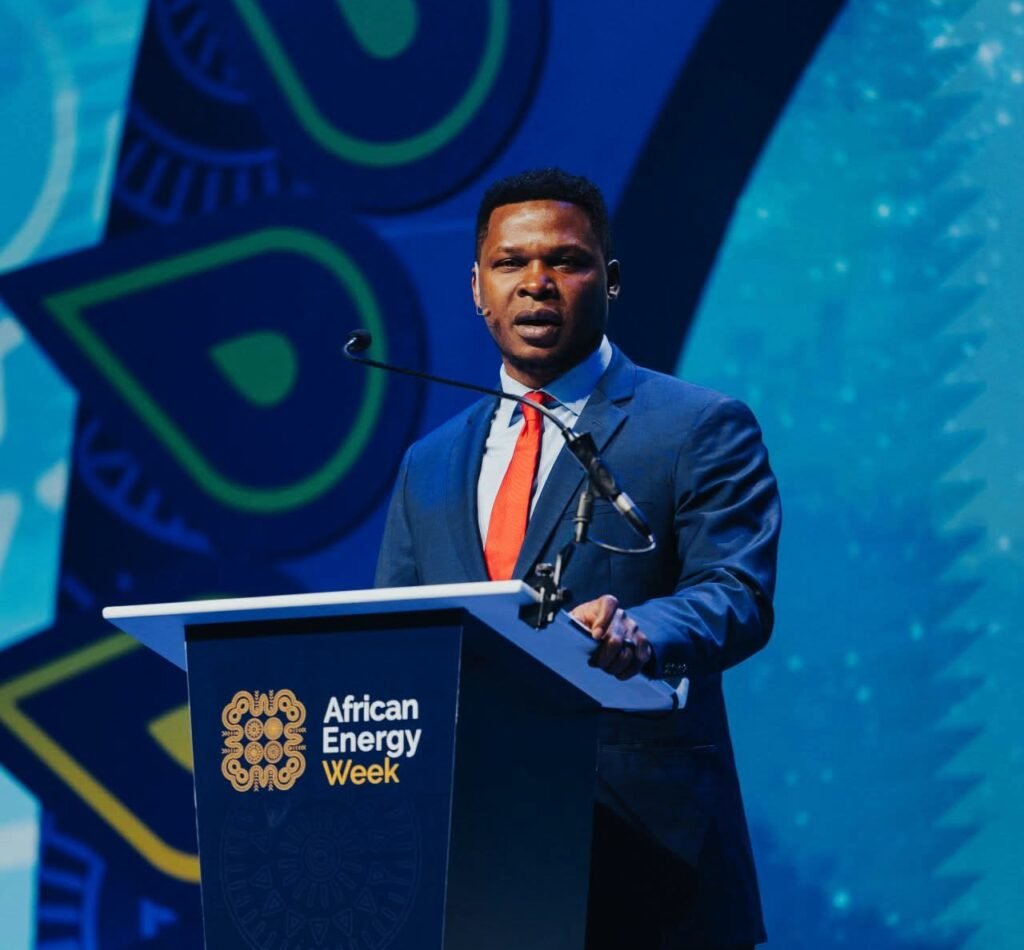
“We expect North Africa’s share of total continental production to decrease to below 40% by 2035 as output from other regional producers accelerates.”
NJ Ayuk, Executive Chairman of the African Energy Chamber
Sub-Saharan Africa currently accounts for roughly one-third of total gas production, but holds more than 70% of Africa’s remaining recoverable resources, over 400 trillion cubic feet (Tcf). This imbalance sets the stage for the next phase of growth.


Nigeria, where the government launched a “Decade of Gas” initiative in 2021, is expected to anchor the expansion, already producing more than half of the region’s commercialized gas. Major new entrants, including Mozambique, Tanzania, Senegal, Mauritania, and Angola, are also building momentum.
“Mozambique’s Coral Sul project, Senegal-Mauritania’s Greater Tortue project, and Congo LNG have all added new export streams since 2022.”
NJ Ayuk, Executive Chairman of the African Energy Chamber
By 2050, African gross gas demand is projected to exceed 90 billion cubic meters (Bcm) annually, driven by residential consumption, industrialization, and expanding power generation.
A Strategic Advantage for African Producers
A notable shift outlined in the report is Africa’s growing reliance on non-associated gas, reserves not linked to crude oil production. Ayuk explained that while non-associated gas is more expensive per MMBtu, it carries fewer constraints.
“Unlike North Africa’s mature, pipeline-linked markets, sub-Saharan gas is increasingly non-associated or ‘dry’.
“The fact that it is not cross-subsidized by oil frees it from the pricing and operational constraints of oil-centric projects.”
NJ Ayuk, Executive Chairman of the African Energy Chamber
This flexibility allows producers to direct volumes toward domestic markets, regional pipelines, or LNG exports, depending on commercial opportunities.
Gas presents African nations with two transformative economic pathways: export revenues and domestic industrialization.
On exports, Ayuk revealed that Africa supplied 34.7 million metric tonnes (MMt) of LNG last year, 8.5% of global supply, with sub-Saharan producers contributing 26.9 MMt.
“With Tanzania joining the export roster, the 2026 Outlook Report projects a quadrupling of the sub-Saharan supply by 2050.”
NJ Ayuk, Executive Chairman of the African Energy Chamber
Because producers in West and Southwest Africa sit near both Atlantic and Indian Ocean markets, they can serve as swing suppliers, responding quickly to price fluctuations in Europe and Asia.
Countries with domestic market obligations (DMOs), such as Nigeria, Senegal-Mauritania, and Angola, also stand to benefit from increased export capacity. Ayuk notes that these obligations ensure local power and industrial sectors receive critical gas volumes.
“For example, Senegal has plans of achieving 3 gigawatts (GW) of gas-fired power by 2050, largely fed by DMOs from the Greater Tortue and Yakaar-Teranga projects.”
NJ Ayuk, Executive Chairman of the African Energy Chamber
Gas-Based Industrialization: Second Engine of Economic Growth

Beyond exports, the Chamber identifies in-country value creation as a major catalyst for development.
Gas is already reshaping power generation across sub-Saharan Africa. Nigeria’s gas-fired capacity now stands at 12.6GW, followed by Ghana at 2.9GW and Mozambique at 1.1GW. Countries such as Senegal, Tanzania, Angola, Côte d’Ivoire, and South Africa are also expanding gas-to-power projects.
The AEC expects demand for fertilizers, petrochemicals, CNG, and metals processing to rise significantly. Angola and Nigeria, in particular, are positioning gas at the heart of long-term industrial policy.
“Angola’s National Gas Plan targets fertilizer and petrochemicals to curb import reliance.
“Nigeria’s push for CNG vehicles officially began in 2022 under the National Gas Expansion Program.”
NJ Ayuk, Executive Chairman of the African Energy Chamber
These developments, he argued, will allow African economies to “cut down on imports, grow revenues, and provide energy access to their people for decades to come.”
Africa to Unlock Its Gas Potential
Despite abundant resources, Africa ranks second globally for discovered but undeveloped gas, a gap driven by structural and regulatory challenges.
More than half of sub-Saharan production comes from low-cost associated gas. Expanding non-associated gas output requires competitive pricing to justify investment.
Ayuk emphasized the need for “long-term contracts with creditworthy offtakers, predictable consumption patterns, and government-backed incentives.”
LNG terminals, pipelines, and processing facilities remain sparse. The report highlights the classic “chicken-and-egg paradox,” in which investors demand guaranteed demand before building infrastructure, while demand cannot grow without infrastructure.
Governments must balance royalties, taxes, DMOs, and local content rules while maintaining stability to attract long-term capital.
Ayuk frames natural gas as the essential “bridge fuel” that can support Africa’s energy transition while expanding electricity access and industrial capacity.
“Sub-Saharan Africa’s anticipated non-associated gas production surge can deliver energy security, export revenues, and new industrial jobs.
“If African nations can collectively support upstream scalability, midstream connectivity, and downstream certainty, gas production will not merely surge it will transform the entire continent for the better.”
NJ Ayuk, Executive Chairman of the African Energy Chamber
The AEC’s 2026 Outlook makes it clear: with the right policies and partnerships, Africa’s gas boom could define its economic trajectory for decades to come.
READ ALSO: Suhuyini Demands UG Flexibility on WASSCE Failure, Slams Zipline Termination Calls