The global financial environment is entering a new era of fragility as developing countries navigate unprecedented debt pressures.
According to the World Bank’s latest International Debt Report, low and middle income countries restructured a staggering 90 billion dollars in external debt in 2024. This marks the highest amount since 2010, a reflection of tightening global financial conditions, soaring interest rates, and capital outflows that have left many nations vulnerable.
The World Bank warns that although financial markets appear to be stabilizing, developing economies remain exposed to persistent debt risks.
Indermit Gill, the World Bank Group’s Chief Economist, captures the gravity of the moment by noting that “global financial conditions might be improving, but developing countries should not deceive themselves: they are not out of danger.” His caution echoes deeply across Africa, where several economies including Ghana continue to grapple with the consequences of heavy borrowing and limited fiscal space.
The Record Outflow That Set Off Alarms
Between 2022 and 2024, developing economies paid 741 billion dollars more in principal and interest than they received in new financing. This represents the largest negative net financial flow in at least fifty years.
The report highlights that the combined external debt of low and middle income countries reached an all time high of 8.9 trillion dollars in 2024. The average interest rate these countries pay on newly contracted public debt rose to a 24 year high for official creditors and a 17 year high for private creditors.


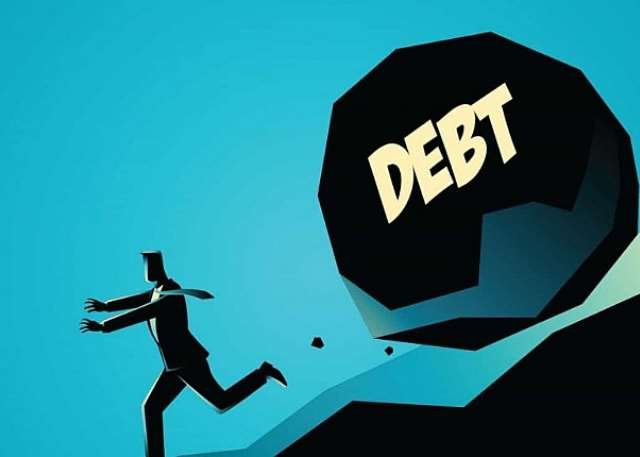
The consequences have been severe. Developing countries spent an unprecedented 415 billion dollars in interest payments alone. These are resources that could have been invested in schooling, primary healthcare, agriculture, or infrastructure. The World Bank notes a troubling correlation between high debt levels and living standards.
Among the 22 most indebted countries, where external debt exceeds 200 percent of export revenue, an average of 56 percent of the population cannot afford the minimum daily diet necessary for long term health.
Ghana’s Struggle and Its Path to Stabilisation
Ghana features prominently within this global reshuffling. Faced with unsustainable debt levels, the government initiated a comprehensive restructuring program to restore economic stability. The country has pursued a dual approach, combining external debt restructuring with official and commercial creditors and a wide ranging domestic debt exchange.
On the external front, Ghana has made significant progress with bilateral creditors. The government has secured agreements in principle with key partners including China through China Exim Bank, France, Finland, the United Kingdom, Spain, and Germany. These agreements are designed to extend maturities, reduce interest costs, and provide the fiscal breathing room necessary to support the recovery programme.
Ghana has also completed a Eurobond debt exchange in record time, finishing the process in under nine months. This exchange delivered a 37 percent reduction in the nominal value of targeted debt, translating into a five billion dollar reduction. Debt service savings are also substantial.
Ghana expects to save 4.3 billion dollars during the period of the IMF supported programme. The restructuring has brought down the average interest rate on its bonded external debt from above eight percent to less than five percent.
Ghana’s Domestic Debt Exchange
To complement the external restructuring, Ghana executed a large scale domestic debt exchange. Existing domestic bonds as of December 1, 2022 were exchanged for new instruments with longer maturity dates and revised coupon structures.
The new bonds carried zero percent interest for 2023, five percent for 2024, and ten percent from 2025 onward. Treasury bills were exempted entirely. The government stressed that individual bondholders would be protected and that no principal would be reduced.
Although the domestic programme helped reduce near term financing pressures, it also brought short term strain, particularly for financial institutions holding large volumes of government securities. The Bank of Ghana responded with liquidity support and regulatory relief measures to safeguard the banking sector.

The Global and Local Risks That Remain
Despite the restructuring momentum across developing countries, the World Bank warns that the broader debt environment remains precarious. Bond investors poured 80 billion dollars more in new financing into developing countries than they received in repayments, but at a steep cost.
Interest rates for many nations hovered around ten percent, roughly double the pre 2020 levels. This creates new fiscal risks that could undermine future stability.
In addition, access to low cost financing from bilateral creditors is shrinking. Bilateral lenders took in 8.8 billion dollars more in principal and interest than they disbursed in 2024. As a result, many developing countries including Ghana have turned increasingly to domestic markets.
While this signals growing financial sector development, it also forces domestic banks to allocate more resources to government bonds rather than private sector lending. Haishan Fu, the World Bank Group’s Chief Statistician, warns that “governments should be careful not to overdo it.”
A Narrow Path Ahead
Ghana’s debt restructuring has delivered early wins, yet the country is not out of the woods. The global environment remains challenging, borrowing costs are still elevated, and access to affordable long term financing is shrinking.
As the World Bank cautions, this is a moment to consolidate progress rather than rush back into the markets.
Ghana’s task now is to sustain fiscal discipline, deepen domestic revenue mobilisation, and maintain structural reforms that support growth. The stakes are high. Getting the debt trajectory right is essential not only for macroeconomic stability but also for protecting the livelihoods of millions of Ghanaians who rely on robust public investment and social services.
READ ALSO:Banking Consultant Backs BoG’s “Faster, Sharper” 14-Day Bill Strategy Amid Rate Declines