Pressure from lawmakers and industry players is intensifying as the government prepares to implement new electricity and water tariff increases next year. Critics argued that the adjustment is not only unjustified but also economically damaging at a time when systemic inefficiencies within the utility companies remain unaddressed.
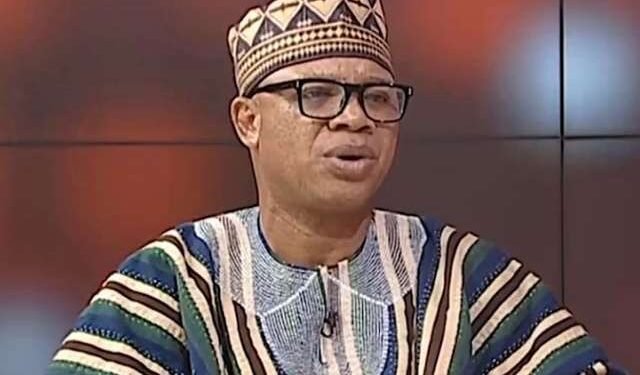
The Ranking Member on Parliament’s Energy Committee, George Kwame Aboagye, accused the government of neglecting structural problems that continue to drain the power sector.
“We are losing between $80 million and $90 million every month.
“Tell me, can’t we use this money to offload whatever cost or debt we have? Every time we talk about losses, but it seems nobody is taking serious account of them.”
George Kwame Aboagye, Ranking Member on Parliament’s Energy Committee
Hon. Aboagye stressed that tariff reviews “can be downward or upward,” insisting that the current economic pressures demand a reduction rather than an increase. He argued that consumers should not be penalised for systemic failures that have been ignored for decades.
He noted that Ghana’s peak demand of 4,080 megawatts, alongside an average demand of about 3,500 megawatts, highlights persistent inefficiencies that tariff hikes alone cannot resolve.
According to him, the government’s insistence on periodic upward adjustments does not address the structural rot undermining the power sector.
Businesses Accuse ECG and GWCL of “Crippling the Economy”



The Food and Beverages Association of Ghana (FABAG) has also strongly condemned the tariff adjustments, accusing the Electricity Company of Ghana and the Ghana Water Company of burdening industry with years of inefficiency.
FABAG described the tariff hike as “unacceptable, unjustifiable and insensitive,” especially given the ongoing economic challenges slowing business growth and increasing production costs.
According to the Association, ECG has failed to account for what it calls a “cancer of inefficiency, financial waste and mismanagement” revealed by Parliament’s Public Accounts Committee.
The group insists that “this cannot be swept under the carpet,” saying Ghanaians deserve clarity on how ECG intends to tackle recurring failures rather than compensating with higher tariffs.
FABAG argued that raising tariffs in the face of unresolved operational lapses only deepens the financial strain on businesses.
Business operators say the service quality delivered by ECG and the Ghana Water Company does not justify the tariff increments. Frequent outages, unstable supply, and billing inconsistencies remain widespread complaints among industrial and residential consumers.
FABAG warned that continued mismanagement risks triggering business shutdowns, job losses and reduced production output in the manufacturing and hospitality sectors—two industries heavily reliant on stable electricity and water supply.
The group is calling for an immediate suspension of the tariff adjustments and a comprehensive plan detailing how the utilities intend to improve efficiency, reduce losses and uphold financial accountability.
Debate Over Cost Recovery and Public Confidence
The Public Utilities Regulatory Commission (PURC) has defended the decision, noting that the tariff adjustments are necessary to ensure financial sustainability and enable critical infrastructure expansion.
But critics argue that without addressing ECG’s operational leakages, the new charges serve only to transfer inefficiencies to consumers.
Consumers, meanwhile, express frustration that they are being called upon to absorb rising costs while the utilities continue to lose revenue through theft, technical inefficiencies and internal administrative failures.
Civil society groups, industry associations and opposition legislators are pushing for a national dialogue to reassess the tariff structure, review ECG’s operational performance, and introduce tougher accountability measures.
For many observers, stabilising the utilities requires more than incremental tariff changes; it demands deep operational reforms, strong managerial oversight and transparency in financial reporting.
As pressure continues to mount, government has yet to indicate whether it will reconsider the tariff increases. But with households and businesses already grappling with inflation and rising operational costs, demands for relief are only expected to grow louder in the weeks ahead.
READ ALSO: Fidelity Bank Pushes ESG, GreenTech and Youth Innovation as Ghana’s New Growth Pillars