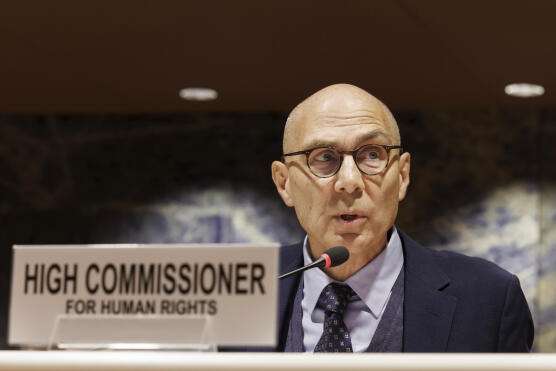
The UN Human Rights Chief, Volker Turk has said that his office is facing a $90 million funding shortfall this year and staff cuts would include about 300 posts, or about 15%, over the course of the year.
Turk told reporters on Human Rights Day that his office was in “survival mode” at a time when major donors, including Britain, Finland, France and the United States, have lowered their contributions.
“Our resources have been slashed along with funding for human rights organizations, including at the grassroots level around the world…My office has had about $90 million less than we needed this year, which means around 300 jobs have been lost.”
Volker Turk
He stressed that essential work has had to be cut, including on Colombia, the Democratic Republic of the Congo, Myanmar, Tunisia and other countries at a time “when the needs are rising.”
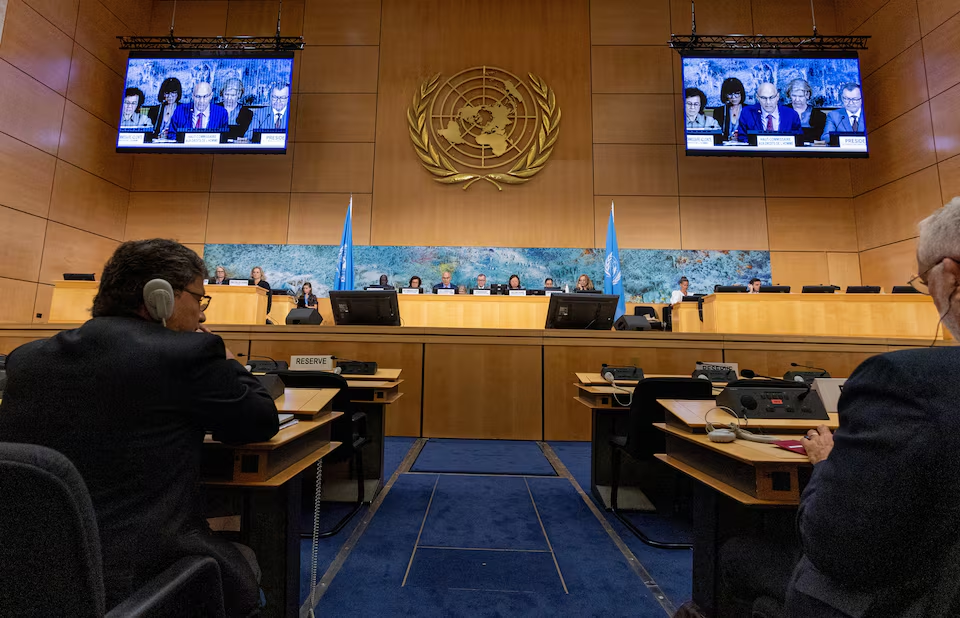
He noted that funding for human rights has been slashed, while anti-rights movements are increasingly well-funded.
“Profits for the arms industry are soaring, while funding for humanitarian aid and grassroots civil society plummets.Those defending rights and justice are attacked, sanctioned and hauled before courts, even as those ordering the commission of atrocity crimes continue to enjoy impunity.”
Volker Turk
Spokeswoman Marta Hurtado Gomez said in an email that the rights office had an approved budget from member states of $246 million this year, but received $67 million less than that.
Additionally, the office had appealed for extra-budgetary, or voluntary, funding for $500 million, but has received half that. It is expected to have spent $273 million by year’s end, which means a deficit of another $23 million.


He said that country visits by UN special rapporteurs, who are independent experts, as well as investigative missions by fact-finding bodies have been reduced, while dialogues with states on their compliance with UN human rights treaties have had to be postponed, with the number of state parties reviews falling to 103 from 145. “All this has extensive ripple effects on international and national efforts to protect human rights,” Turk said.
Also, the UN Human Rights Chief pointed to grave human rights concerns in Sudan, Gaza and Ukraine.
Referring to the conflict in Sudan, he said, “I am extremely worried that we might see in Kordofan a repeat of the atrocities that have been committed in El-Fasher.”
Sudan’s paramilitary Rapid Support Forces took over Darfur’s city of El-Fasher in late October in one of its biggest gains of the two-and-a-half-year war with Sudan’s army. This month, advances have continued eastward into the Kordofan region, and they seized the country’s biggest oil field.
He noted that Russia’s increased use of powerful long-range weapons had driven a sharp rise in civilian casualties in Ukraine – with these rising 24% from the same period last year.
Many UN Agencies Affected
Many UN organizations, including the World Health Organization, the UN refugee agency and the International Organization for Migration, have slashed jobs and spending this year because some top donors have not paid their UN dues in full or cut back foreign aid.
Those other organizations have annual budgets in the billions, and far larger staffs than the rights office.
Turk said, “We are all affected,” adding that his office has been “disproportionately affected … in the sense that if you cut what is already very scarce, and if you cut this even further, then obviously it has a huge impact.”
After beginning the year with about 2,000 employees, the rights office has already cut 230 posts this year and is expected to cut between 70 and 80 more by year-end.
READ ALSO: Albanese Hails Australia’s Social Media Ban For Under-16s