The National Road Safety Authority (NRSA) has issued a critical appeal to the Ministry of Roads and Highways, demanding the immediate incorporation of dedicated motorcycle (Okada) lanes into all new road projects.
This demand follows Parliament’s historic passage of the Road Traffic Amendment Bill, 2025, which legalized the commercial use of motorcycles, tricycles, and quadricycles across the country.
While welcoming the regulatory framework, the NRSA warned that without essential infrastructure changes, the new law risks compounding existing road safety crises. The Public Relations Officer of the NRSA, Pearl Satekla, stressed that legalization must be matched by infrastructural reforms designed to enforce disciplined riding.
“We welcome the legalisation with its regularisation. We are appealing to the Road Agency that henceforth, they should make provision for motor riding lanes so that it will prevent them from meandering through vehicular lanes, thereby killing pedestrians”
Pearl Satekla, NRSA Public Relations Officer
She noted that the lack of designated lanes is the primary driver of the dangerous habit of riders meandering through main traffic lanes, a practice which consistently endangers both riders and pedestrians.

The passage of the Road Traffic Amendment Bill, 2025, on Thursday, December 11, 2025, ushered in a new regulatory phase for a sector that has operated informally for years.
The legislation provides a legal framework expected to sanitize transport services, create employment opportunities for young people, and improve road safety through defined rules and stronger enforcement.


Minister for Transport, Hon. Joseph Nikpe Bukari, emphasized during the parliamentary debate that the amendment is designed to “sanitise road transport services,” and strengthen safety protocols nationwide.
In addition to legalizing commercial motorcycle operations, the new law introduces stricter penalties for offenders and importantly, raises the legal alcohol concentration threshold for drivers, aiming to curb drunk driving and related accidents.
The new provisions are seen by government officials as essential for bringing order to the rapidly expanding road transport sector. The positive reception was immediate, with the Okada Riders Association welcoming the new law as a major step toward professionalizing the sector.
Prerequisite for Safety
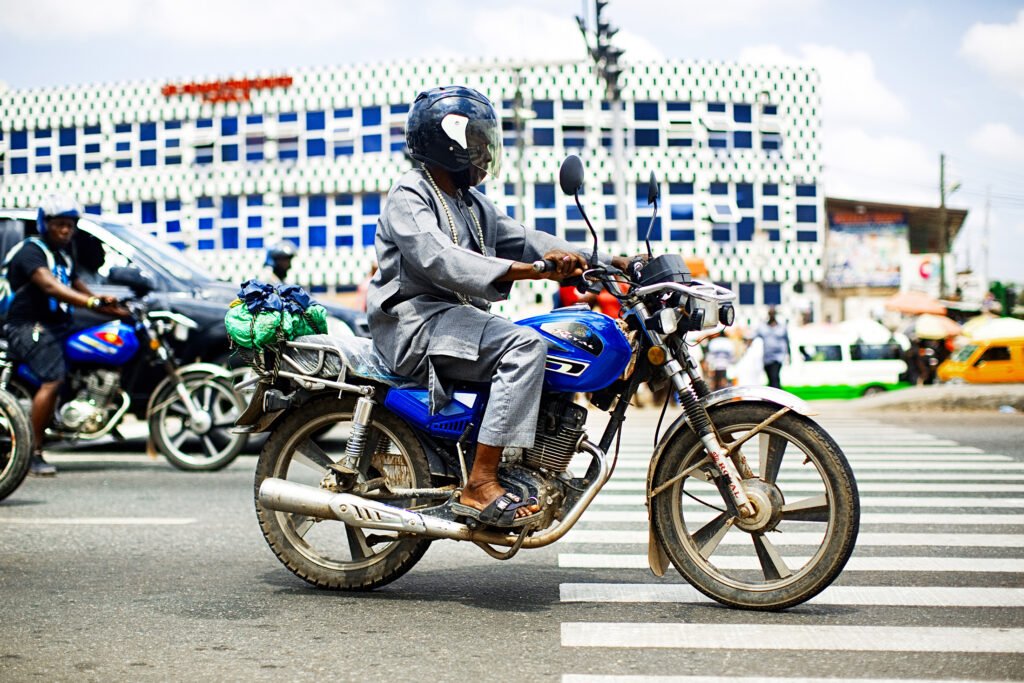
Despite the widespread welcome for the new law, the NRSA views the immediate infrastructural deficit as the biggest threat to its successful implementation. Ms. Satekla highlighted that the very purpose of legalization – to enhance safety – will be undermined if riders are continually forced to share lanes with cars and heavy-duty vehicles.
The phenomenon of motor riders weaving erratically between vehicles is a major contributor to the country’s consistently high road fatality rates. The NRSA is firm in its position that separating the traffic flows is not merely a convenience, but a non-negotiable safety prerequisite for the burgeoning commercial motorcycle sector.
“We’ve done a lot of feasibility studies. We are holding ourselves in preparedness for implementation,” Ms. Satekla added, confirming that the Authority is ready to roll out its regulatory and educational mandates once the necessary physical environment is provided.
The NRSA’s warning serves as a call to action for the Ministry of Roads and Highways and its affiliated agencies.
The Authority’s readiness to implement the enforcement and regulatory aspects of the new law contrasts sharply with the potential long delay in constructing dedicated lanes, which typically requires years of planning, budgeting, and execution.
The appeal made by the NRSA ensures that the focus of the post-legalization discourse remains firmly on road safety, forcing the relevant ministries to integrate this essential infrastructure into future national development plans.
Without designated lanes, officials believe that the increased volume of legally operating motorcycles will only exacerbate the existing high accident rates, making the legalization effort counterproductive to the nation’s safety goals.
The expectation now is for the Roads Agency to promptly respond to this urgent safety mandate.
READ ALSO: Atlantic Lithium Remains Confident After Ghana Parliament Pauses Mining Lease Approval