Ministry of Lands and Natural Resources has restated the government’s unwavering dedication to Green Mining, a sustainable paradigm for mineral extraction, while simultaneously calling on Ghana’s media landscape to adopt responsible and data-driven reporting on the sector.
This dual-focus approach, announced at a recent training workshop for journalists in Aburi, is seen as the critical path toward safeguarding the nation’s environment and effectively combating the scourge of illegal mining.
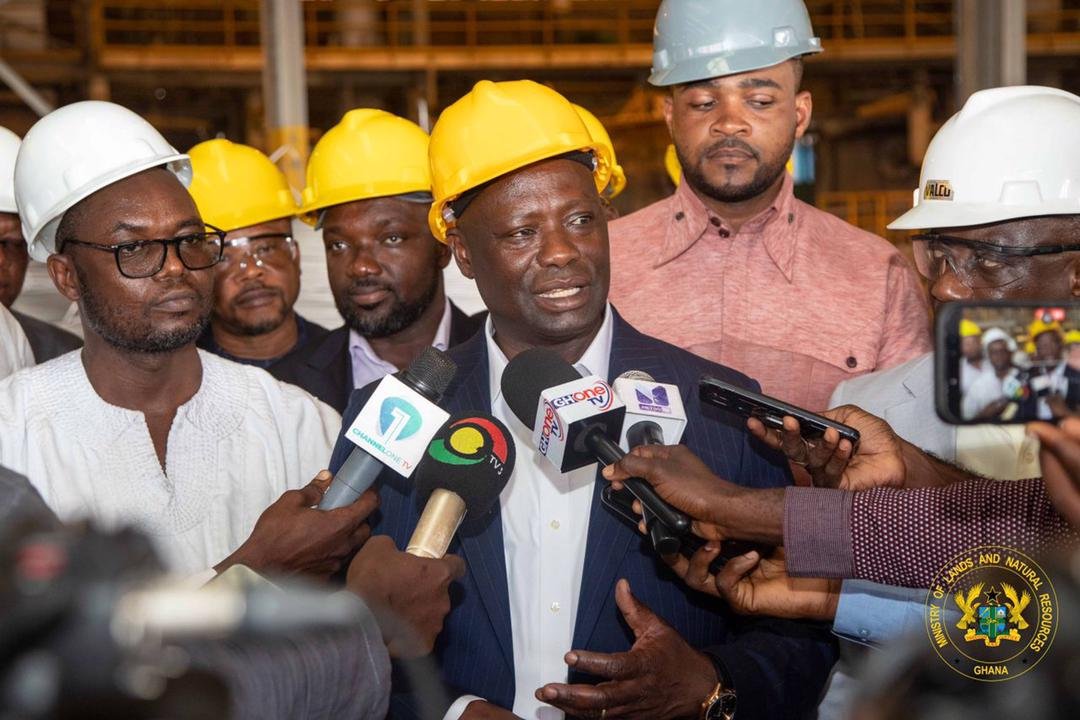
The Minister of Lands and Natural Resources, Hon. Emmanuel Armah-Kofi Buah, underscored that the future of Ghana’s extractive sector hinges on practices that not only yield economic benefits but also minimize degradation to water bodies, land, and air quality.
“These conventions, treaties and national laws are a testament to Ghana’s commitment to responsible mining and environmental stewardship.”
Hon. Emmanuel Armah-Kofi Buah
“Green mining is a shared mission,” Mr. Buah affirmed, stressing that it goes beyond mere compliance, representing a fundamental commitment to responsible resource management.
He also urged the media to uphold ethical standards, collaborate with government, and actively help keep the public informed and protected, noting that, “We expect journalists to engage credible data sources, adopt practical reporting tools, and promote multi-stakeholder dialogue.”
Legal and Policy Framework to Enforce Sustainability

Ghana is moving beyond rhetoric by strengthening its legislative framework to solidify its commitment to sustainable mining.


The nation’s legal regime, highlighted by the Minister, is underpinned by the Minerals and Mining Act, 2006 (Act 703), as amended by Acts 900 and 995.
This legislation criminalizes unlicensed mining and imposes severe penalties, including prison terms ranging from fifteen (15) to twenty-five (25) years, thereby providing significant legal “teeth” to enforcement efforts.
Beyond the deterrent provisions, the law explicitly bans mining activities in protected areas and tightens enforcement through controls on equipment like excavator imports.
Furthermore, the Minister referenced the newly enacted Environmental Protection Act, 2025 (Act 1124) as a critical legislative instrument dedicated to strengthening environmental safeguards.
The Act, which replaced the 1994 law, enhances the regulatory powers of the Environmental Protection Authority (EPA) and importantly introduces new provisions on climate change, including the establishment of the Ghana Carbon Registry to facilitate the country’s climate action and carbon market participation.

This domestic legal muscle is complemented by Ghana’s deep commitment to global standards, evidenced by its ratification of key international treaties such as the UN Framework Convention on Climate Change (UNFCCC), the Paris Agreement, and the Vienna Convention for the Protection of the Ozone Layer.
The government has also taken a definitive step to protect the country’s sensitive forest reserves, an area of historic concern for environmental groups.
Mr. Buah disclosed that an instrument has been laid before Parliament to revoke Legislative Instrument (L.I.) 2462.
This decisive legislative action is intended to end the provision that allows the President to grant mining licenses in forest reserves, aligning government policy with the broader national outcry against forest degradation and positioning the state for genuine biodiversity restoration.
Green Mining Initiatives and Industry Benchmarks
The transition to Green Mining is being actively driven by specific government initiatives and validated by exemplary performance within the large-scale sector.

A key component of the government’s integrated strategy to transform artisanal and small-scale mining (ASM) is the Responsible Cooperative Mining and Skills Development Programme (rCOMSDEP).
This initiative is designed to transition illegal miners into organized cooperatives, providing them with training, legal concessions, and access to modern, mercury-free gold processing technologies. rCOMSDEP is a multifaceted approach that seeks to simultaneously create jobs, formalize the ASM sector, and enforce environmentally sound practices, offering a tangible alternative to illicit galamsey.
The Minister was quick to acknowledge the industry leaders setting world-class standards for sustainability.
Newmont Ghana Gold Limited’s Ahafo South Mine was celebrated as the Best Green Mine at the 11th Ghana Mining Industry Awards (GMIA) in 2025 for its innovation, strong environmental stewardship, and community development.
Other key players, including AngloGold Ashanti Iduapriem Mine and Gold Fields Ghana Limited’s Tarkwa Mine, also received commendation for their robust performance in critical areas such as carbon reduction, proactive land and water management, and successful biodiversity restoration through active reclamation.
The Ministry’s vision is a symbiotic relationship where these award-winning global firms act as mentors to small-scale mining operations, facilitating the adoption of best practices and thereby accelerating the eradication of illegal mining methods.
Media’s Mandate for Responsible Reporting

In the ongoing war against galamsey and the broader drive toward environmental sustainability, the Minister reserved a critical role for the media, labeling it the “fourth estate of the realm.”
He emphatically urged journalists to move beyond sensationalism, prioritize technical knowledge, and enhance their ethical accountability in reporting.
The call is for journalists to deepen their understanding of complex mining processes, laws, and regulatory frameworks to ensure fair and accurate coverage.
Crucially, “responsible reporting,” he noted, must be multi-dimensional.
It is not only about holding stakeholders accountable whether state agencies or mining firms, but also about highlighting the positive impact and ongoing interventions.
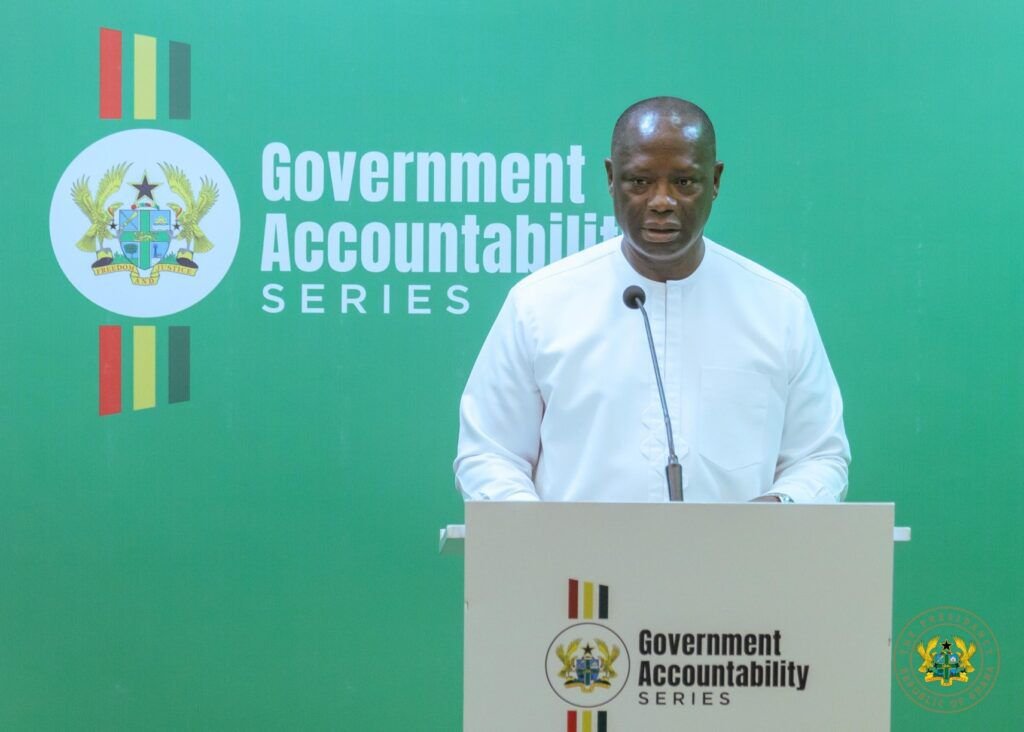
Reporters were encouraged to bring to the fore the reclamation efforts being undertaken and the work of institutions like the National Anti-Illegal Mining Operations Secretariat (NAIMOS) in combating illegal activities.
The training workshop itself, themed “Green Mining: Best Practices and Responsible Reporting,” was specifically designed to enhance the capacity of journalists, ensuring they can report with the necessary accuracy, depth, and responsibility to serve as genuine partners in Ghana’s mission for a greener, more sustainable extractive future.
This collaborative model, the Minister concluded, is the most effective way to safeguard the nation’s natural resources for future generations.
READ ALSO: Fitch Projects Ghana’s Oil Production to Reach 5.1% in 2026