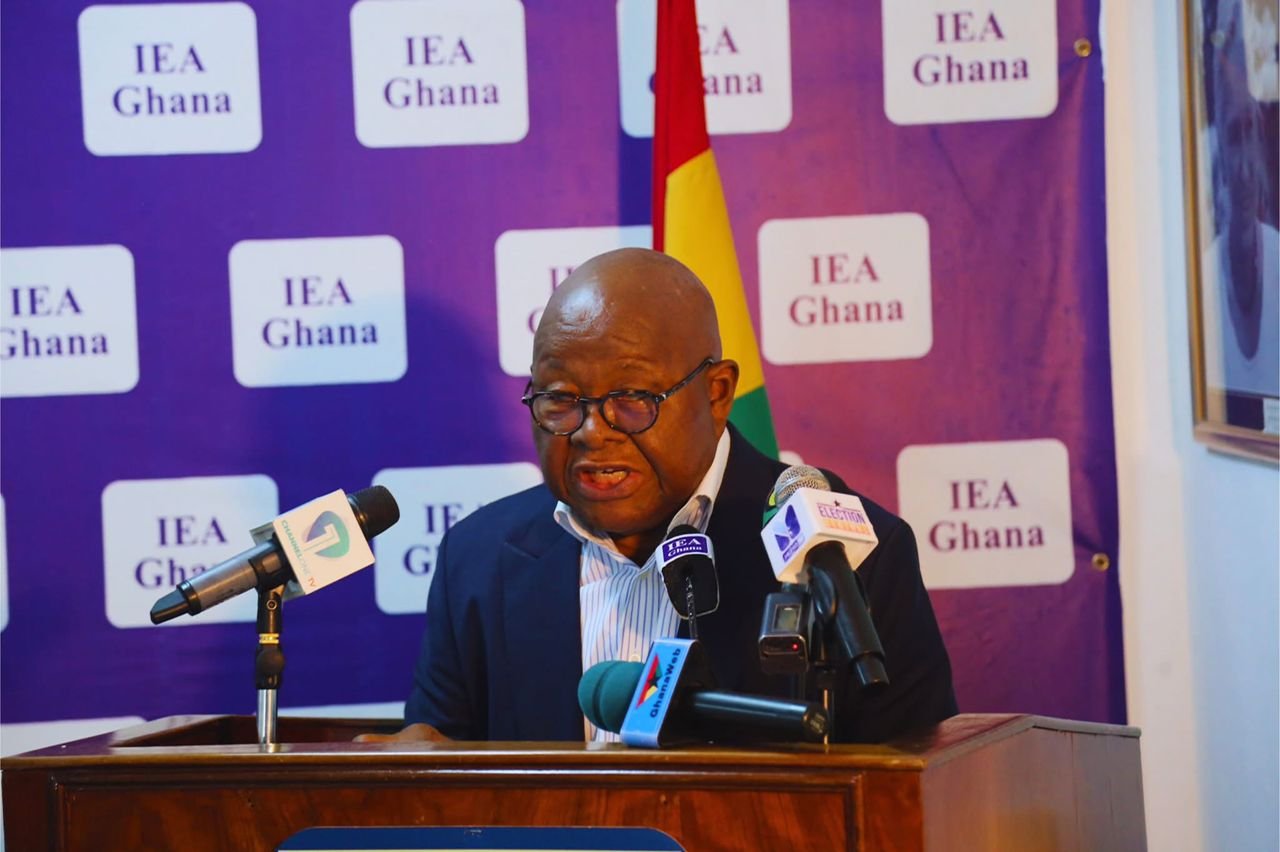
Professor Aaron Mike Oquaye, a Fellow of the Institute of Economic Affairs (IEA) and former Speaker of Parliament, has declared that Ghana must abandon the traditional royalty-based mining system, describing it as a “colonial heritage” that no longer serves the national interest.
According to Prof. Oquaye, the practice of accepting small percentage fees for finite mineral resources is an outdated philosophy rooted in an era when colonized people were viewed as property and their gold belonged to the British Crown.
He argued that this “colonial relic” effectively treats Ghana as a subject rather than a partner, necessitating an urgent shift toward a comprehensive ownership model to secure the nation’s economic future.
“And we are saying that the era of royalties is gone. Royalties is a colonial heritage. When they started giving us royalties, actually, as colonised people, the gold belonged to the King of England. Or the King of England. So they give you something small because you are my colony.”
Professor Aaron Mike Oquaye
Expanding on this paradigm shift, Prof. Oquaye emphasized that the global transition toward critical minerals like lithium demands a complete overhaul of existing agreements to prioritize equity over mere rent collection.
He noted that modern investors often raise capital on the international market using the host country’s mineral guarantees as collateral, yet the state remains sidelined with minimal control or benefit.
In the case of the Atlantic Lithium project, Prof. Oquaye highlighted that while the developer has reportedly spent $80 million, Ghana has already contributed $32 million through the Minerals Income Investment Fund (MIIF).


He insists that “all equities must be on the table,” ensuring that the inherent value of the lithium under the soil is recognized as a significant capital contribution by the state.
Structural Deficiencies of the Royalty Regime
Historically, Ghana’s reliance on royalties typically ranging between 3% and 10% has failed to bridge the country’s development gap, often leaving the state with insufficient revenue to fund industrialization.
While the mining sector contributed US$291.87 million in royalties during the first nine months of 2025 alone, critics argued these figures represent only a fraction of the total value exported.
Under the current “colonial-type” framework, the state functions as a rent collector, accepting fiscal relief that is frequently offset by external shocks and price volatility.
This structure has deprived the nation of billions in potential revenue, contributing to Ghana’s recurring dependence on international donor for financial bailouts.
Prof. Oquaye points out that the “give it to the white man and sit aside” approach is no longer viable when local capacity is flourishing.
He listed several Ghanaian entities, including African Mining Services, Engineers and Planners, and Quantum LC Limited, as proof that indigenous companies possess the technical expertise to manage large-scale operations.
“If you raise the money, you buy the equipment,” Oquaye remarked, asserting that capital is accessible on the international market if the project is “bankable” and backed by the state’s sovereign resources.
By shifting to an ownership model, Ghana could potentially increase its earnings from major mining ventures by 50 to 70 percent, providing the necessary domestic capital for sustainable growth.
New Architecture for Mineral Ownership
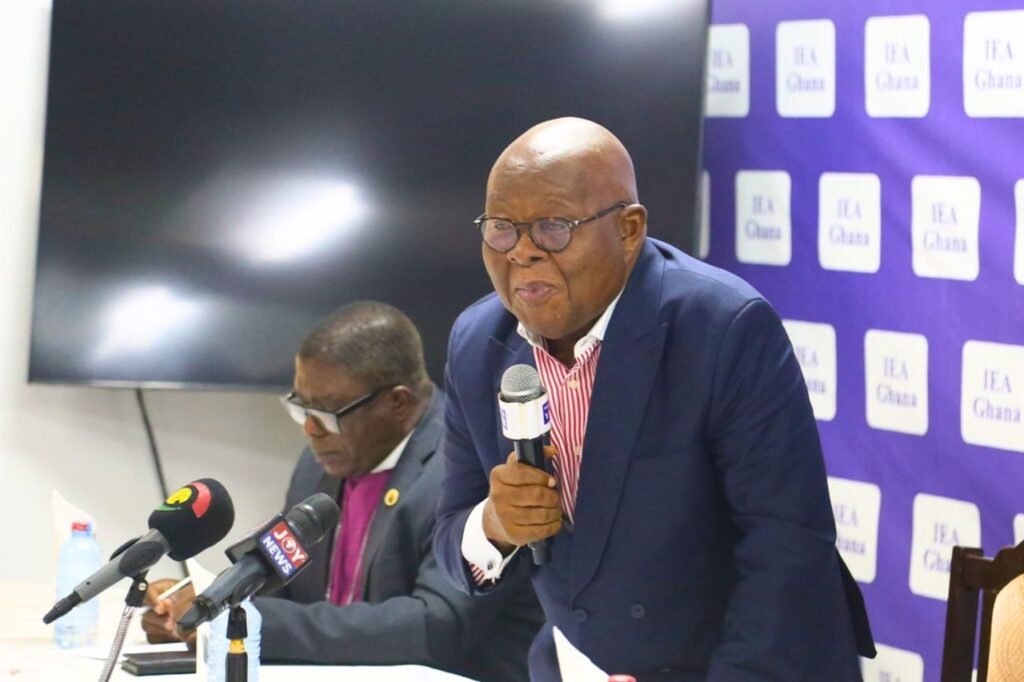
The proposed alternative involves the adoption of service contracts and profit-return agreements, similar to models used in Norway and Botswana.
Under this architecture, the state retains 100% ownership of the mineral assets and pays foreign firms a fee for their technical services, rather than surrendering the resource for a small royalty. Prof. Oquaye suggests that a “consortium of Ghanaian mining companies” should be encouraged to take the lead, ensuring that management decisions and value-added processes, such as refining, remain within national borders. This would prevent the “vigorous” and “shameful” situation where raw lithium is shipped away without the state knowing “how it really even arrives at the end product.”
The former Speaker’s advocacy comes at a critical time as the Atlantic Lithium lease undergoes parliamentary scrutiny.
He warned that the company is effectively “doing shopping for capital” using Ghana’s parliamentary approval as a guarantee.
He argued that Ghana has a better chance of raising such money independently because the resource is “right now under our soil.”
By abandoning the “philosophy of royalties” and moving toward a joint-venture or service-contract framework, the government can ensure that the $32 million already paid by MIIF is not just a minority stake, but the foundation of a “just system” that empowers the local workforce and secures intergenerational wealth.
Empowering Local Content through Consortia
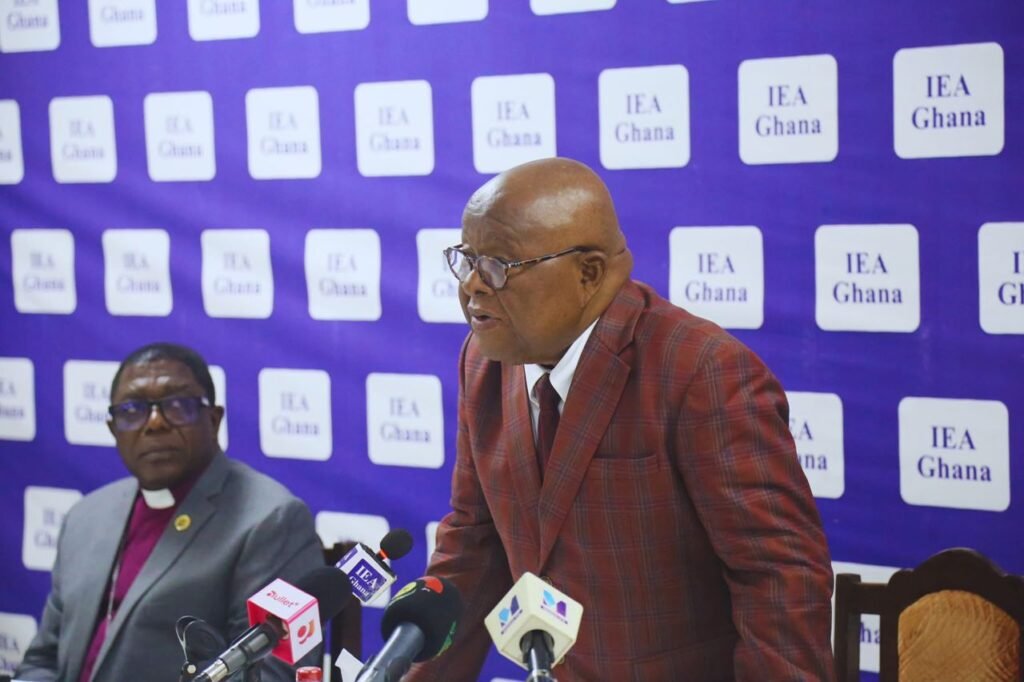
To operationalize this vision, the IEA Fellow calls for the formalization of a “Ghana Minerals Corporation” to manage national resource equity and negotiate contracts that prioritize local participation.
This strategy aims to eliminate the “tribalism, ethnicity, and nepotism” that sometimes plague local employment by leaving operational management to professional consortia.
“Ghanaians are not thieves,” Oquaye noted, “we need a just system” that recognizes the intrinsic value of what lies beneath the earth as the ultimate equity.
By transitioning from a passive recipient of royalties to an active owner and manager of its natural wealth, Ghana can finally break the cycle of “colonial-type agreements” that have historically favored foreign investors over the citizenry.
This overhaul is not merely a matter of percentage points but a fundamental reclamation of economic sovereignty. As the lithium debate continues, Prof. Oquaye’s insistence serves as a clarion call for a new era where the minerals of the land truly belong to the people of the land.
READ ALSO: Kpandai Rerun: EC Signals Full Readiness Amid Supreme Court Stalemate