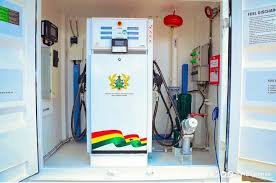
The National Premix Fuel Secretariat has renewed its call for a comprehensive accounting of premix fuel funds managed between 2017 and 2024, as it seeks to rebuild confidence in a system designed to support Ghana’s fishing communities.
The appeal comes amid fresh evidence that transparent management of premix proceeds is already delivering tangible benefits under the current framework.
Administrator of the National Premix Fuel Secretariat, Ebow Mensah, emphasized that premix fuel are a state subsidy governed by Legislative Instrument 2233, which clearly spells out how the margins from premix sales should be distributed.
“These are not discretionary funds.
“They belong to the community, and communities have the right to know how much accrued to them and what it was used for.”
Ebow Mensah, Administrator of the National Premix Fuel Secretariat

Under L.I. 2233, more than half of the margins from premix fuel sales are allocated directly to fishing communities for development purposes. Mr Mensah said this legal framework makes accountability not just a moral obligation, but a statutory requirement.
According to data cited by the Secretariat, landing beach committees in New Takoradi, within the Takoradi Metropolis, raised GHS59,000 for community development projects.


In Abuesi, located in the Shama District, premix-related activities generated GHS102,000, also earmarked for local development.
Officials say these outcomes contrast sharply with years of uncertainty and disputes that have plagued the premix system, particularly during periods when records were incomplete or inaccessible.
The Secretariat believes the recent figures demonstrate what is possible when premix funds are managed transparently and in accordance with established regulations.
Disputes Linked to Poor Records

Mr Mensah noted that the absence of proper accounting for premix funds between 2017 and 2024 has contributed to tensions and disagreements at several landing beaches across the country.
In many cases, fisherfolk have questioned whether projects attributed to premix funds were genuinely financed from their community’s share.
According to him, the uncertainty has undermined trust in the system and weakened cooperation at the local level.
“The lack of proper accounting for the 2017–2024 period has fuelled disputes at several landing beaches,” he said, adding that many communities remain unsure about how much money actually accrued to them during that time.
The Secretariat believes that resolving historical gaps in accountability is essential to restoring confidence among fisherfolk and local stakeholders. Mr Mensah warned that efforts to strengthen the premix system going forward will be undermined if past concerns are ignored.
“You cannot build trust by ignoring the past.
“If people do not understand what happened to earlier funds, it becomes difficult to convince them that the system is now working in their interest.”
Ebow Mensah, Administrator of the National Premix Fuel Secretariat
He argued that transparency about previous fund management, even where records are incomplete, would go a long way toward easing tensions and reinforcing confidence in the current reforms.
Collaboration with Local Authorities
To address these challenges, the National Premix Fuel Secretariat says it will work closely with metropolitan and municipal chief executives, who are mandated by law to oversee landing beach committees.
The goal, according to Mr Mensah, is to retrieve, review and present past premix fund records to communities wherever possible.
“Fortunately, chief fishermen are relatively stable in their positions.
“We intend to empower them to insist on accountability and ensure that premix funds serve the purpose for which they were created.”
Ebow Mensah, Administrator of the National Premix Fuel Secretariat
The ongoing accountability engagements, which have so far covered only three communities, are part of a pilot initiative to test a broader framework.
The Secretariat says lessons from these early engagements will inform a nationwide rollout aimed at standardizing transparency and reporting across all landing beaches.
Mr Mensah explained that the process is designed not only to clarify past transactions but also to establish systems that prevent future lapses.
As the review process unfolds, the Secretariat maintains that transparent handling of premix funds remains central to supporting fishing communities and preserving the integrity of a subsidy meant to sustain livelihoods along Ghana’s coast.
READ ALSO: President Mahama Deploys Army Engineers to Rebuild Post-Hurricane Jamaica