The International Monetary Fund (IMF) has approved and released US$385 million fifth tranche, to the government of Ghana after reaching a staff-level agreement.
The formal approval of funds by the IMF Executive Board follows a meeting held in Washington, DC, to evaluate vital benchmarks under the program. The disbursement will further support economic reforms and stability in Ghana and complement the government’s effort to engineer structural reforms.
After four successful reviews, approval, and disbursement of funds under Ghana’s 17th IMF-Extended Credit Facility (ECF), which began in May 2023, the Fund has completed its approval of the fifth review of the US$3 billion, which was approved by the Board.
Completion of the review allows for an immediate disbursement of about US$385 million (SDR 267.5 million), bringing Ghana’s total disbursements under the arrangement to about US$2.8 billion.
“The IMF Executive Board today completed the fifth review of Ghana’s 39-month Extended Credit Facility Arrangement. This allows for the immediate disbursement of about US$385 million (SDR 267.5 million).”
IMF
IMF’s Assessment of Ghana
Ghana’s performance under the program has been broadly satisfactory, despite some delays in implementing complex structural reforms, the Fund declared.
IMF noted that Ghana’s “macroeconomic stabilization is gaining momentum, with strong growth and single-digit inflation for the first time since 2021,” adding that “the fiscal and external positions have improved, and good progress has been made on debt restructuring.”


The Fund credits the government’s strong program ownership, favorable external developments, and improved investor confidence. However, the government is urged to be steadfast in its implementation of the policy as its reform agenda remains essential to fully restore macroeconomic stability and debt sustainability.
“Ghana’s performance under the IMF-supported program has been generally satisfactory. All quantitative performance criteria and indicative targets for the fifth review were met. Notwithstanding some delays, good progress has also been made on the key structural reforms, including overdue measures from previous reviews.”
IMF
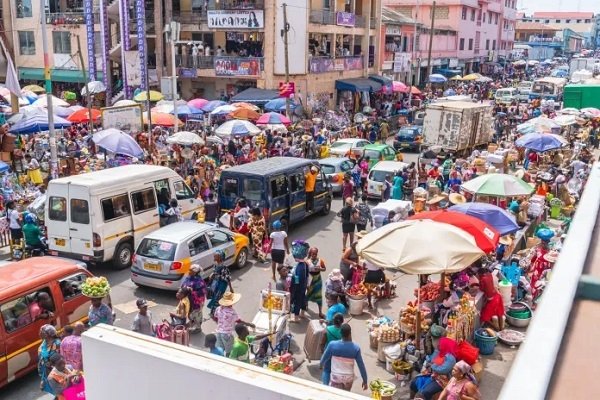
Ghana’s Comeback After Policy Slippage
According to the Fund, after last year’s policy slippages, Ghana’s IMF-supported reforms are yielding results. This comeback resulted in exceeded growth expectations through September, which, according to the Ghana Statistical Service (GSS), is driven by strong services and agriculture.
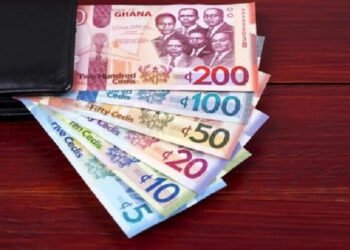
IMF declared that inflation is now within the Bank of Ghana’s target range, and the external sector strengthened on robust gold and cocoa exports. Reserves accumulation surpassed ECF targets, the cedi appreciated, and Ghana’s debt trajectory improved significantly.
Ghana continues to make significant progress on its public debt restructuring, consistent with program parameters and comparability of treatment. The country has signed bilateral debt relief agreements with many members of its Official Creditor Committee, while finalizing several Agreements in Principle with other external commercial creditors.
“The authorities have shown strong program ownership by decisively implementing ambitious corrective actions after the 2024 policy slippages.
“These efforts, coupled with structural reforms, have driven a stronger-than-anticipated recovery in growth, brought inflation within the Bank of Ghana’s target range, and supported robust reserve accumulation.”
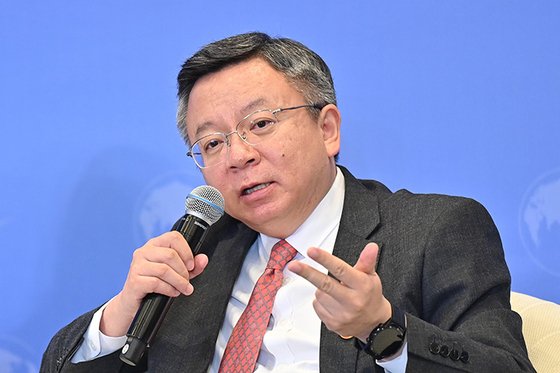
Bo Li, Deputy Managing Director, IMF
Ghana’s Fiscal Framework
According to the IMF, Ghana is on track to achieve a primary surplus of 1.5% of GDP by year-end. “The 2026 budget, submitted to Parliament, aligns with fiscal program objectives and the new fiscal responsibility framework, while accommodating developmental and security needs,” the Executive Board said.
The fiscal program will be driven by revenue mobilization and expenditure rationalization, with safeguards for vulnerable groups. To sustain Ghana’s fiscal discipline, the IMF urged the government to establish stronger revenue administration, improve public financial management, and better oversight of State-Owned Enterprises, which pose significant fiscal risks.
The government needs to urgently address the challenges in the energy sector—including related arrears—is critical to contain the country’s fiscal risks.
“Ghana has made progress in strengthening its fiscal position. Looking ahead, staying the course of fiscal policy adjustment and creating room to enhance social programs is paramount to put public finances on a sustainable path and reduce financing needs, while cushioning vulnerable households from the impact of fiscal adjustment.”
Bo Li, Deputy Managing Director, IMF
BOG’s Monetary Easing Strategy
The Fund also revealed that with inflation down and the Cedi’s appreciation, the Bank of Ghana (BOG) has appropriately begun a cautious monetary easing cycle. The Fund recommends that any further easing should remain gradual and data-dependent.
In collaboration with the IMF, BOG has developed and implemented a new structured foreign exchange (FX) operations framework to intermediate FX flows and smooth excessive market volatility, while accumulating international reserves.

IMF applauds the authorities for taking “decisive steps to safeguard financial stability by implementing the strategy to restructure and reform state-owned banks, closing gaps in the crisis management and resolution framework, and pursuing a multi-pronged approach to reduce non-performing loans.”
“The authorities have made progress in bolstering financial stability by continuing to implement banks’ recapitalization plans and initiating the recapitalization of key state-owned banks. However, vulnerabilities persist.
“To address these challenges sustainably, it is critical to strengthen governance in state-owned banks, fully leverage the bank resolution framework, develop contingency plans for banks that fail to recapitalize, ensure cost-effective resolution of legacy issues, and implement robust supervisory strategies to enhance credit and operational risk management.”
Bo Li, Deputy Managing Director, IMF
Government’s Commitment to Transparency
The IMF acknowledges the significant progress that Ghana has made in strengthening governance and public sector efficiency, outlined in the recently published Governance Diagnostic Assessment report.
“Efforts to improve transparency and oversight need to continue, particularly related to public disclosure requirements and management of SOEs in the gold, cocoa, and energy sectors,” the Fund said.
The Fund encourages inclusive private sector investment to support the government’s ambitious structural reforms. Furthermore, Ghana must ensure that governance and transparency remain key to boost the economy’s potential and underpin sustainable job creation.
“More is needed to strengthen anti-corruption frameworks and bolster governance and public trust, including fully aligning Ghana’s asset declaration to best practices,” the IMF strongly noted.
READ ALSO: Cedi to Break Winds as Year Ends in an Astounding Performance