The Chartered Institute of Bankers (CIB), Ghana, has reaffirmed its commitment to building a resilient and forward-looking financial sector as it inducted and graduated 186 professionals at its 17th Induction and Graduation Ceremony in Accra.
Held at the Chartered Institute of Bankers, Ghana Auditorium, the event brought together senior government officials, regulators, industry leaders, academics, families and members of the banking community under the theme, Building Future-Ready Banks: Ethical Leadership, Sustainable Finance and Currency Stability amid Disruption.
The ceremony marked another milestone in the Institute’s mission to strengthen professionalism, ethics and human capital development in Ghana’s financial services industry. With the addition of the 2025 cohort, the Institute has now produced 1,313 chartered bankers over the past six years, expanding the pool of trusted professionals supporting economic growth across banking, finance and allied sectors.
Addressing the inductees and graduates, the President of the Institute, Mr. Benjamin Amenumey, FCIB, underscored that the chartered banker designation goes beyond academic achievement. In a speech delivered on his behalf by the Vice President, Mr. Samuel Manu Asiama, FCIB, he reminded members that the qualification represents a lifelong commitment to honesty, integrity and responsible conduct.
He emphasized that the Institute, established under Act 991, has a clear mandate to promote the study of banking and regulate the practice of the profession in Ghana. According to him, this responsibility has become even more critical at a time when public confidence in financial systems is shaped by ethical behavior and sound decision-making.
Building competence for a disrupted financial landscape
The President highlighted several targeted professional development programmes designed to prepare bankers for emerging risks and opportunities. These include the mandatory Ethics Certification Programme, the Chartered Banker for Executive Leadership and the ESG Certification Programme delivered in collaboration with the Environmental Protection Agency and the International Finance Corporation.


New initiatives such as the Digital Banking Academy and the Branch CEO Programme were also cited as strategic interventions aimed at equipping bankers with the competence, character and conduct required in a rapidly evolving financial environment shaped by technology, sustainability imperatives and currency volatility.
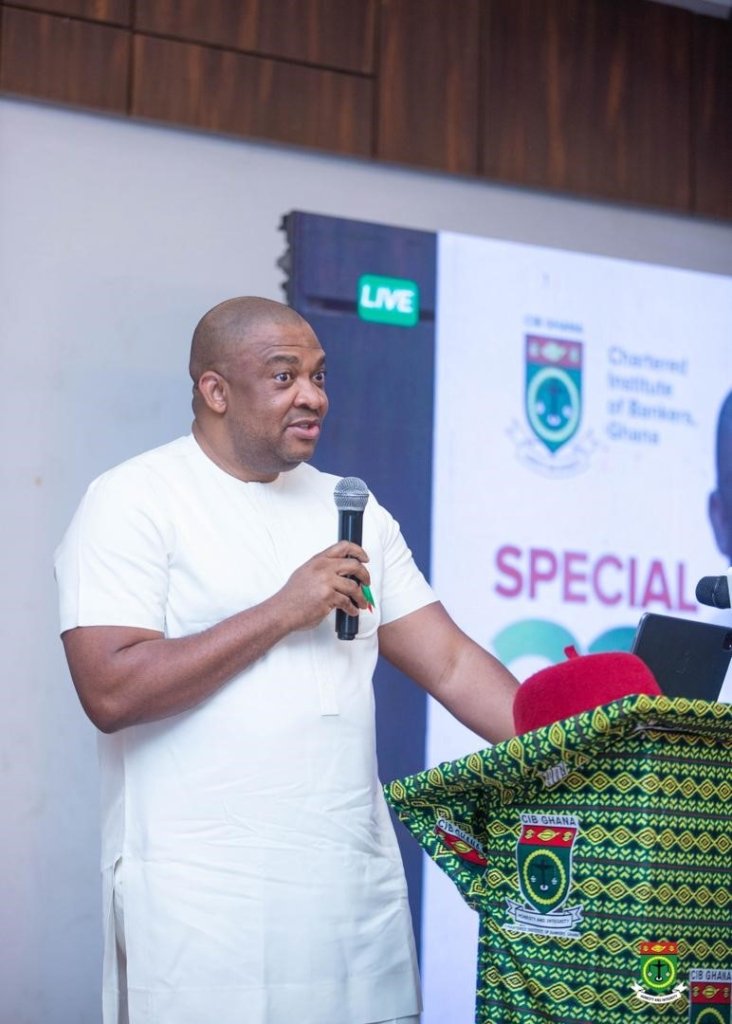
The keynote address was delivered by Mr. Thomas Atta John, Managing Director of Guaranty Trust Bank Ghana, who challenged bankers to fully appreciate the social consequences of their decisions. He described banking as one of the most risky professions in the world, not because of physical danger but because of the often unseen human cost of poor financial judgment.
“When banking decisions go wrong, people lose access to healthcare, children drop out of school and livelihoods are destroyed. These consequences may not make headlines, but they are real. That is why society needs trusted professionals in banking.”
Mr. Thomas Atta John
He stressed that integrity remains a non-negotiable asset in professional life, noting that while balance sheets can be repaired, reputational damage resulting from ethical failure is often permanent. He urged chartered bankers to commit to lifelong learning, warning that experience without updated skills can be dangerous in a disrupted financial system.
Promoting inclusiveness and sustainability
A key highlight of the 2025 induction and graduation ceremony was the growing participation of women. Females accounted for 55 percent of the inductees and graduates, reflecting a steady rise from previous years. The Institute described this trend as a positive signal for the long-term sustainability and inclusiveness of the banking profession in Ghana.
The cohort also reflected diversity in age and career stage. The youngest graduate was 23 years old, having entered the ACIB programme through the Best and Bright Programme, while the oldest inductee was 59. This diversity reinforced the message that professional development in banking is open to both early-career entrants and seasoned practitioners.
Outstanding performance and resilience were also recognised during the ceremony. Ms. Eyram Amenyo Klutse, a Relationship Manager with First National Bank, emerged as the Overall Best Inductee, while Ms. Rosemary Quansah of Access Bank was recognised as the youngest graduate.
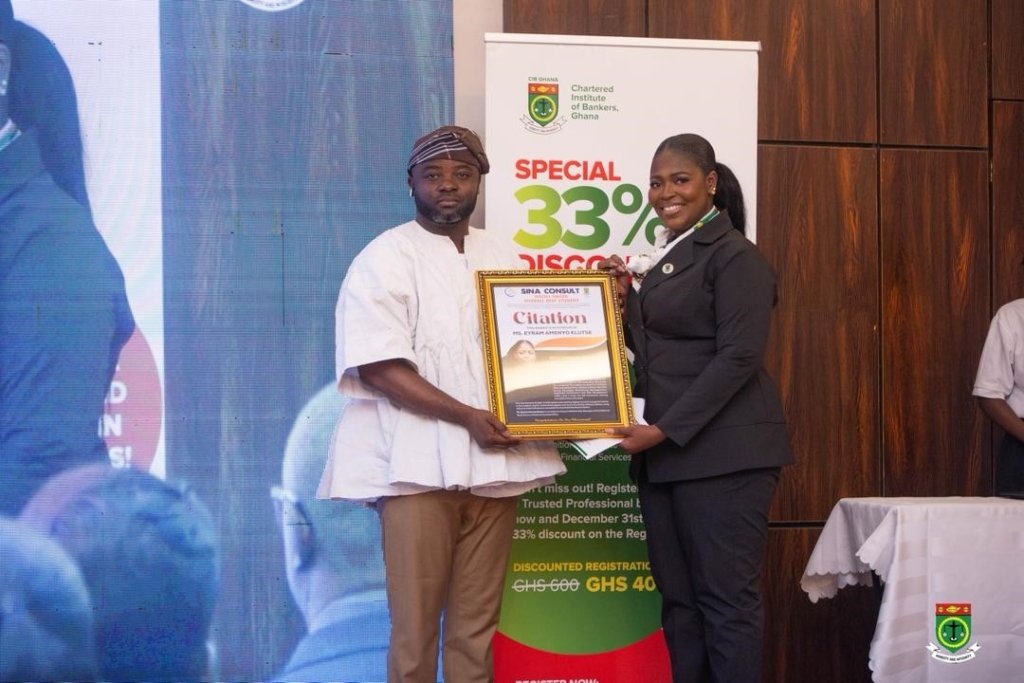
In brief remarks, Ms. Klutse described the programme as demanding but deeply rewarding, noting that it broadened her understanding of the banking industry and strengthened her appreciation for ethics and professionalism. Ms. Quansah encouraged students, national service personnel and young professionals to begin professional qualifications early and to persevere despite challenges.
Strengthening confidence in Ghana’s financial system
The Chief Executive Officer of the Institute, Mr. Robert Dzato, expressed appreciation to key stakeholders and partners, including the Bank of Ghana, the Ghana Association of Banks, government ministries, corporate members and training partners, for their continued support.
“Banking is not just about numbers and balance sheets,” he said. “It is about trust, responsibility and decisions that shape lives and communities.”
He urged the newly inducted chartered bankers to wear their designation with pride, humility and a strong sense of responsibility, reminding them that their actions would directly influence public confidence in Ghana’s financial system as the industry navigates currency pressures, sustainability demands and ongoing disruption.
READ ALSO:ORAL on Track, and Will Succeed – Ablakwa Says Failure Risks Doom for Ghana’s Democracy