
The Confederation of African Football (CAF) has confirmed a major shift in the organisation of its flagship tournament, announcing that the Africa Cup of Nations (AFCON) will move to a four-year cycle after the 2028 edition.
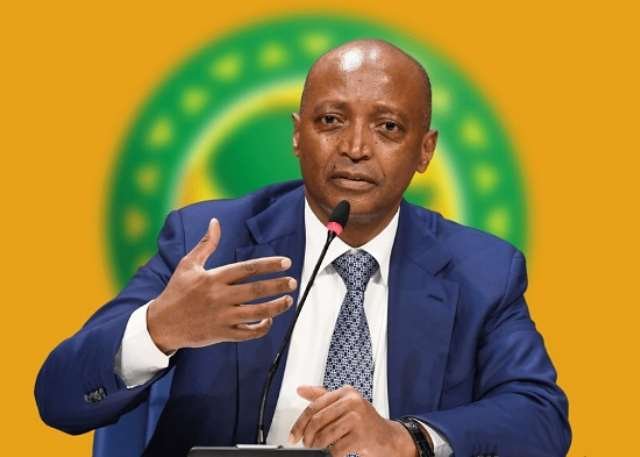
The decision, confirmed by CAF President Patrice Motsepe on Saturday, December 20, marks the end of a tradition that has seen the tournament staged every two years since 1968.
Motsepe said the change reflects a long-term strategic vision aimed at strengthening African football and aligning it more effectively with the global football calendar. He described the decision as part of a broader restructuring designed to improve competition standards and planning across the continent.
“We have the most exciting new structure for African football,” Motsepe said, indicating that the move was the result of extensive consultation within the football body.
Under the new plan, the immediate AFCON calendar will remain largely intact through the end of the decade. The 2025 Africa Cup of Nations will be hosted by Morocco from December 21, 2025, to January 18, 2026.

That tournament will retain the traditional format and timing, with matches scheduled across several Moroccan cities and the final set to be played at the Prince Moulay Abdellah Stadium in Rabat.


The 2027 edition will follow and will be co-hosted by Kenya, Tanzania, and Uganda, marking a return of the tournament to Eastern Africa. CAF has indicated that the 2028 edition will also be staged as part of a transitional phase to align the competition calendar.
After the 2028 tournament, AFCON will officially move to a quadrennial format, meaning future editions will be held once every four years. CAF believes the new cycle will address several long-standing challenges associated with the biennial format.
Easing Strain on Players
Officials within the organisation have argued that holding AFCON every two years placed significant strain on players, many of whom are based at European clubs with demanding domestic and continental schedules. The timing of AFCON has frequently led to conflicts with league competitions, creating tensions between clubs and national teams.
By adopting a four-year cycle, CAF expects host nations to benefit from longer preparation periods, improved infrastructure planning, and stronger organisational capacity. The association also believes that extending the interval between tournaments will enhance the overall quality of the competition, allowing teams more time to build squads and prepare tactically.
New African Nations League beginning in 2029
Motsepe said the restructuring was not about reducing opportunities for competition but about improving balance. To ensure African teams continue to enjoy regular high-level competitive matches, CAF has announced plans to introduce a new African Nations League beginning in 2029. The competition is expected to be held annually and will provide additional fixtures for national teams while complementing the new AFCON cycle.
The introduction of an African Nations League mirrors similar competitions in other confederations and is intended to modernise international football on the continent. CAF has said further details on the format, qualification process, and scheduling of the new competition will be announced in due course.
Meanwhile, attention is already turning to the 2025 AFCON in Morocco, which will open on Sunday, December 21, 2025, in Rabat. The group stage of the tournament will run until December 31, with teams competing for places in the knockout rounds. The round of 16 is scheduled for January 3 to 6, 2026, followed by the quarterfinals on January 9 and 10.
The semifinals will be played on January 14, 2026, before the final on January 18. CAF has indicated that the full match schedule, including kick-off times and venue allocations, will be published through official platforms, including partner websites hosting the detailed tournament calendar.

The 2027 tournament in East Africa is also expected to play a significant role in CAF’s transition strategy. Co-hosting duties will be shared among Kenya, Tanzania, and Uganda, with infrastructure development and regional cooperation forming a key part of the hosting arrangement. CAF officials have said the joint hosting model reflects a broader effort to spread major football events across different regions of the continent.
While the move away from a biennial AFCON marks a historic shift, CAF insists the change is necessary to ensure sustainability and growth. The expanded FIFA Club World Cup and the increasingly congested international football calendar have added urgency to calls for reform, particularly from clubs and player unions.
A Balancing Act between Tradition and Reform
For CAF, the decision represents a balancing act between tradition and reform. AFCON has long been one of the most frequently held continental championships in world football, contributing to its popularity and visibility.
However, CAF leadership believes that the new four-year cycle, combined with additional competitions like the African Nations League, will preserve the tournament’s prestige while adapting it to modern football realities.

As African football enters this new phase, the upcoming editions of AFCON will serve as both a continuation of a proud tradition and a bridge to a restructured future. CAF officials say the ultimate goal remains unchanged: to elevate African football, protect players’ welfare, and deliver competitions that reflect the continent’s growing influence on the global game.
READ ALSO: Mahama Inspects Takoradi–Agona–Nkwanta Road, Directs $78m Payment to Speed Up Completion