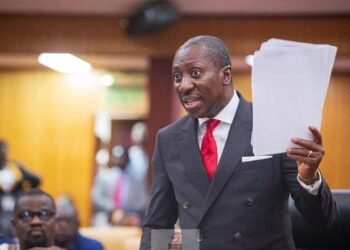

The Office of the Special Prosecutor (OSP) has credited its preventive mandate with saving Ghana millions of cedis by halting transactions and practices it identified as carrying high corruption risks, even before any formal prosecutions were pursued.
According to Sammy Darko, the Director of Strategy, Research, and Communications at the Office of the Special Prosecutor (OSP), these interventions demonstrate how early institutional vigilance can protect public resources and strategic state assets from long-term losses. Mr Darko pointed to the controversial Agyapa Royalties deal as one of the most prominent examples of the OSP’s preventive impact.
He explained that the office raised red flags about corruption risks embedded in the proposed transaction, prompting a pause that ultimately stopped the deal from proceeding in its original form. In his assessment, that intervention prevented potential losses that could have far outweighed any short-term financial gains.
“That money stayed with Ghana, not private interests,” he said, underscoring the significance of acting before questionable arrangements become entrenched. The Agyapa case, which generated intense national debate at the time, illustrated how corruption risks can be embedded in complex financial and extractive-sector agreements.
By intervening early, the OSP argued that it helped preserve state value and avert outcomes that might have constrained future fiscal space or transferred disproportionate benefits to a narrow set of actors.

Mr Darko maintained that this approach reflects the broader philosophy behind the OSP’s preventive powers, which are designed not only to punish wrongdoing after the fact, but also to stop it from occurring in the first place.


A similar approach, he noted, was applied to plans surrounding the Tema Oil Refinery (TOR). According to Mr Darko, the OSP flagged corruption risks in a proposed partnership arrangement linked to the refinery, leading to the suspension of the planned transaction.
He suggested that, without that intervention, Ghana could have lost control of a key strategic asset under unfavourable terms. “Without that intervention, a key state asset would likely have been lost,” he said, framing the outcome as a direct financial and strategic saving for the state.
The TOR case has regained prominence following the full resumption of operations at the refinery after years of shutdown. The revival comes after the new National Democratic Congress (NDC) administration discontinued plans by the previous New Patriotic Party (NPP) government to sell the refinery upon assuming office.
The refinery’s return to operation has renewed debate about the management of state-owned enterprises and the long-term costs of neglect, mismanagement, or poorly structured divestments.
Taming Routine Financial Leakages
Beyond large-scale transactions, Mr Darko also highlighted the OSP’s role in stemming more routine but persistent financial leakages within the public sector. He said the office uncovered ghost names on public payrolls, including cases that had persisted despite Ghana Card verification systems.

These, he explained, involved individuals who were being paid even though they did not exist or were no longer legitimately employed. Removing such names, he said, halted continuous drains on public funds that might otherwise have gone unnoticed for years.
According to Mr Darko, the cumulative effect of addressing these payroll irregularities is substantial. While individual cases may appear small in isolation, he argued that the long-term savings from eliminating fictitious salaries and allowances translate into meaningful fiscal relief.
In his view, this is another illustration of how preventive anti-corruption work delivers tangible financial benefits, even when it does not culminate in high-profile court cases.
Public Support
The OSP’s account of its preventive role has found support among some policy analysts and civil society actors. Franklin Cudjoe, Founding President of the IMANI Centre for Policy and Education, linked the OSP’s vigilance directly to the revival of the Tema Oil Refinery.
In a strongly worded statement, he credited the office with stopping plans that would have seen the refinery disposed of under questionable circumstances. Describing the refinery’s return to life, Mr Cudjoe said a facility that had been rendered moribund over several years was “reborn,” attributing that outcome in part to the OSP’s intervention.
The comments from IMANI add to a broader conversation about the value of preventive anti-corruption measures in Ghana’s governance framework. While prosecutions remain a central expectation of the OSP’s mandate, the office has consistently argued that prevention is equally important in safeguarding public resources.
By identifying risks early and forcing reconsideration of flawed transactions, the OSP contends that it delivers savings that may never be fully captured in court judgments or asset recovery figures. Critics of Ghana’s anti-corruption efforts have often questioned whether the country derives sufficient value from its institutions.

The OSP’s emphasis on prevention seeks to reframe that debate by highlighting outcomes that are less visible but financially consequential. Mr Darko suggested that stopping a bad deal before it is signed can be more beneficial than attempting to recover losses years later through litigation.
As Ghana continues to grapple with fiscal pressures and the need to maximise value from state assets, the debate over the balance between prevention and prosecution is likely to intensify.
For the OSP, the examples cited by its communications director serve as evidence that early intervention, even when controversial, can protect the public purse and preserve national assets.
Whether this approach will continue to command broad political and public support may depend on how consistently such preventive actions translate into sustained economic and institutional gains.
READ ALSO: GDP Can’t Measure Empty Pockets: Bokpin Demands Jobs-Focused Economic Policy