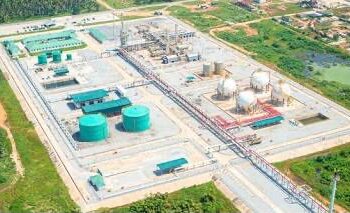
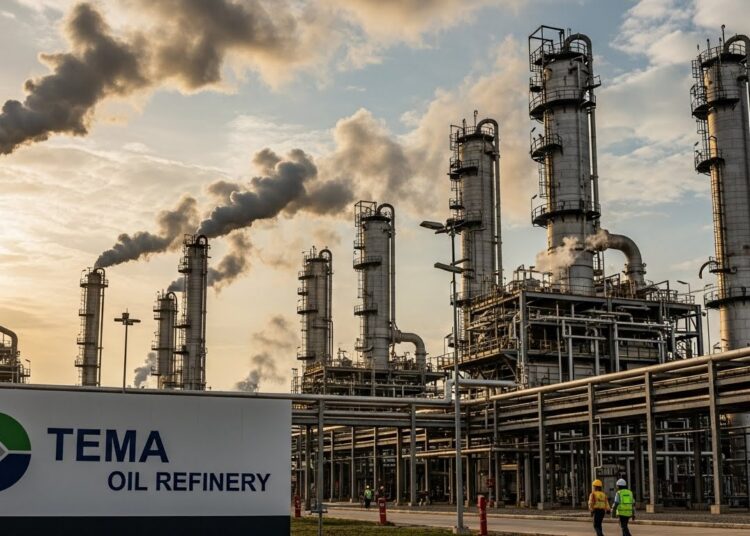
The Tema Oil Refinery (TOR) has officially resumed crude oil refining operations after several years of inactivity, marking a significant turning point in efforts to revive Ghana’s downstream petroleum sector.
The development follows the successful completion of major maintenance works and regulatory clearance, restoring operations at a facility long regarded as a strategic asset for national energy security.
In a statement announcing the milestone, TOR described the restart as “a historic milestone in the revitalization of Ghana’s downstream petroleum sector,” signaling renewed confidence in the refinery’s operational future and its role in reducing dependence on imported petroleum products.
“Following the completion of the TAM, the National Petroleum Authority (NPA) conducted comprehensive regulatory inspections and confirmed TOR’s full compliance with all mandatory safety and operational requirements.
“Consequently, the NPA granted clearance for the resumption of refining activities.”
Tema Oil Refinery (TOR)
This paved the way for the refinery to begin processing crude oil once again. Industry observers see the regulatory approval as a key confidence booster for stakeholders in Ghana’s energy sector.
Major Maintenance Works Completed

The resumption of operations comes after extensive Turnaround Maintenance (TAM) works on the refinery’s Crude Distillation Unit (CDU).
According to TOR, the maintenance exercise was carried out over a three-month period, from August 1 to October 30, 2025, and adhered strictly to international engineering, safety, and operational standards.
The TAM works were critical in restoring the integrity and reliability of the CDU, which is the core processing unit of the refinery.
TOR indicated that the successful execution of the project reflects improved technical coordination and a renewed commitment to operational excellence after years of challenges that kept the refinery idle.
TOR has indicated that the restart will follow a phased operational approach. In the coming months, the refinery will continue operating to stabilize systems, optimize performance, and ensure sustained reliability ahead of its official recommissioning.
“As part of a phased transition toward full operational capacity, and in advance of the refinery’s official recommissioning, TOR will continue operating over the coming months.”
Tema Oil Refinery (TOR)
This gradual approach is intended to minimize operational risks and ensure consistency in output as systems are fine-tuned.
Capacity Expansion Through New Furnace

A major highlight of the refinery’s revival is the installation of a new furnace, known as F-61, which is expected to be commissioned soon and integrated into the CDU. TOR described the furnace as a critical upgrade that will significantly enhance production capacity.
“This critical upgrade will enable the refinery to restore its original nameplate capacity of 45,000 barrels per stream day (bpsd), up from the current operating level of 28,000 bpsd.”
Tema Oil Refinery (TOR)
The refinery has also outlined plans to expand capacity further to 60,000 barrels per stream day in the medium term, subject to the installation of a new air-cooler.
The Government of Ghana is expected to formally commission and tie in the F-61 furnace at a later date, with TOR assuring that details of the event will be communicated to stakeholders and the public in due course.
TOR used the occasion to acknowledge the role of political leadership in the refinery’s revival. The company expressed appreciation to President John Dramani Mahama for his “continued support, vision, leadership, and steadfast dedication” to restoring TOR as a key pillar of Ghana’s energy infrastructure.
The refinery also praised the Minister for Energy and Green Transition, Dr. John Abdulai Jinapor, describing his technical oversight and policy leadership as instrumental in bringing TOR back to operational life.
According to the statement, his consistent engagement helped align technical execution with national energy priorities.
Workforce Commitment and Future Outlook

Beyond government support, TOR commended its board, management, and workforce for their resilience and professionalism throughout the revival process.
The refinery said its staff remains committed to sustaining operational momentum and achieving high standards across all aspects of performance.
Looking ahead, TOR reaffirmed its commitment to operating “safely, efficiently, and sustainably” as it works to reclaim its place as a cornerstone of Ghana’s energy infrastructure.
With refining operations back on stream and expansion plans underway, the restart of TOR is expected to have far-reaching implications for fuel supply security, foreign exchange savings, and the broader energy sector.
READ ALSO: Thailand And Cambodia Agree To Immediate Ceasefire