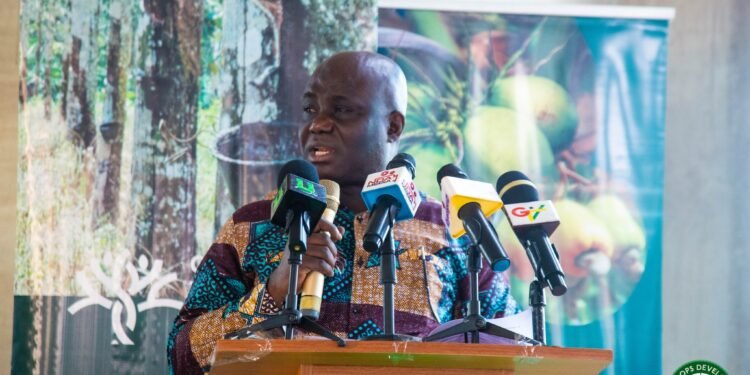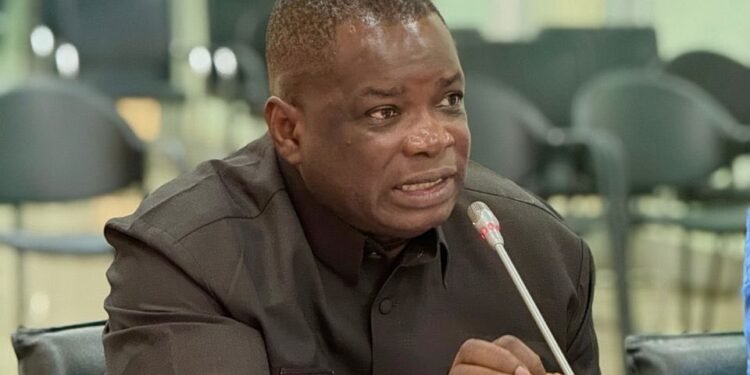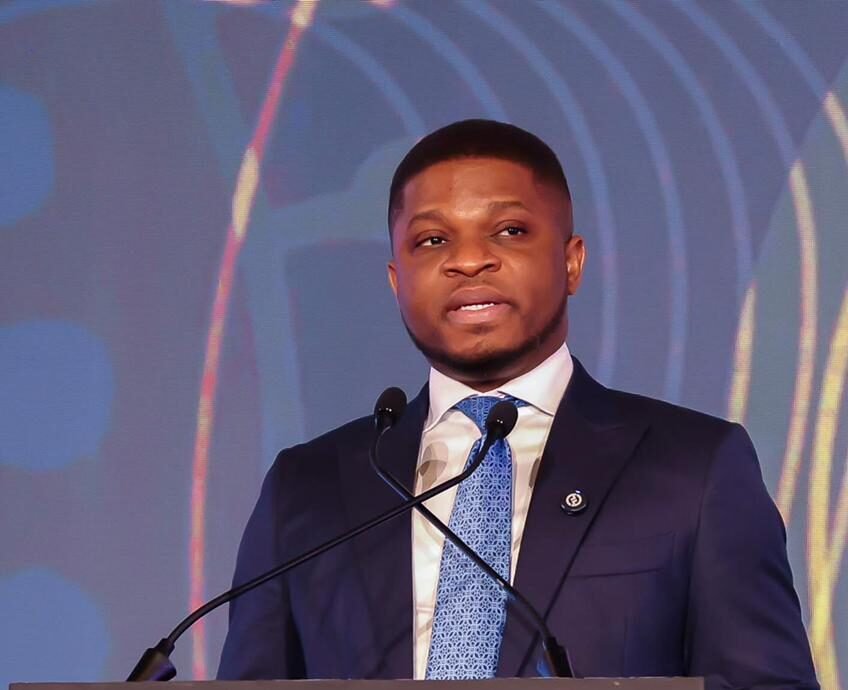
Chief Executive Officer of the Ghana Gold Board (GoldBod), Mr. Sammy Gyamfi, has issued a robust rebuttal against recent assertions made by the Minority Caucus regarding alleged financial mismanagement within the nation’s gold-backed economic programs.
Mr. Sammy Gyamfi characterized the Minority’s narrative as “uninformed and unfounded,” designed to obscure the significant fiscal strides made under the current administration.
He emphasized that the claims regarding a $214 million loss reported by the International Monetary Fund (IMF) are being deliberately misinterpreted to create a false sense of crisis.
“But before that, I hear the Minority Caucus has today addressed a presser making several uninformed and unfounded claims. So I thought it prudent to give you a teaser to nibble on as you enjoy the Yuletide.”
Mr. Sammy Gyamfi
This escalating friction centers on the Gold for Reserves (G4R) program, a strategic initiative conducted by the Bank of Ghana (BoG) in partnership with GoldBod to stabilize the cedi and accumulate precious metal reserves.
While the IMF’s Fifth Review under the Extended Credit Facility (ECF) flagged a provisional $214 million (GHS 2.3 billion) accounting shortfall for the first nine months of 2025, Gyamfi argues this represents a drastic reduction from previous years.
He noted that the Minority’s sudden demand for a probe is a “paradox,” given that the same program saw audited losses of GHS 2.15 billion in 2023 and GHS 4.84 billion in 2024 under different oversight.


Comparative Analysis of BoG Gold Program Performance

In a move to provide “intellectual honesty” to the extractive sector discourse, the GoldBod CEO provided a granular breakdown of historical losses to contrast with current performance.
According to the data, the combined losses of the Gold for Oil (G4O) and Gold for Reserves (G4R) initiatives totaled over GHS 7 billion across 2023 and 2024.
In 2023, the audited figures showed a GHS 1.18 billion loss for the gold component of G4O and GHS 973 million for G4R.
This escalated significantly in 2024, with G4R losses alone hitting GHS 4.18 billion, while the cedi faced a cumulative depreciation of over 45% during that two-year window.
Sammy Gyamfi points out that the 2025 unaudited figures estimated at roughly GHS 3.3 billion by the opposition actually signal a downward trend in operational costs.
This fiscal improvement has coincided with a dramatic shift in Ghana’s macroeconomic indicators. For the first time since 2007, the Ghana cedi has seen a cumulative appreciation of over 35% against the U.S. dollar in 2025.
Furthermore, inflation has plummeted from a high of 23.8% to a single-digit 6.3%, following eleven consecutive months of decline, a feat Gyamfi attributes to the successful aggregation of over 100 tonnes of gold.
IMF Scrutiny and the Political Tug-of-War

The extractive industry has been closely monitoring the IMF’s disclosure of the $214 million figure, which the Fund attributes to “trading losses” and “off-taker fees” within the artisanal and small-scale mining (ASM) component.
However, technical experts at GoldBod clarify that these are “unresolved accounting and financial reporting treatments” currently being debated between the BoG and external auditors.
Mr. Sammy Gyamfi insists that GoldBod itself is on track to declare an income surplus of approximately GHS 600 million for 2025, as it operates primarily as an agent for the central bank, earning statutory assay and service fees.
Despite the Minority’s allegations of “unprecedented losses,” the current administration views the G4R program as a necessary “strategic cost” for currency defense.
The transition of the program’s full mandate to GoldBod in January 2026 is expected to further streamline these costs.
As the Yuletide season concludes, the extractive sector awaits the CEO’s full disclosure on January 5th, which promises to deconstruct the “mathematical inconsistencies” in the opposition’s claims and provide a roadmap for the future of Ghana’s domestic gold purchase framework.
READ ALSO: Economic Activities to Improve as Confidence in Corruption Fight Grows