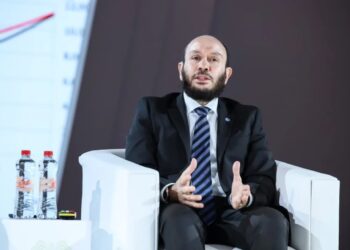
Chief Executive Officer of the Ghana Gold Board (GoldBod), Lawyer Sammy Gyamfi, has once again dismissed recent reports alleging that the Bank of Ghana (BoG) incurred staggering losses of $214 million through its gold-trading operations.
Describing the figures as “imaginary losses” fabricated by “doom wishers” desperate to see the Mahama administration fail, Gyamfi maintains that the institution is, in fact, a surplus-making entity.
The controversy stems from an International Monetary Fund (IMF) report that flagged these figures as trading shortfalls under the Gold-for-Reserves program, citing “GoldBod off-taker fees” and operational gaps.
However, the GoldBod chief insists these claims are “ridiculous” and rooted in a fundamental misunderstanding of the Domestic Gold Purchase Programme (DGPP) and its broader economic benefits.
“The doom wishers have created ‘by force’ imaginary losses and are aggressively imposing same on the surplus-making GoldBod. The policy choice of the DGPP has always come with an intrinsic cost to the central bank. Their ‘jandam’ will collapse like a heap of sand when we make the time to engage the issues after the Yuletide.”
Lawyer Sammy Gyamfi
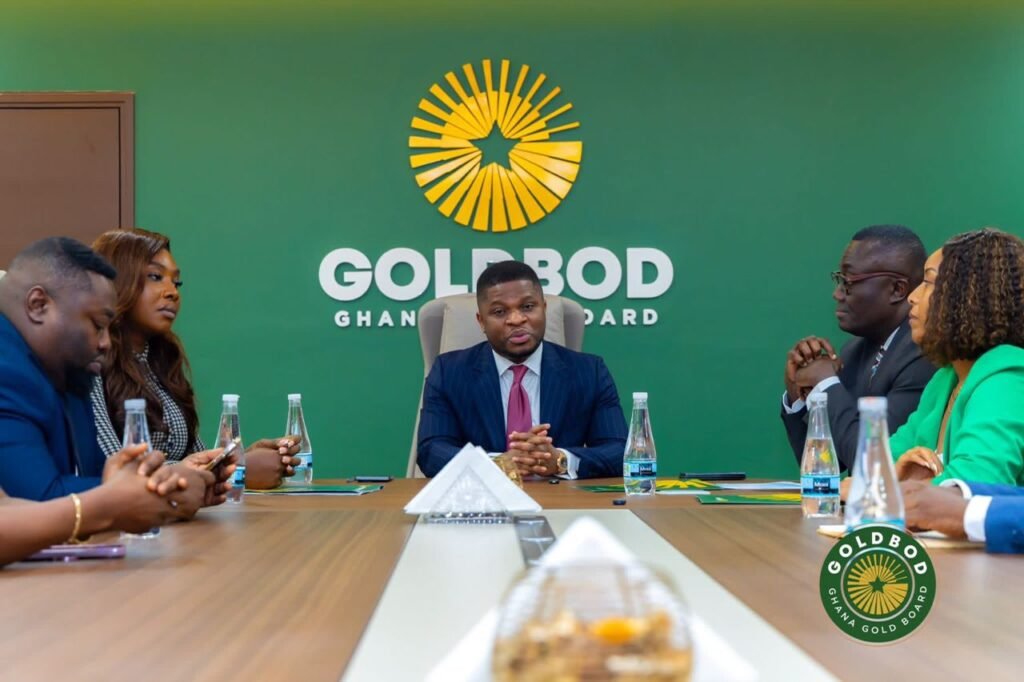
Expanding on this rebuttal, the GoldBod CEO argued that the critics have conveniently ignored the policy-design and the intrinsic costs associated with the Domestic Gold Purchase Programme (DGPP), which was engineered to shore up national reserves and ensure price stability.
According to Sammy Gyamfi, the administration has delivered the “most sterling economic record” in recent history, achieving in one year what predecessors failed to do in eight.
He clarified that while the DGPP may carry an “intrinsic cost” to the central bank, the true measure of success lies in a “holistic analysis” of costs versus economic benefits, such as the generation of over $10 billion in foreign exchange and the stabilization of the cedi at GHS11.1 to the dollar.
$214 Million Controversy: IMF Reports vs. GoldBod Surpluses

The genesis of this heated debate lies in the IMF’s Fifth Review of Ghana’s Extended Credit Facility, which identified a $214 million shortfall attributed to “artisanal and small-scale mining (ASM) dore gold transactions.”
The Fund’s report suggested that the Bank of Ghana was absorbing the financial weight of “GoldBod off-taker fees” and pricing gaps where gold was purchased at market premiums but processed at a deficit.
This has sparked intense scrutiny from extractive experts and political opponents who argue that the central bank is essentially subsidizing the profitability of GoldBod.
In contrast, GoldBod’s unaudited financial statements for 2025 paint a picture of fiscal health, projecting an income surplus of no less than GH₵600 million.
Expert analysis suggests that the “losses” cited by the IMF may actually represent the operational expenditure of building a national gold reserve, which has surged to over 36 tonnes. Gyamfi’s defense hinges on the fact that GoldBod functions as a “transformational” vehicle for economic sovereignty, and that any attempt to characterize these strategic investments as “losses” is a calculated attempt to “wallow in imaginary” failure.
Economic Sovereignty and the “Intrinsic Cost” of Gold Acquisition

By utilizing the DGPP to convert local currency into hard assets, the government has created a buffer that critics allegedly refuse to acknowledge.
The CEO pointed out that these detractors once touted similar programs with “very little to show for” them, whereas the current “sterling record” is anchored in tangible results.
He challenges the “ridiculous” narrative by highlighting that the interbank dollar rate has remained steady, a feat he attributes to the success of the very administration being castigated.
From an extractive standpoint, the transition from the Precious Minerals Marketing Company (PMMC) to the fully legislated GoldBod represents a shift toward formalizing the small-scale sector.
Sammy Gyamfi insists that the “policy justification” for the DGPP remains robust despite the associated costs, as it brings transparency to a sector once riddled with smuggling.
He maintained that the current administration has delivered on its mandate “for Ghanaians in one year,” effectively turningthe”dust of our earth into the bedrock of our recovery” through disciplined gold accumulation.
READ MORE: Akandoh Demands Total Unity on Western North Development Tour