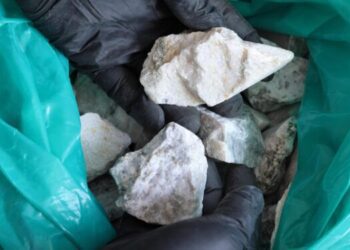
Natural Resource Governance Institute (NRGI) has identified 2026 as a critical year for Ghana to establish a robust lithium governance framework as the nation prepares to renegotiate and resubmit the Ewoyaa lithium mining agreement to Parliament.
This projection follows the government’s recent decision to withdraw the initial agreement for further stakeholder consultations, highlighting the immense pressure to align the project with long-term national interests and the global energy transition.
The upcoming year is seen as a narrow but vital window for Ghana to refine its fiscal and regulatory strategies before the deal returns for parliamentary ratification.
With lithium prices experiencing significant volatility, NRGI emphasizes the need to scrutinize corporate profitability claims and avoid permanent tax reductions.
Instead, the institute advocates for flexible fiscal tools, such as the recently proposed sliding-scale royalties, which would allow the state to capture higher revenues when market prices recover while protecting the project’s viability during downturns.
“The period ahead presents a narrow but important opportunity for Ghana to strengthen its fiscal and regulatory approach before any renegotiated deal returns to lawmakers. Decisions taken ahead of 2026 will shape whether the country secures lasting economic benefits from lithium extraction or repeats governance challenges seen in other extractive sectors.”
NRGI
Scrutinizing Fiscal Regimes Amid Market Volatility
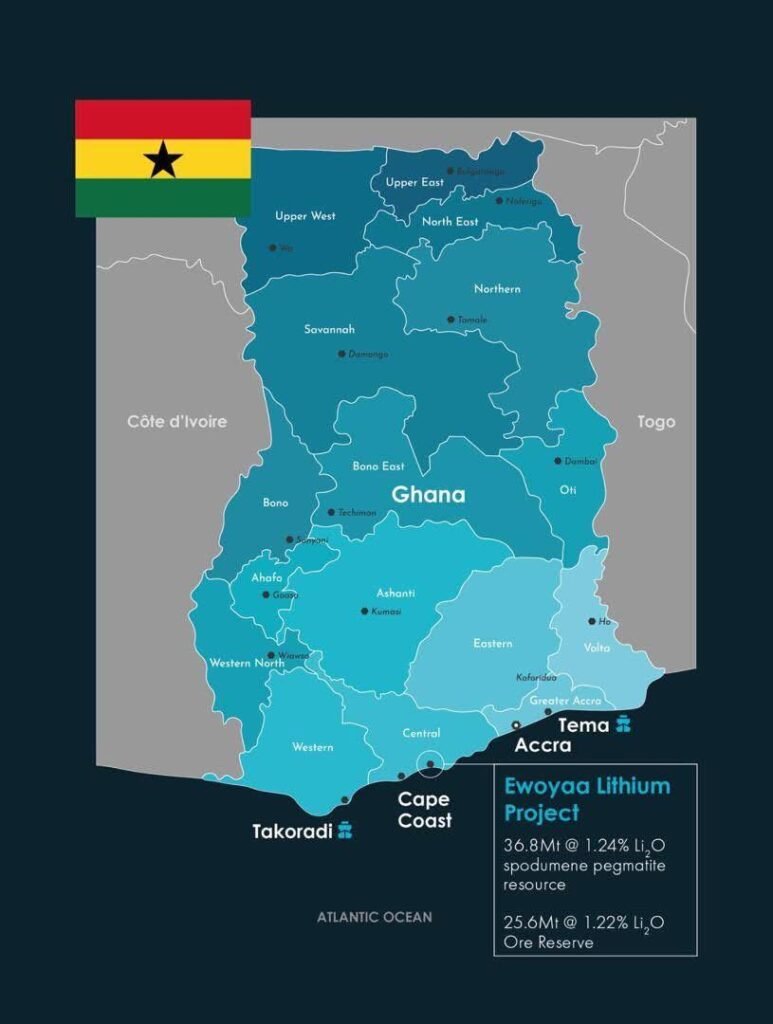
As the Ewoyaa project marks Ghana’s first major venture into the “green gold” rush, the fiscal terms have become a focal point of national debate.
The original 2023 lease, which featured a 10% fixed royalty and a 13% state-carried interest, has been contested by Atlantic Lithium following an 80% collapse in global spodumene prices.
In response, the Ministry of Lands and Natural Resources has introduced the Minerals and Mining (Royalty) Regulations, 2025, which proposes a variable royalty band.
Under this new structure, royalties would drop to 5% when prices fall below $1,500 per tonne but could scale up to 12% if market values exceed $3,000.
NRGI warns that while flexibility is necessary, the government must resist “permanent reductions in taxes or royalties” that could haunt the treasury during future price rallies.
The institute’s modeling suggests that even under current “crisis” prices, the Ewoyaa project maintains a significant internal rate of return, prompting calls for more rigorous independent price benchmarking.
Experts argue that without these safeguards, Ghana risks “leaving money on the table” and suffering from profit-shifting practices that have plagued the gold and cocoa sectors for decades.
Strengthening Safeguards Against Revenue Leakage
Beyond royalty rates, the 2026 milestone represents a test for Ghana’s ability to implement “strong safeguards to prevent profit shifting and tax avoidance.”
NRGI has been a vocal proponent of contract transparency and beneficial ownership disclosure, arguing that weak enforcement of these measures could significantly “undermine the value Ghana derives from its lithium resources.”
The institute recommends that the shareholders’ agreement include non-dilutable state equity and strict rules on dividend payments to ensure the Minerals Income Investment Fund (MIIF) remains a strategic guardian rather than a passive observer.
The push for value addition also remains a contentious pillar of the 2026 roadmap. While the government aims to establish a domestic refinery, civil society organizations like IMANI Africa and NRGI urged the state to demand “concrete commitments” rather than “aspirational clauses.”
A refinery is only deemed viable if Ghana can guarantee a steady supply from multiple mines, making the 2026 governance framework a blueprint not just for Ewoyaa, but for the entire burgeoning critical minerals supply chain in West Africa.
NRGI’s Role in Global and Local Resource Management

The Natural Resource Governance Institute (NRGI) is an independent non-profit organization that evolved from the merger of the Revenue Watch Institute and the Natural Resource Charter. With a regional office based in Accra, NRGI works globally to help resource-rich countries avoid the “resource curse” by providing technical advice, policy analysis, and advocacy for accountable governance.
In Ghana, their role has been instrumental in shaping the Ghana Extractive Industries Transparency Initiative (GHEITI) and providing data-driven critiques of mining and petroleum legislation.
This projection for 2026 is set to benefit Ghana by providing a data-backed counter-narrative to corporate lobbying, ensuring that the “unprecedented” 19% total state stake (including MIIF’s acquisition) actually translates into tangible wealth.
By fostering an inclusive consultation process, NRGI’s intervention helps bridge the gap between technical mining lease terms and the socioeconomic expectations of the Mfantseman community.
Ultimately, the 2026 framework will determine if Ghana can successfully leverage its lithium reserves to fund its own energy transition and industrialization goals.
READ ALSO: Risk, Governance, Capital Buffers Take Centre Stage In Sweeping Banking Reforms From 2026